 Yesterday MDN editor Jim Willis had the pleasure of attending, and moderating two panel sessions, at the Oil & Gas Awards 2017 Northeast Industry Summit in Pittsburgh. (Jim is back in Binghamton today, very tired!) When the sessions are made available via video, Jim will post them here on MDN. In the meantime a few words about the sessions and presenters, and about what we consider some pretty big news coming out of yesterday’s meeting. The day began with MDN friend George Stark, Director of External Affairs for Cabot Oil & Gas, making an impassioned plea for everyone in the industry to get involved with telling the great story of our beloved industry. Don’t think it’s someone else’s role–it’s the role of every single person in the industry, from janitor to secretary to CEO. George gave a rousing, opening address. George was followed by a panel discussion led by MDN friend Charlie Schliebs, Managing Director of Stone Pier Capital. Charlie’s panel tackled some interesting topics about mergers and acquisitions, bankruptcies, and where they see the price of natural gas going over the next several years. After Charlies panel was a panel discussing pipeline projects. The moderator was Fred Lowther, a partner at powerhouse energy law firm Blank Rome. Fred, who once worked on the Iroquois Gas Transmission Pipeline project when it was being built, said over the years since that pipeline was built he’s often joked they failed to do a “celebrity impact statement” when building it. Liked that line! After Fred’s panel was a talk given by Michael Krancer, also with Blank Rome (and former Secretary of the PA Dept. of Environmental Protection). Mike is always a take-no-prisoners presenter. We’ve always loved the way he thinks and expresses himself. Yesterday was no different. It was during Mike’s talk that we found what we believe was the most important thing said yesterday. It has to do with PA’s proposed General Permit 5A. Mike said if GP-5A is enacted as written, it will result in a 12-18 month moratorium on production in Pennsylvania…
Read More “Big News from the O&G Awards Northeast Industry Summit”

 As MDN has noted over the past several months, the signs have been positive that Marcellus/Utica drilling is picking up once again. But that doesn’t mean it’s picking up in every location. Or does it? One of the hotbeds of drilling activity “back in the day” was in several northeastern/central Pennsylvania counties, including Tioga, Bradford, Lycoming and Sullivan. But then the bottom fell out of the industry (with super low prices) and drilling all but dried up in those counties. The good news is that there are signs of life, once again, in the central counties of PA. Between Nov. 1 and Mar. 6, 30 drilling permits were issued in Tioga County, 12 permits in Lycoming County, and (somewhat surprising), 8 permits issued in Sullivan County. Shale is coming back!…


 The Baker Hughes rig count in the U.S. continued to be on fire in February. Whoops! Poor choice of words. The rig count continued its rocket ride. In January the average number of U.S. rigs was 683. In February, the count zoomed to 744, up 61 rigs in just a month. Each active rig translates into hundreds of jobs, both directly working at the rig and indirectly in services delivered to the rig and its workers. It also means more landowners will soon have royalty payments heading in their direction. When rigs are active, life is good. What about rig counts in the Marcellus/Utica? Total rig count went up another 3 rigs. Two of the rigs were added in WV (now 10), and one in PA (now 34). OH’s rig count remained the same (20 rigs) in February as January. Just 3 added rigs out of 61 means other shale plays (primarily the Permian and other oil plays) are where most of the rig action is happening. Here’s the full set of numbers, along with a pretty MDN chart showing the last 12 months of rig counts in the Marcellus/Utica…
 One of our fun pastimes is speculating about when, exactly, the mighty Shell ethane cracker in Beaver County, PA will actually go online. In February, Shell CEO Ben van Beurden said this: “We haven’t announced exactly when it will start up, but expect that to be not anymore this decade” (see
 The Federal Energy Regulatory Commission (FERC) approved Atlantic Sunrise in early February (see
  Dennis Davin, Secretary of the Pennsylvania Department of Community and Economic Development (DCED), has been one of the loudest and most credible voices in the disastrous PA Gov. Tom Wolf Administration. Davin has done great work in promoting the Shell ethane cracker and the jobs/economic development it will bring to the state (see
  At last week’s Oil & Gas Awards’ 2017 Northeast Industry Summit, MDN editor Jim Willis heard former Pennsylvania Dept. of Environmental Protection (DEP) Secretary, Michael Krancer, say that the DEP’s proposed changes to General Permit (GP) 5 and 5A are “a big deal” and that the permits, as drafted, have the potential to stop PA natural gas production for 12-18 months while new regulations get sorted out (see
  Ding dong–Lush is calling. A British cosmetics company (think UK version of Avon), looking to get bought-and-paid-for publicity here in the states, has donated $22,000 to the anti-Atlantic Sunrise Pipeline group, Lancaster Against Pipelines (LAP). Anti-drilling losers like those in LAP would flare out if not for the backing of companies and Big Green groups with deep pockets. Which cosmetics company did the donating? The name is Lush. You’ve never heard of them and almost certainly have never purchased any of their forgettable products–which is why they donate money to groups like LAP, to get far more exposure than advertising can buy. There’s enough nutjobs out there that will buy products from companies like Lush to make “donating” money for “causes” to these groups a profitable venture. Another funder of LAP? The Universal Unitarian Church in Lancaster, which forked over $5,000 of parishioner contributions to LAP. Hello IRS! Will you please investigate the non-profit Universal Unitarian Church for giving money to an overtly political cause? Who else is donating money to the small group of LAP rabble-rousers?…
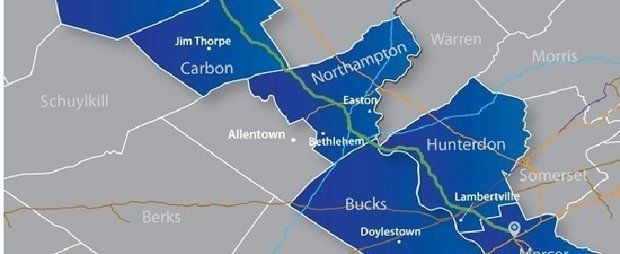 PennEast Pipeline is a $1 billion, 118-mile pipeline from Luzerne County, PA to Mercer County, NJ. Along the entire length of the pipeline, there will only be one compressor station–located in Carbon County, PA. This past Wednesday the PA Dept. of Environmental Protection (DEP) conducted a public hearing on the compressor station plan. Nominally the hearing is to elicit feedback from the public. However, as is so often the case, these are not really hearings but theatrical performances where anti-drilling kooks put on the equivalent of a circus act. But antis weren’t the only ones who showed up for the hearing. Plenty of supporters were there too…
 The Delaware River Basin Commission (DRBC), charged with overseeing potential impacts on the Delaware River and the various tributaries that feed it, has stepped outside of its legal bounds with plans to review the PennEast Pipeline, part of which will run through the Delaware River Basin area. In 2014 the DRBC tried to tell PennEast and its sponsors that the pipeline will need their approval before it can be built (see
  Yesterday MDN editor Jim Willis had the pleasure of attending, and moderating two panel sessions, at the Oil & Gas Awards 2017 Northeast Industry Summit in Pittsburgh. (Jim is back in Binghamton today, very tired!) When the sessions are made available via video, Jim will post them here on MDN. In the meantime a few words about the sessions and presenters, and about what we consider some pretty big news coming out of yesterday’s meeting. The day began with MDN friend George Stark, Director of External Affairs for Cabot Oil & Gas, making an impassioned plea for everyone in the industry to get involved with telling the great story of our beloved industry. Don’t think it’s someone else’s role–it’s the role of every single person in the industry, from janitor to secretary to CEO. George gave a rousing, opening address. George was followed by a panel discussion led by MDN friend Charlie Schliebs, Managing Director of Stone Pier Capital. Charlie’s panel tackled some interesting topics about mergers and acquisitions, bankruptcies, and where they see the price of natural gas going over the next several years. After Charlies panel was a panel discussing pipeline projects. The moderator was Fred Lowther, a partner at powerhouse energy law firm Blank Rome. Fred, who once worked on the Iroquois Gas Transmission Pipeline project when it was being built, said over the years since that pipeline was built he’s often joked they failed to do a “celebrity impact statement” when building it. Liked that line! After Fred’s panel was a talk given by Michael Krancer, also with Blank Rome (and former Secretary of the PA Dept. of Environmental Protection). Mike is always a take-no-prisoners presenter. We’ve always loved the way he thinks and expresses himself. Yesterday was no different. It was during Mike’s talk that we found what we believe was the most important thing said yesterday. It has to do with PA’s proposed General Permit 5A. Mike said if GP-5A is enacted as written, it will result in a 12-18 month moratorium on production in Pennsylvania…
 The Allegheny Institute exists to conduct research, education and advocacy work in a mission to defend taxpayers and businesses against burdensome taxation, inefficiency and intrusiveness of an ever expanding government. That’s a pretty tall order because government–at all levels–is always expanding, like a voracious monster. Think of the Allegheny Institute as a mini version of the Heritage Foundation–focused on Pennsylvania. Last week the Institute published a new policy brief dealing with the latest severance tax proposal by PA Gov. Tom Wolf. This is a think piece–but not overly heavy. It is quite readable (within a few minutes) and delivers food for thought. As the author points out, you can change to a severance tax from an impact fee (i.e. tax), but will you really reap all of the revenue claimed? Politicians like Wolf often gloss over the economics. Currently, the impact fee is levied on drillers. A severance tax, if enacted, would (in many/most cases) be deducted as an expense from royalty checks, placing the burden for the tax on landowners–and lowering their income, which means less in the way of state income tax revenues. The severance tax proposed by Wolf, when considered honestly, is nothing short of a disaster…