
PJM Appoints 2 Board Members, Thumbs Nose at Gov’s Political Picks
 Last week, we brought you several posts about a “summit” (a blaming and bullying session) convened by one of the biggest bullies on the political scene today, Pennsylvania Governor Josh Shapiro, to complain about high electricity prices in the PJM Interconnection grid (see Gov. Shapiro Convenes Gang to Blame PJM Grid for His Policies). Shapiro and some of his fellow governors in PJM are blaming the grid operator, alleging mismanagement, for high prices. As we pointed out, PJM is nothing more than the equivalent of an air traffic controller (see GOP State Senators Respond to PA Gov. Shapiro’s Bash PJM Summit). Read More “PJM Appoints 2 Board Members, Thumbs Nose at Gov’s Political Picks”
 For the week of September 15 – 21, the number of permits issued to drill new wells in the Marcellus/Utica decreased from the previous week, but not by much. There were 24 new permits issued across the three M-U states last week, down from 26 issued two weeks ago. Pennsylvania finally improved a bit, but only because of one driller. PA issued 11 new permits last week, with 10 of the 11 going to Range Resources. Range’s permits were spread across three counties, with one permit in Allegheny, five in Beaver, and four in Washington. The other PA permit went to Beech Resources for a well in Lycoming County.
  Homer City Redevelopment is transforming the former Homer City Generating Station in Indiana County, Pennsylvania, into the $24 billion Homer City Energy Campus, one of the largest redevelopment projects in state history (see
 We chalk this story up to the category, “We’re winning, and here’s more proof.” When, in your wildest dreams, would you ever think the lefty libs at the University of Pittsburgh (who HATE shale energy and fossil fuels) would launch a degree program for undergraduates that combines natural gas, oil, and unreliable renewables? We thought, NEVER! But that’s just what has happened. The school is launching an “all of the above” engineering degree, allowing students to “move seamlessly between industries.” Get them trained in both fossil fuels and so-called green energy for when the day arrives that fossil fuels are finally dead and green energy rules the land. (Which is when hell freezes over.)
  On September 24, the U.S. Environmental Protection Agency (EPA) granted Sandstone Development, LLC a permit for an oil and gas wastewater injection well in Lafayette Township, in McKean County. The permit authorizes Sandstone to inject up to 10,500 gallons per day of produced fluids from the McKay 7A conventional well to enhance oil and gas recovery in the McKay Lease area. Injection will occur into the Upper Devonian Kane Sandstone Formation at depths between 2,295 and 2,315 feet. A public hearing on the permit application was conducted in May.
  Yesterday, we told you about comments made by several governors from states covered by the PJM electric grid delivered to a bash PJM summit organized by Pennsylvania Governor Josh Shapiro (see
  PJM Interconnection is the electrical grid operator serving Pennsylvania, as well as parts of 12 other states and the District of Columbia. For months, the Democrat governors of PJM states have been criticizing PJM, blaming the grid operator for higher electricity prices, even though their own policies are driving electricity prices higher (see
  We continue to eek out progress with the rig report. Last week, the national rig count added three rigs after adding two the prior week and one three weeks ago. We’ve added rigs for three weeks in a row! We ended last week with 542 active rigs across the country. The Utica Shale in Ohio added one rig two weeks ago and kept it last week. The combined count was 37 for two weeks running. PA operated 18 active rigs last week. OH operated 12 rigs. And WV operated 7 rigs. Twenty-four rigs targeted the Marcellus and 13 rigs targeted the Utica last week.
 The highly functional and responsible Susquehanna River Basin Commission (SRBC), unlike its highly dysfunctional and irresponsible counterpart, the Delaware River Basin Commission (DRBC), continues to support the shale energy industry by approving water withdrawals and consumptive use requests for responsible and safe shale drilling. The SRBC published a notice in the September 20 Pennsylvania Bulletin that the Executive Director of the SRBC approved and/or renewed 40 general water use permits in August for individual shale gas well drilling pads in Bradford, Centre, Clearfield, Lycoming, Sullivan, Susquehanna, Tioga, and Wyoming counties in Pennsylvania.
 Recently, two neighboring towns in Greene County, PA, declared a Disaster Emergency related to a “frac-out” at the EQT Lumber well that happened three years ago, in July 2022 (see
 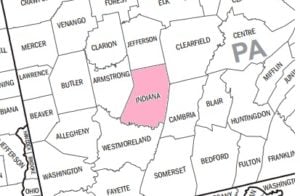 In April, Knighthead Capital Management, Homer City Redevelopment (HCR), and Kiewit Power Constructors Co. announced a plan to convert the former Homer City Generating Station, previously the largest coal-fired power plant in Pennsylvania (Indiana County, 50 miles east of Pittsburgh) into a more than 3,200-acre natural gas-powered data center campus, designed to meet the growing demand for artificial intelligence (AI) and high-performance computing (see
  Following three years of negotiations, Lycoming County Commissioners celebrated closing a deal with Range Resources to lease 1,350 acres in Jackson Township for shale drilling. The county is receiving a $5.4 million signing bonus, which works out to $4,000 per acre. Sweet. However, the county will receive just a 2% royalty for any oil/gas produced from the property. You read that right (not a typo)—just 2%, which has to be the lowest royalty rate we’ve ever seen negotiated, either with a private landowner or a municipality.