
Antero Resources | BKV/Banpu | CNX Resources | Coterra Energy (Cabot O&G) | Diversified Energy | Energy Companies | EQT Corp | Expand Energy | Gulfport Energy | Industrywide Issues | Range Resources Corp | Research | Reserves (Proved and Unproved) | Seneca Resources
EQT Is #1 in U.S. Gas Reserves, New EY Benchmarking Study Shows
 Accounting giant Ernst & Young dropped its annual reserves benchmarking study yesterday, and while the press release leads with oil, the real story for our part of the country is buried in the tables: EQT is now the largest holder of proved natural gas reserves in the United States, and Appalachian-focused producers control roughly a third of all the gas reserves booked by America’s 30 biggest publicly traded drillers. Read More “EQT Is #1 in U.S. Gas Reserves, New EY Benchmarking Study Shows”
 EOG Resources, the biggest acreage holder in the Ohio Utica, sent Chief Operating Officer Jeff Leitzell to the Barclays 40th Annual Energy-Power Conference yesterday (Sept. 9), and he spent a good chunk of his stage time explaining exactly how EOG thinks about our play. We’ve heard some of it before. But Leitzell went deeper on Utica geology than the company usually does on an earnings call — including a north-versus-south distinction that shapes how tightly EOG spaces its wells — and he dropped a fresh well-results number: three inherited Encino wells with 3.5-mile laterals that each came online at more than 35 million cubic feet per day (MMcf/d). He also confirmed that Ohio’s first in-basin frack sand mine is still on track for a year-end startup, and that the savings from it are not yet baked into EOG’s cost numbers.
  Last week we told you Dominion Energy cleared its first hurdle for the monster 3,000-megawatt (3 gigawatt) Cumberland Energy Center in Cumberland County, Virginia (see
  Virginia Democrats have spent the summer hammering the proposed $67 billion NextEra-Dominion merger — letters to regulators, a 64-question interrogation, a statewide listening tour, a demand for a special session. Last week the pile-on reached the very top when House Speaker Don Scott (D-Portsmouth) filed his own letter with the State Corporation Commission (SCC). Here’s the twist: the same Democrat leaders doing the loudest complaining just refused to do the one thing that would actually slow this deal down.
 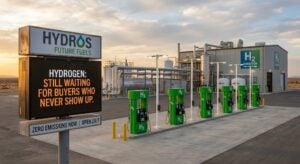 We’ve said it here more times than we can count: hydrogen has no customers. A new investigation from RealClearInvestigations, published Sept. 1, backs that up with numbers — and the picture it paints of the federal hydrogen push should worry anyone who thought ARCH2 was going to become a big new buyer of Marcellus/Utica gas. Reporter James Varney’s piece walks through what’s become of the Biden administration’s National Clean Hydrogen Strategy and Roadmap, released in June 2023. That plan promised $9.5 billion in spending would produce 100,000 jobs by 2030 and cut economy-wide emissions 10% by 2050. Three years on, the biggest single piece of it — $3 billion split between two West Coast hydrogen hubs — is frozen and tied up in court. California’s ARCHES hub says on its own website that the state has paused activities. Thirteen Democratic attorneys general sued in February to force the money out the door.
  MARCELLUS/UTICA REGION: New England natural gas prices have been trading near record discounts to Henry Hub; OTHER U.S. REGIONS: Korea picks $22B gas project as first in USA trade deal; NATIONAL: U.S. natural gas futures fall as weather set to turn; New Fortress Energy announces reverse stock split; USA oil, gas workforce figures buck trend; INTERNATIONAL: Oil surges as attacks escalate.
  Big Green scored a win yesterday — but not the win they’re telling you they got. On Tuesday, September 8, a three-judge panel of the U.S. Court of Appeals for the Third Circuit vacated the Clean Water Act Section 401 water quality certification (WQC) that the New Jersey Department of Environmental Protection (NJDEP) issued last November for Williams/Transco’s Northeast Supply Enhancement (NESE) project — the $1 billion, 400,000 Dth/d expansion that carries Marcellus gas from Pennsylvania, across New Jersey, under Raritan Bay, and into New York City (see
 West Virginia has sued the Pennsylvania Public Utility Commission in federal court, arguing that two Pennsylvania laws — Act 40 of 2017 and Act 114 of 2020 — built a wall around the state’s “alternative energy credit” market and locked out every power producer outside Pennsylvania’s borders. West Virginia Attorney General JB McCuskey filed the 54-page complaint on September 3 in the U.S. District Court for the Middle District of Pennsylvania, and here’s the kicker: the PUC’s own annual report, published seven months earlier, told the legislature that these very rules needed a second look.
 A federal judge in Knoxville has thrown out the environmental review behind the Tennessee Valley Authority’s $2.5 billion Kingston gas plant — and almost nobody has seen the ruling, because it’s sealed. We pulled the public docket and found the whole story hiding in TVA’s own court filings. On August 31, U.S. District Judge Curtis L. Collier granted partial summary judgment to Appalachian Voices, the Center for Biological Diversity, and the Sierra Club, represented by the Southern Environmental Law Center. The judge vacated TVA’s Environmental Impact Statement (EIS) and Record of Decision (ROD) for the plant, which is replacing nine coal units at the old Kingston Fossil Plant in Roane County, Tennessee — the site of the infamous 2008 coal ash spill.
  For four years, the province of Québec has had one answer for the drillers whose mineral rights it seized: see you in court. Last week that changed — a little. Questerre Energy announced it has signed a mediation protocol with Québec’s Attorney General and the province’s Ministry of the Economy, Innovation and Energy, agreeing to sit down at a table and talk. Longtime MDN readers know the backstory. Québec sits on top of a big slice of the Utica Shale — yes, the same Utica that runs under Ohio, West Virginia and Pennsylvania.
 Two things happened last week, and both of them are unusual. Pennsylvania dropped a rig to 15, pulling the combined Marcellus/Utica down to 33 — a number we haven’t printed since the fall of 2024. And the national count came in at 588 for the third consecutive week. Not 588, then 587, then 589. The same number, three times in a row. We’ve been writing this column a long time, and we can’t recall the national count sitting perfectly still for three straight reports. Underneath it, the shuffle continued: two more oil rigs, two fewer gas rigs. Look at the price sheet, and you’ll see why. WTI settled Friday near $90.76 a barrel. Natural gas settled around $2.98 per MMBtu.
  Devon Energy’s Coterra unit is asking Pennsylvania regulators for permission to lay 18.4 miles of 20-inch freshwater pipeline across three Susquehanna County townships — which is a strange thing to spend money on if you’re about to sell the place. The Department of Environmental Protection (DEP) published the notice in the September 5 Pennsylvania Bulletin, opening a comment window that closes October 5. The project is the Brooks to Forwood Temporary Waterline, running through Springville, Lathrop, and Lenox townships.