
Williams Atlantic Sunrise Project to Begin Partial Service on Sept 1

An important piece of Williams’ $3 billion Atlantic Sunrise Pipeline project, meant to flow Marcellus gas to new markets in the Mid-Atlantic and southeast, is about to go online in the next few days. You read that right. Most of the coverage here on MDN with respect to the Atlantic Sunrise project has been about the most controversial part of the project–183 miles of new “greenfield” (brand new) pipeline construction that will happen in Pennsylvania–a project referred to as the Central Penn Line. Small groups of antis in places like Lebanon and Lancaster counties have vigorously opposed the new pipeline portion of the project in their communities. However, upgrades to several compressor stations and fixes to the existing Transco pipeline as it runs through states like Maryland and Virginia are also needed in order to make Transco bi-directional–able to continue flowing gas from the Gulf to the northeast, but now, also able to reverse and flow gas from the Marcellus/Utica in the other direction. Although the greenfield portion of the project has not yet begun (should in the next few weeks), the “brownfield” or tweaks to the existing pipeline/compressor stations has been underway, since February, and is now ready. The Federal Energy Regulatory Commission (FERC) has just granted Williams permission to bring the new tweaks online, which will allow Transco to reverse and flow an extra 400 million cubic feet per day (MMcf/d) of natural gas from Lancaster County, PA all the way to Choctaw County, Alabama…
Read More “Williams Atlantic Sunrise Project to Begin Partial Service on Sept 1”
 A Broome County, NY judge ruled yesterday that the Town of Fenton Planning Board did not take a hard enough look at environmental and traffic issues related to their approval of NG Advantage’s plan to construct a facility in the town to compress and load natural gas onto tractor trailers for delivery to regional customers who desperately need the gas–what is called a “virtual pipeline.” MDN has chronicled the project from the beginning (see our
  Ohio Gov. John Kasich (RINO) promised, five years ago, to allow shale drilling on state-owned forests and parks. He promptly then reneged on his promise. The way Kasich blocked drilling was to refuse adding new members to the Oil and Gas Commission, charged with approving potential drillers on state land. Kasich created a de facto moratorium that prevents fracking on state-owned land. In May of this year, Republican legislators, tired of Kasich’s recalcitrance, added a “little-noticed provision” in the state budget deal that will give the legislature, and not the governor, the power to select members of the Ohio Oil and Gas Commission (see
  Exactly two years ago, two Big Green groups–the Philadelphia-based Clean Air Council and the Washington, DC-based Environmental Integrity Project (both disgusting litigation factories)–filed a complaint against Shell to block the air quality permit needed to build the $6 billion ethane cracker in Monaca, PA (see
  The Allegheny Institute is out with another top notch policy brief. This one tackles the state’s existing impact fee and addresses the issue of why revenues from the impact fee have slid over the past several years. The Institute is not denigrating the impact fee, but lauding it as a better system of taxation than a severance tax. The Allegheny Institute exists to conduct research, education and advocacy work in a mission to defend taxpayers and businesses against burdensome taxation, inefficiency and intrusiveness of an ever expanding government–a pretty tall order because government at all levels is always expanding, like a voracious monster. Think of the Allegheny Institute as a mini version of the Heritage Foundation–focused specifically on Pennsylvania. The newest brief, titled “Shale Gas Impact Fee Revenue Continues to Slide” (full copy below) takes an honest, and hard look, at the impact fee. Researchers conclude that slapping a severance tax on top of the impact fee would be a disaster and violate the state’s commitment to drillers when they passed the impact fee…
 An extensive expose appearing on The Daily Signal blows the doors off collusion and money funneling from Russia to several Big Green groups using that money to oppose pipeline projects, including opposition to the Mountain Valley Pipeline and Atlantic Coast Pipeline projects here in the Marcellus/Utica region. A 29-year CIA veteran does a masterful job of connecting the dots between the Kremlin and so-called environmental groups that are using Russian money to oppose these American, much-needed pipeline projects. Group allegedly receiving Russian money include Virginia Organizing, Preserve Montgomery County and Friends of Nelson County in Virginia. Nationally, groups on the take with Russian money include the Natural Resources Defense Council, Sierra Club, and League of Conservation Voters Education Fund. Are they committing treason? We report, you decide…
 The Pennsylvania Dept. of Environmental Protection has put drillers (and everyone) on notice that it will bump up the fee to file for a permit to drill a Marcellus Shale well. Prior to 2013, the permit fee for a new Marcellus well was $3,200. In 2013 the DEP bumped it up by 56%, to $5,000 (see
  There’s been an interesting twist in the saga of National Fuel Gas Company’s (NFG) Northern Access Pipeline project. The $455 million project includes building 97 miles of new pipeline along a power line corridor from northwestern Pennsylvania up to Erie County, NY. The project also calls for 3 miles of new pipeline further up, in Niagara County, along with a new compressor station in the Town of Pendleton. The Federal Energy Regulatory Commission (FERC) granted final approval for the project in February of this year (see
  Dominion Energy’s $5 billion, 594-mile Atlantic Coast Pipeline (ACP)–a natural gas pipeline that will stretch from West Virginia through Virginia and into North Carolina, will help butterflies, bees and other “pollinator” insects along the pipeline’s route. Last week Dominion announced an initiative to establish new habitats for pollinator insects. The plan will use 750 acres along roughly 50 miles of the proposed route in Virginia and North Carolina. It’ll be fun to see how so-called environmentalists will find fault with helping the environment…
 The “best of the rest” – stories that caught MDN’s eye that you may be interested in reading. In today’s lineup: Cuomo’s ‘clear energy’ con game; Cuomo’s preposterous renewable energy plan threatens Long Island fishing industry; NEXUS will create 5,300 OH jobs; PA rig count drops by 3; new 2-year compression degree program in central PA; judge approves light sentence for green presidential candidate Jill Stein following criminal actions re Dakota Access Pipeline; Harvey throws a wrench in US energy engine; US LNG heading to Portugal; get politics out of pipeline approvals; and more!
 Two new members added to the Federal Energy Regulatory Commission by President Trump (Neil Chatterjee and Rob Powelson), added to the Obama-appointed member (Cheryl LaFleur) have not wasted any time in authorizing their first major pipeline project as a group. Last week the trio voted to approve the first major pipeline project since a quorum has been reestablished–NEXUS, a $2 billion, 255-mile interstate pipeline that will run from Ohio through Michigan and eventually to the Dawn Hub in Ontario, Canada. On August 4th, NEXUS, which is a jointly owned project between DTE Energy and Spectra Energy (now part of Enbridge), sent a letter to the new FERC quorum urging fast action (see
 Four Texas Eastern Transmission (Tetco) pipeline projects are expected to be completed by the end of this year and when they are, they will together flow an extra 1 billion cubic feet per day of Marcellus/Utica gas to more profitable markets in the South, as far away as the Gulf Coast. The four Tetco projects are: Gulf Markets Expansion Phase 2, Access South, Adair Southwest and Lebanon Extension. As fate would have it, Tetco experienced a fire while drilling under a highway for what we believe is the Adair Southwest project (see today’s companion story, Tetco Pipe Drilling in Athens, OH Hits Gas Pocket, Catches Fire). Three of the four projects–Access South, Adair Southwest and Lebanon Extension–are part of the same umbrella filing with the Federal Energy Regulatory Commission (FERC). Those three together will flow an extra 662 million cubic feet (MMcf) per day of gas to Ohio, Kentucky and Mississippi. Some of that gas will then catch a ride on the Gulf Markets Expansion Phase 2, flowing gas to Louisiana and Texas. Here’s the exciting part: Some of that gas will go to LNG export facilities, and some will go by pipeline from Texas to Mexico. Cool! Marcellus/Utica gas finding its way to other countries via the Tetco pipeline. Which means some Marcellus/Utica drillers will get higher prices for their gas. Here’s an update on Tetco’s four pipeline projects combining to boost prices in our region, and carry our gas to other parts of the world, and which drillers will benefit…
 The Sisters of the Corn have lost their battle to prevent the Williams Atlantic Sunrise Pipeline from crossing their cornfield. Last month MDN told you about a group of Catholic nuns who, with the help of radical Big Green groups, cleared a portion of a corn field they own (local farmer uses for planting corn), plopped a couple of wooden park benches and portable flower trestle in the middle of the corn field, and declared the spot a “chapel” (see
 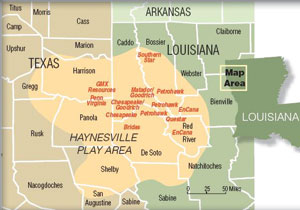 The Haynesville Shale, found in East Texas and Louisiana, last week surpassed the Marcellus for total number of active drilling rigs. That’s the first time the Haynesville has had more active rigs than the Marcellus since 2011–six years. What’s up with the “sleepy” Haynesville? It’s not so sleepy anymore. Last year one of the biggest and best drillers in the Marcellus, Range Resources, paid $4.4 billion to buy out and take over a Louisiana driller (see
  We have more evidence that a so-called “Conservative” environmental group, calling themselves Conservatives for Responsible Stewardship, is anything but conservative. Let’s strip the euphemisms away, shall we? Conservatives for Responsible Stewardship is a group of liberal Democrats pretending to be conservative Republicans. It is a pretense. A lie. How do we know? It all goes back to the budget bill passed by the Pennsylvania Senate. Republicans, which control both the House and Senate in Pennsylvania, passed an unbalanced budget of $32 billion. Problem is, there’s only $30 billion of projected revenue. So after passing the spending part of the budget, the legislature (i.e. Republicans) now have to “come up with” $2 billion to cover the difference. The pressure has been intense to punish the successful Marcellus industry by stealing even more of their money (PA already takes an overly generous portion of their profits). Senate Republicans caved to the pressure and floated a spending plan that includes a severance tax (see