
Potter Twp Declines to Approve Permits for Shell Cracker, For Now
 The Potter Township Board of Supervisors convened a public hearing on Tuesday afternoon at 3 pm that ended up going until 1 am Wednesday. The intent was to approve Shell’s request for permits to begin construction on the multi-billion dollar ethane cracker plant. That didn’t happen. Instead, the supervisors decided to hold another hearing Wednesday night. They did, and that hearing went for over an hour, in closed-door session. At the conclusion, the supervisors made a couple of requests from Shell, which Shell agreed to. However, the supervisors are still not ready to approve the permits and instead asked for more paperwork to be filed–by both Shell and the radical, anti-fossil fuel Big Green group Clean Air Council (from Philadelphia). It seems the antis are attempting to stop this project cold–which should have the good citizens of Beaver County (indeed the entire northeast) outraged. At any rate, we’re sure the permits will be forthcoming–but now it won’t happen until sometime in January…
Read More “Potter Twp Declines to Approve Permits for Shell Cracker, For Now”
 Stone Energy, an independent oil and natural gas exploration and production company (E&P) headquartered in Lafayette, Louisiana drills mainly in the Gulf of Mexico but also has (or rather had) a presence in the Marcellus/Utica Shale with 90,000 acres of leases. In October Stone announced (a) it is selling its Marcellus/Utica assets to Tug Hill for $350 million, and (b) the company is preparing to file for bankruptcy (see
  Keane Group is a Texas-based oilfield services company that provides fracking, wireline and top-hole air drilling services to oil and gas companies in the Marcellus/Utica as well as several other major basins. In January, Keane announced they were buying out Canadian-based Trican Well Service for $247 million (see
  The Pennsylvania Dept. of Environmental Protection is using an unspecified amount of grant money from the U.S. Department of Energy to fund a Penn State pilot project that combines a natural gas-fired electric plant with solar cell and battery energy storage systems in a hybrid system to power several office buildings, a sewage pump station and several Penn State training center facilities. The hope is to prove developing “microgrids” like this one can lead to a “low-carbon footprint.” Hey, at least they wised up and are using Marcellus natural gas (a hated fossil fuel) as part of their “low carbon” research. Here’s the details on the latest big money project, using taxpayer dollars, under way at Penn State…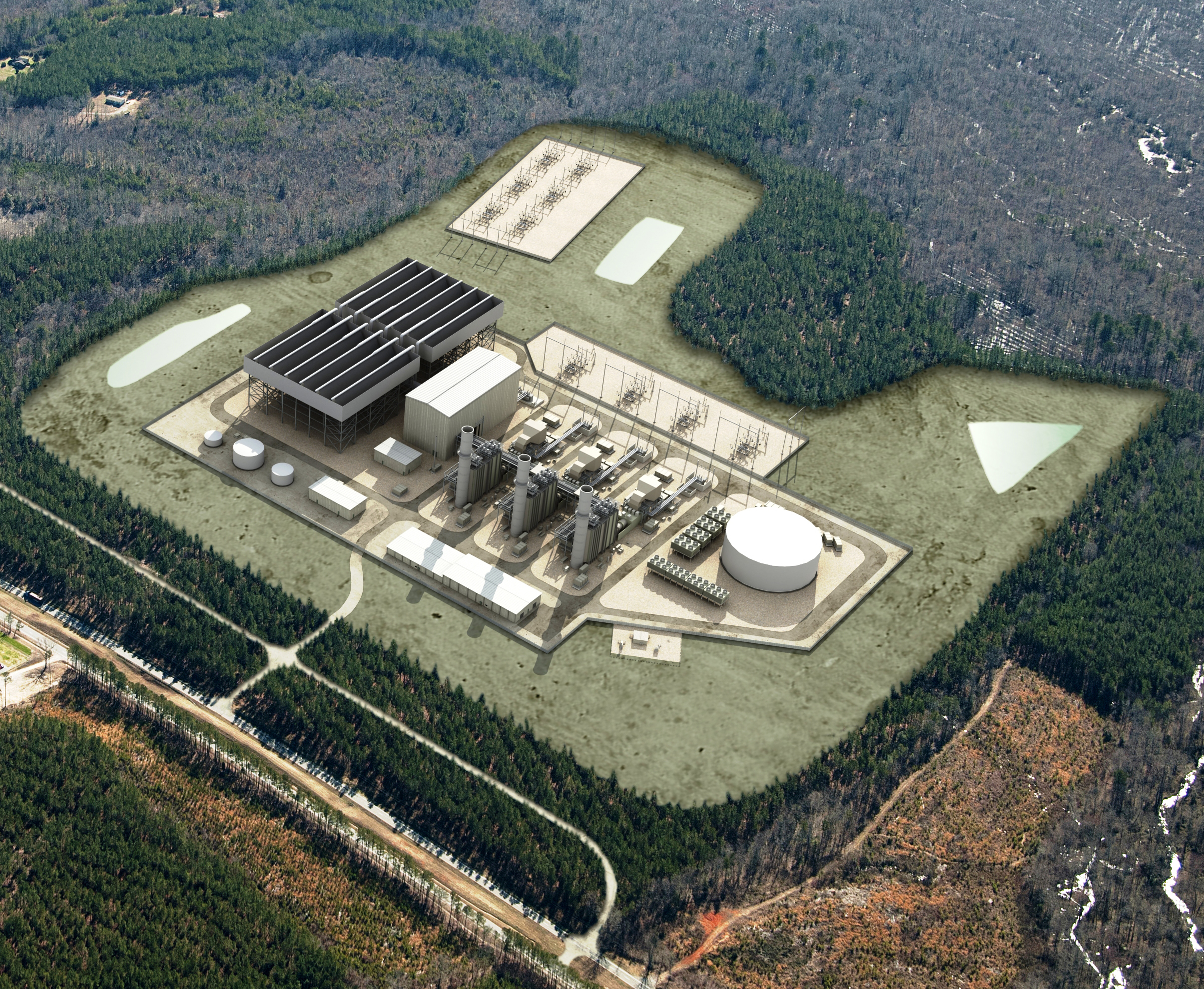
 Gulfport Energy is an Oklahoma City-based independent oil and natural gas exploration and production company (“driller”) with its main operations in the Utica Shale of eastern Ohio and along the Louisiana Gulf Coast. Gulfport is considered one of the Top 5 Utica drillers (see
  Our favorite government agency, the U.S. Energy Information Administration (EIA), yesterday released their annual report of proved oil and natural gas reserves in the United States for 2015. The report, titled “U.S. Crude Oil and Natural Gas Proved Reserves, Year-end 2015” (full copy embedded below) shows proved reserves for natural gas dropped by 64.5 trillion cubic feet (Tcf), or 16.6%. U.S. crude oil and lease condensate proved reserves also decreased–from 39.9 billion barrels to 35.2 billion barrels (down 11.8%). The drop in proved reserves for gas and oil comes after last year’s record high proved reserves (see
 Ever use the job site called
  The “best of the rest” – stories that caught MDN’s eye that you may be interested in reading. In today’s lineup: CONSOL focused on building Utica core; Wayne Natl Forest lease sales net $1.7M for taxpayers; proposed PA methane regs go way beyond fed standards; Mass. AG panicked over Exxon CEO becoming Sec State; protesters show up at Atlantic Coast Pipe expo–nobody notices; big non-profits corrupting America; improved drilling & completion lowers breakeven price; natgas storage whipsaws prices; and more!
 We now know that it’s possible to bribe people who work for the federal Environmental Protection Agency. That is, big money donors DO have a say in how “science” is presented by the agency. The one great, huge, towering problem that anti-drillers have is that there is no scientific evidence that supports their wild claims that fracking contaminates water–which is their favorite lie to spread. When the Environmental Protection Agency arrived at the same conclusion–fracking doesn’t pollute water–after four years of studying it, that really took the wind out of the sails of rabid fossil fuel haters (see
  As we mentioned in a story yesterday, the Bureau of Land Management proceeded with an online auction for BLM-controlled land in Ohio’s Wayne National Forest (see
  You may recall our story about the daughter of a Huntingdon County, PA landowner, radicalized by Big Green groups (as evidenced by her association with well known protesters previously arrested), who took to a tree on her mom’s property in order to illegally stop crews working on tree clearing for the Mariner East 2 pipeline (see
 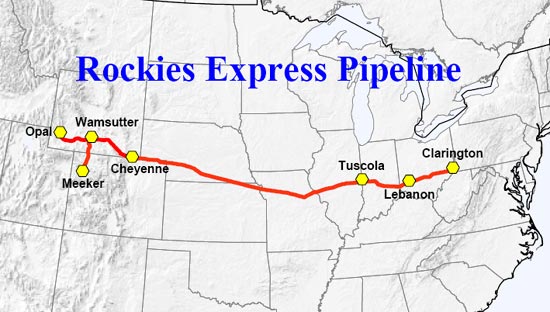 The Rockies Express Pipeline (REX), originally built from Colorado and Wyoming to Monroe County, OH to bring natural gas from west to east, last year reversed the flow for a large and important section of the pipeline. On August 1, 2015 the section of REX from Monroe County, OH to Mexico, MO reversed the flow and began to carry 1.8 billion cubic feet per day (Bcf/d) of Utica and Marcellus Shale gas to the Midwest, including to the greater Chicago area. REX has been hard at work on plans to expand capacity even more by beefing up compressor stations along portions of the pipeline. REX filed a plan with FERC to add another 800 million cubic feet per day (MMcf/d) of capacity along the same portion of the reversed pipeline. In late November, the Federal Energy Regulatory Commission (FERC) gave REX the go-ahead to start additional compressors added at three locations along the route (see
 Headquartered in Houston, Texas, Exterran Corporation (with 5,400 employees) specializes in natural gas compression production equipment and processing facilities. They design, build and operate compressor stations and natural gas processing plants. In 2012 MDN reported on a contract Exterran won to build three natural gas processing plants in West Virginia (see