MDN’s Energy Stories of Interest: Tue, May 12, 2026
 MARCELLUS/UTICA REGION: Utica Shale Academy receives $50,000 award; Large-scale emergency drill tests county response; OTHER U.S. REGIONS: Venture Global signs new LNG supply deals with TotalEnergies, Vitol; Oglethorpe Power breaks ground on $3.3B Monroe natgas plant to meet rising demand; NATIONAL: U.S. natural gas futures settle higher; “Green Machine” targets plastics at consumer expense; CFACT presses utility giants on costly Green energy fence-sitting; Why the U.S. now dominates global LNG markets; INTERNATIONAL: Oil jumps as Hormuz crisis deepens; China LNG imports signal recovery; Carney moves to fast-track federal approval for major projects. Read More “MDN’s Energy Stories of Interest: Tue, May 12, 2026”
 Last week, the combined Marcellus/Utica Baker Hughes rig count remained at 37 active rigs for the seventh week in a row. The M-U’s chief competitor, the Haynesville, remained at 58 active rigs after adding two rigs two weeks ago, some 21 more than the M-U. Clearly, drillers are choosing to put their money into the Haynesville over the M-U. The national count added one rig last week and now operates 548 rigs.
  Ascent Resources, formerly American Energy Partners, was founded by Aubrey McClendon and is a privately held company that focuses 100% on the Ohio Utica Shale. Ascent, headquartered in Oklahoma City, OK, is Ohio’s largest natural gas producer and one of the largest natural gas producers in the U.S. The company issued its first quarter 2026 update last week. First quarter net production averaged 2,132 MMcfe/d, consisting of 1,838 MMcf/d of natural gas, 11,500 bbls per day of oil, and 37,589 bbls per day of natural gas liquids (NGLs), putting liquids at 14% of the overall production mix for the quarter.
  EOG Resources is one of the largest crude oil and natural gas exploration and production companies in the U.S., with proved reserves in the U.S. and Trinidad. The company bought and merged with Encino Energy’s extensive Ohio Utica operation last August, making EOG one of the largest drillers in the Buckeye State (see
  It’s been nearly a year since we last wrote about WhiteHawk Energy (now undergoing a rename to WhiteHawk Minerals), a natural gas mineral and royalty interest owner in the Marcellus and Haynesville plays, with over 3.4 million gross acres under lease for drilling (see
  In March 2025, the Wall Street Journal reported that Shell is “exploring a potential sale of its chemicals assets in Europe and the U.S.,” which includes the Monaca (Beaver County, PA) ethane cracker complex (see
 The Marcellus/Utica region received 19 new drilling permits last week, Apr. 27 – May 3, up from the 12 permits issued two weeks ago. Pennsylvania issued 5 of last week’s permits. Ohio issued the lion’s share, with 13 new permits (four of which were from two weeks ago). West Virginia issued just 1 new permit last week. The drillers who received new permits included: Ascent Resources, Campbell Oil & Gas, CNX Resources, EOG Resources, Gulfport Energy, and Range Resources.
  In February, MDN brought you the big news that Devon Energy is buying out and merging with Coterra Energy, paying $21.4 billion in Devon stock (see
  You have to hand it to Dominion Energy, the company has brass… courage. In June 2023, Dominion announced plans to build four small “peaker” electric generating plants in Chesterfield County near Richmond (see
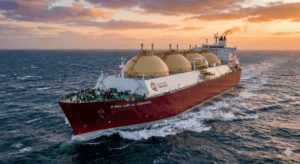 Kinder Morgan’s Elba Island LNG, which accepts and liquefies Marcellus/Utica molecules just offshore from Savannah, Georgia, received approval from the Federal Energy Regulatory Commission (FERC) in November 2024 to expand the facility to produce an extra 0.4 million metric tons/year (see