
Qatar Shuts World’s Largest LNG Export Plant, Europe Gas Soars 85%
 Although the Iran war has caused shipping, including oil shipping, to temporarily stop through the Strait of Hormuz, the bigger story is how the war currently is, and will continue to, affect the price of natural gas around the globe. Yesterday, QatarEnergy announced it is suspending production at the world’s largest LNG export facility following attacks by Iran. Qatar accounts for 20% of global LNG capacity, so its decision removes 20% of the market’s LNG supply for now. It represents the most significant market shock since Russia’s invasion of Ukraine in 2022. Dutch TTF Natural Gas Futures (the European benchmark, like our own Henry Hub) for April 2026 have surged 85% since Friday, trading near €59.62 following a 33.97% jump earlier today. Read More “Qatar Shuts World’s Largest LNG Export Plant, Europe Gas Soars 85%”
 U.S. LNG exporters are scrambling to capitalize on a 50+ percent price surge in European and Asian markets following an Iranian drone attack that halted production at Qatar’s massive Ras Laffan plant. Leading U.S. exporters like Venture Global and Cheniere Energy are maximizing output (squeezing every extra molecule out they can from existing plants) and rerouting cargoes to meet global shortages. While the U.S.’s flexible export contracts provide critical market stability, experts warn that American capacity cannot fully replace Qatar’s lost volumes, which account for 20% of global supply. Unless production resumes shortly, the world faces a more severe energy crisis than the 2022 Russian gas shock.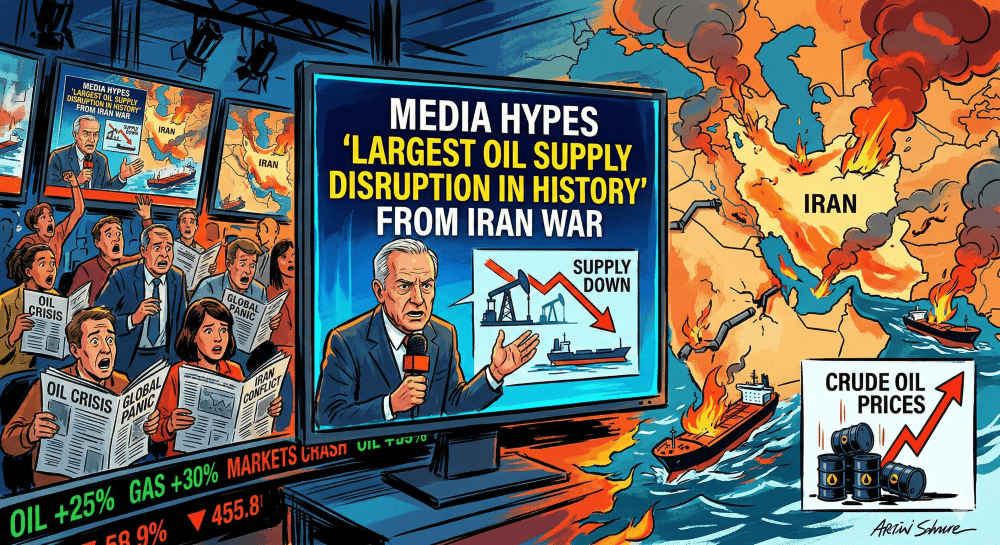
 OTHER U.S. REGIONS: Venture Global announces LNG purchase agreement with Trafigura; NATIONAL: U.S. natural gas futures post moderate gains; Science demands we overturn the ‘Endangerment Finding’; U.S. NGLs hit record 7.5 MMb/d production on ethane-driven gains; INTERNATIONAL: Crude jumps on Iran war escalation; Hopes for Suez Canal revival dashed; Saudis pulled deeper into war after new Iranian strikes; Nuclear reactor restart in Japan will likely displace natgas powergen; Naftogaz to import US LNG via Lithuanian terminal; The gas price shock will expose Britain’s catastrophic energy misjudgment; For oil prices, it’s the fear not the barrels.
 On Friday, Baker Hughes reported that the U.S. rig count lost 1 rig and now stands at 550 active rigs. Three weeks ago, the Pennsylvania Marcellus added a rig, bringing PA’s total to 20 active rigs, the most it has operated in well over a year. PA kept its new/higher total last week. Both Ohio and West Virginia remained at 13 and 7, respectively. The combined M-U count was 40 rigs last week, the most operated rigs in well over a year, now for a third week in a row. The M-U’s primary competitor (for attention and money), the Haynesville, continues to operate 52 rigs (12 more than the M-U).
  Quantum Pleasants has successfully completed a year-long validation of its Omnis Quantum Reformer (OQR) technology at the Pleasants Power Station in West Virginia. This breakthrough ultra-high-temperature pyrolysis technology produces hydrogen on-site at half the cost of existing methods by utilizing the state’s coal and natural gas resources. Independent evaluations confirmed the system’s safety and economic viability, paving the way for the 1,300 MW facility to become the world’s first large power plant to operate on 100% hydrogen fuel. Right here in the heart of the Marcellus/Utica!
  Marking the tenth anniversary of U.S. liquefied natural gas (LNG) exports, European Union (EU) and American officials convened in Pittsburgh on Friday for an all-day conference, “EU-U.S. LNG Cooperation 2.0,” which was held at the Heinz History Center. The purpose of the meeting was to reinforce a critical strategic energy partnership. Since the first shipment in 2016, and accelerated by Russia’s invasion of Ukraine, U.S. LNG has transformed European energy security by enabling a dramatic shift away from dependence on Russian gas. As Europe seeks to eliminate Russian gas entirely, the U.S. has become the world’s leading exporter.
  The proposed $58 billion merger between Devon Energy and Coterra Energy is under scrutiny by the U.S. Department of Justice (DOJ) over “shale market dominance.” The key problem is: how does the DOJ define a “market” that may be dominated? What, exactly, is a market? Critics argue that the DOJ’s narrow market definitions—mirrored in its antitrust case against Visa—ignore broader competitive realities and existing regulations, such as the Durbin Amendment. While the Devon/Coterra merger increases shale concentration, natural gas remains a singular, competitive (much broader) market regardless of extraction methods. By applying outdated antitrust frameworks, the government risks stifling innovation and weakening companies’ ability to compete globally. Ultimately, rational policy must reflect modern market dynamics to avoid economic stagnation and the fragmentation of viable industries. So says author (and lawyer) Daniel Markind.
 The Marcellus/Utica region received a combined 17 new drilling permits last week, Feb. 16 – 22, way down (by 26) from the 43 permits issued two weeks ago. To be fair, 43 permits was one of the highest in recent months, so a slide was expected. What wasn’t expected was that Pennsylvania issued just a single (1) new permit. Ohio issued 8 permits, and West Virginia issued 8 as well. The drillers receiving new permits last week included: Antero Resources, Arsenal Resources, Ascent Resources, Gulfport Energy, and Infinity Natural Resources.
  Coterra Energy issued its fourth quarter and full-year 2025 update yesterday. For this latest update, there was no earnings conference call with analysts due to the impending merger of Coterra into Devon Energy. Companies don’t want to face questions about the merger or risk screwing it up, so they keep mum. Can’t blame them. What we noticed about Coterra’s 4Q update is that the company continues to treat its Marcellus gas production as a cash cow to fund oil drilling in the Permian Basin. Even so, we were encouraged to see an increase in the number of new wells drilled in 4Q and for full-year 2025, although Marcellus production slipped in 4Q and for full-year 2025 relative to 2024. Call it maintenance mode.
 PJM Interconnection recently proposed reforms to its retail BTM (behind-the-meter) generation rules to support data center colocation. The filing, responding to a FERC mandate, introduces a 50-MW threshold for BTM facilities and three new transmission service categories. Under the plan, new loads exceeding 50 MW would be ineligible for “netting,” a process that currently lowers grid charges by balancing on-site generation against consumption. While existing contracts are grandfathered, industrial trade groups warn that removing netting rules threatens the economic viability of combined heat and power facilities, potentially discouraging manufacturing investments while aiming to address regional grid reliability and grid cost-shifting concerns.