
M-U Rigs Realign: PA Stays @ 20, OH Drops 2 @ 11, WV Adds 1 @ 8
 Last week, the Marcellus/Utica saw a realignment in rig counts, at least in Ohio and West Virginia. Pennsylvania kept the 20 rigs it has had since early February. Ohio lost two rigs, from 13 to 11, the fewest active rigs in the Buckeye State since last September. And perhaps the biggest news was that West Virginia picked up one rig, from 7 to 8 rigs, for the first time since last May! Overall, the M-U region had a net loss of one rig last week, going from 40 to 39 active rigs. The M-U’s biggest competitor, the Haynesville, gained one rig, from 52 to 53 rigs, some 14 rigs more than the M-U. It wasn’t all that long ago that the M-U ran more rigs than the Haynesville. Read More “M-U Rigs Realign: PA Stays @ 20, OH Drops 2 @ 11, WV Adds 1 @ 8”
 Ascent Resources, formerly American Energy Partners, was founded by Aubrey McClendon, a gas industry legend, and is a privately held company that focuses 100% on the Ohio Utica Shale. Ascent, headquartered in Oklahoma City, OK, is Ohio’s largest natural gas producer and one of the largest natural gas producers in the U.S. The company issued its fourth quarter and full-year 2025 update last week. The company plans to expand its 2026 drilling program, increasing land spending by 40% to nearly $225 million. The company aims to strengthen its long-term inventory and supply natural gas to power-hungry Appalachian data centers.
 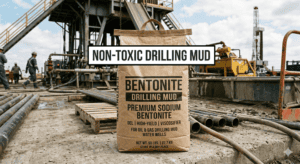 If a tree falls in a forest and no one is around to hear it, does it make a sound? Similarly, if a pipeline being drilled loses 28,500 barrels (1.2 million gallons) of nontoxic drilling mud into an abandoned coal mine void, does it matter? The environmental left is attempting to make a big deal out of MarkWest Liberty Midstream’s drilling project in Washington County, PA, in which the company has, over a series of 19 different episodes, lost a cumulative 28,500 barrels of nontoxic bentonite drilling mud into an old coal mine void as it drilled the Chiarelli to Imperial Pipeline Project, between October 2025 and January 2026. Bentonite is the same stuff used to make kitty litter and toothpaste.
  Thanks to the work of David Hess at the PA Environment Digest Blog in tracking Department of Environmental Protection (DEP) notices published in the Pennsylvania Bulletin, we spotted three new water pipeline projects related to drilling new shale wells in three different northeastern PA counties: Lycoming, Bradford, and Wyoming. Water is used for fracking. New water pipelines mean new fracking is on the way in those locations.
  Just coming to light now, more than a month after it happened, the Pennsylvania Department of Environmental Protection (DEP) is investigating whether there is any connection between a low-level earthquake (“seismic event”) near Murrysville in Westmoreland County, PA, and the Penneco Environmental Solutions LLC Sedat 3A injection well in Plum Borough in Allegheny County. Operators of injection wells in PA are (usually) required to maintain on-site seismometers. On Feb. 7, the seismometer at the Penneco Sedat 3A site registered a “seismic event” about six miles away near Murrysville.
 OTHER U.S. REGIONS: An oil company quietly dug a surprisingly deep geothermal well; NATIONAL: U.S. natural gas futures gain on global energy turmoil; Repeal of 2009 endangerment finding is major milestone in Clean Air Act history; The asymmetric advantages of environmentalist zealotry; Energy security matters now more than ever; INTERNATIONAL: Crude closes near $91 after historic rally; Analysts see ‘significant yet short lived’ oil price rallies; War sees energy exporters scramble for routes out of Gulf; European natural gas prices soar again; Qatar LNG outage erases 2026 supply surplus, Morgan Stanley says.
  The Marcellus/Utica region received a combined 11 new drilling permits last week, Feb. 23 – Mar. 1, down 6 from the 17 permits issued two weeks ago. Pennsylvania issued 10 of the 11 new permits. West Virginia issued the other permit. Ohio got skunked last week. The drillers receiving new permits last week included: Antero Resources, CNX Resources, EQT, JKLM Energy, and STL Resources.
  Hope Gas is a Local Distribution Company (LDC, i.e., utility company) that provides gas service to approximately 140,000 residential, industrial, and commercial customers in 39 West Virginia counties. The company monitors and maintains over 7,000 miles of pipelines that safely deliver West Virginia natural gas to many homes and commercial and industrial sites. In September 2023, Hope Gas asked the West Virginia Public Service Commission for permission to build a new 30-mile pipeline in Monongalia County (see
  A Syracuse University study (full copy below) reveals that conventional oil and gas extraction in Pennsylvania poses a greater long-term threat to stream biodiversity than modern shale fracking. By analyzing over 6,800 aquatic samples, researchers found that legacy infrastructure (old conventional oil and gas wells) is more strongly linked to declining ecosystem health and the loss of sensitive species. While public concern often centers on newer fracking methods, these findings highlight the persistent impact of older, conventional wells. The study, titled “
 Big Solar, as in big solar farms (which are ugly and eat up farmland), can’t exist in a fair and open energy market. It’s too expensive. Big Solar fails unless there are massive taxpayer subsidies—you supporting it with your tax dollars. Nowhere is that more evident than what just happened in Centre County, Pennsylvania. The Centre County government agencies that had worked together for years on plans to buy solar energy are ending the initiative after the company they were working with sought to end the current contract amid a “changing financial landscape.” Taxpayer subsidies disappeared, and so, too, has this project.
  We won’t bore you with links to numerous stories we’ve written pointing out how the environmental left has pivoted from anti-fracking to anti-data center. We believe we were one of the first to make that observation (about a year ago). At any rate, one of the worst of the worst “environmental” organizations, Food & Water Watch (FWW), has all but abandoned its anti-fracking work to focus on opposing and blocking AI data centers. It’s absolutely, positively, anti-progress (not to mention anti-American). FWW’s latest campaign is aimed at convincing Congress and state legislatures (like Pennsylvania) to pass a three-year moratorium on building new data centers.
  The 2026 International Energy Agency (IEA) Ministerial Meeting marked a significant turning point as the U.S. demanded a shift from climate-focused advocacy toward “energy realism.” Energy Secretary Chris Wright threatened withdrawal unless the Agency prioritizes energy security over aspirational Net Zero scenarios. And he did so as IEA’s corrupt leader, Dr. Fatih Birol, sat just a few feet away. Wright’s pressure led the IEA to reinstate its “Current Policies Scenario,” acknowledging that fossil fuel demand may grow through 2050 despite transition efforts. As the Agency expands with new members like Colombia, it faces a mandate to align its data-driven research with real-world energy addition rather than idealized transitions, ensuring its continued relevance to global energy investment and security.
  The Pennsylvania Independent Oil & Gas Association (PIOGA) is the comprehensive trade association representing nearly 400 members across Pennsylvania’s oil and natural gas industry. Tracing its roots to 1918, it serves as a unified voice for shale and conventional producers, service companies, and distributors. PIOGA will host its
  Despite a “public outcry” (of 13 people), the Chesapeake City (Virginia) Council voted 6-3 last July to approve a compressor station for Virginia Natural Gas (see