
Anti-Drilling/Fossil Fuel | Industrywide Issues | Landfills | Litigation | New York | Steuben County
Antis Fabricate Data in Attempt to Block NY Landfill Expansion
 Is anyone shocked at the audacity of anti-fossil fuel groups like the Sierra Club to simply manufacture (make up, out of nothing) new “data” with wild claims of radioactivity in order to block a New York landfill from expanding to accept more PA drill cuttings from shale sites? We aren’t.
Read More “Antis Fabricate Data in Attempt to Block NY Landfill Expansion”
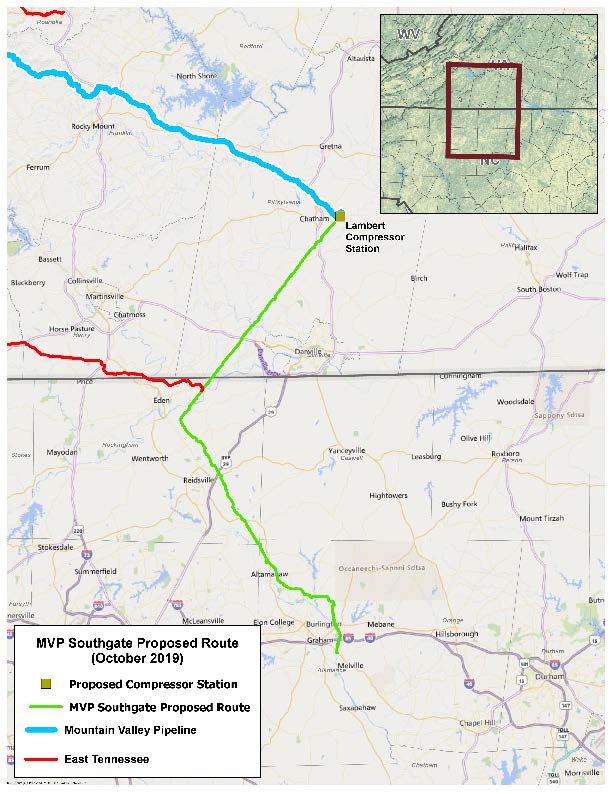
 A U.S.-based compressor station facility had to shut down operations for two days after sustaining a cyber attack that prevented personnel from receiving crucial real-time operational data from control and communication equipment, according to the Dept. of Homeland Security. We do not know if the compressor was located in the Marcellus/Utica or another shale play. We do know this is a serious–and an increasing problem. We consider it cyber terrorism.
 MDN is proud to partner with Petrochemical Update, now owned by Reuters Events, to promote the forthcoming
  OTHER U.S. REGIONS: Texas regulator calls out state’s worst, best companies for natural gas flaring; NATIONAL: Ted Cruz torches Bernie Sanders, Ocasio-Cortez’s bill to ban fracking; Colder weather outlook lifts nat gas to highest finish in four weeks; The rise of distributed natural gas generation; INTERNATIONAL: These kids need oil and natural gas: 325 million children live on less than $2 a day.

 Pennsylvania Democrats are complaining about State Senate Republicans using a political tactic against the Dems that they themselves use. Which we find hilarious. We’re referring to a recently passed House Bill (HB) 1100, a bill to encourage new petrochemical plant investment in PA (see
  Bills aimed at clamping down on illegal pipeline protests (which pretending to be free speech but aren’t) have been introduced in both the Ohio and West Virginia legislatures. In WV, House Bill (HB) 4615 passed the House last week and is now under active consideration in the WV Senate. In Ohio, Senate Bill (SB) 133 was passed last May. The bill was recently reported out of a House committee and likely to see a full House vote soon. It’s obvious that regular folks are tired of radicals and their illegal attempts to block pipeline projects.
 More obsessing and hand-wringing over the low price of natural gas (we can’t help it!). Our favorite government agency, the U.S. Energy Information Administration (EIA) published a post on Friday that points out the NYMEX price of natural gas has hit its lowest level for a February day in the past 20 years, closing at $1.77/MMBtu on Feb. 10 (up slightly since then). EIA also points out these are the lowest absolute prices (for any day in any month) we’ve seen in the past four years–since the price crash of 2016. Again, the price crash is happening in February! Yuck.
 In the space of a little over 10 years natural gas has gone from “climate hero” to “climate villain.” In no small part the change has come due to huge amounts of money spent by disgusting Big Green groups like the Sierra Club, Food & Water Watch, NRDC, EDF and others. We’d guess if you were to ask most Americans, they would say fossil fuels (like natural gas) will be replaced “soon” by electricity–not knowing natgas is the single largest source of generating electricity! At the Winter Policy Summit of the National Association of Regulatory Utility Commissioners (NARUC) last week, a standing-room-only crowd filled a session moderated by former FERC Commissioner Cherly LaFleur on the topic of how soon the electric sector (along with other sectors) will “wean off gas” here in the United States.
 Believe it or not, today is a New York Stock Exchange holiday (i.e. bank) holiday. MDN rarely takes a day off, so we tend to track with those holidays observed by the NYSE. Have no fear, we are monitoring the news and if anything earth-shattering happens, we’ll bring you the latest. Otherwise, look for full-strength MDN to return tomorrow. In the meantime, we have issued the weekly calendar of events.
 Antero Resources, one of the biggest Marcellus/Utica drillers (with major operations in West Virginia) released its fourth-quarter and full-year 2019 update yesterday, along with hosting a conference call to discuss what investors can expect for 2020. There are loads of important details to share. Production was up 19% in 2019 over 2018. The company lost $482 million in 4Q19, compared to a $122 million loss in 4Q18. However, $463 million of the loss was an impairment charge (write-down) of Antero’s ownership interest in its midstream subsidiary (i.e. paper loss). Looking forward to 2020, the company plans to cut spending by 10% this year (spending $1.15 billion) and plans to make some layoffs. Antero plans to drill 95-100 wells and complete 120-130 wells this year.
 In September 2018, MDN brought you the news that six men had been charged with conspiring to illegally alter emissions systems on 30+ trucks with heavy-duty diesel engines, trucks used to haul water and wastewater to and from Marcellus Shale wells (see