
FERC Gridlock Coming Thx to Rob Powelson (Selfishly) Leaving
 Our sadness that Federal Energy Regulatory Commission (FERC) Commissioner Rob Powelson is leaving is quickly turning to anger–against Powelson. In June we told you that Powelson will be leaving FERC in mid-August (see Sad News: FERC’s Rob Powelson (from PA) Resigns Effective August). Powelson has been a breath of fresh air and a strong proponent for pipelines. He’s a former utility regulator from Pennsylvania. Smart guy. Nice guy. And now, a selfish guy. It’s predictable and unsurprising that the two Democrats on FERC have sold out to radical elements in their own party and now vote against every new pipeline project that comes along, using mythical man-made global warming as the excuse. With Powleson leaving in August, gridlock will ensue. It’s easy to predict a a string of 2-2 decisions coming, which means important projects will not get approved in a timely manner. Powelson is leaving to further his own career. While we can appreciate that, we think there’s a higher calling for Powelson–to stick around and ensure important projects are not delayed by gridlock. Powelson needs to “take one for the team” and put his own ambitions aside for another year or two. If a string of important pipeline projects are delayed because Powelson leaves, he won’t be remembered fondly. “But,” you may ask, “won’t President Trump just quickly replace him?” “Quickly” is the operative word there. The rumor mill is already in overdrive on who Powelson’s replacement will be. However, most experts who watch this space are predicting the earliest Trump will be able to get someone seated at FERC will be in early 2019. And maybe longer. Meanwhile, important pipeline projects will be in limbo. And that makes us grumpy with Mr. Powelson…
Read More “FERC Gridlock Coming Thx to Rob Powelson (Selfishly) Leaving”
 If this doesn’t beat all. In an explosive expose from NBC News (yes, NBC News), some of the biggest names in the Big Green movement, including some in the Marcellus/Utica region, are secretly investing in oil and gas companies while at the same time demanding that banks, investment firms, pension funds, state governments and others divest from the same companies they invest in! In one case, the tax-exempt William Penn Foundation, which backs rabid anti-fossil fuel/divestment groups like THE Delaware Riverkeeper and the Philadelphia-based Clean Air Council, actually invests in (yes) oil and gas companies. The profits from William Penn’s fossil fuel investments are then used to fund groups attacking fossil fuel companies. Mind boggling. It’s yet another case of “do what I say, not what I do” when it comes to the left in this country. We’re just amazed that NBC (a big fake news organization) actually reported it…
 The “best of the rest”–stories that caught MDN’s eye that you may be interested in reading: PA health officials hand out potassium iodide pills to those living near nuke plants; Luzerne County can’t find enough uses for shale impact fee money; Marcellus industry finding it hard to fill some jobs; Senators support DOE small-scale LNG export regs; Big Oil rewards shareholders; new horizontal directional drilling software from Technical Toolboxes; oil majors are stepping up their natgas game; use gas flaring to pull water from the atmosphere; Halliburton buys chemical company; Google thinks it can better manage o&g data than o&g companies can; Cuadrilla gets OK to frack first well in UK; and more!…
 Anti-fossil fuel nutters are on a holy mission to stop a 3.5-mile, 8-inch pipeline from being built under the Potomac River by Columbia Gas, from Maryland to West Virginia (see
  One of the oft-repeated canards by antis is that having a drill pad near you, or a pipeline crossing your property, will devalue (lower the value) of your property’s assessment and worth. If you want to sell the property you won’t get as much for it–if you can sell it at all. Who wants to live near a big, ugly drill site, or have an “explosive” pipeline running near the house? Except you can’t even see a drill pad from more than a few hundred feet away after the wells are drilled, and when the pipeline is in the ground and replanted over the top of it–you don’t see or even think about it. Let’s take the later case, of pipelines. Is there evidence that when a pipeline passes through your property, the value goes down? According to property assessors in West Virginia, the answer is “no.” At least not in the short term. Longer term, they say, will have to be watched. IF there are more incidents like the landslide that caused the Leach XPress pipeline to explode, maybe there will be an impact on assessments. But then, if you live in an area where there are frequent landslides, you have bigger valuation problems than a pipeline running through it…
 It takes a long time to build a natural gas-fired electric power plant–especially a big one. We began writing about one of the largest coal-to-gas conversion projects in the country, happening in the heart of PA Marcellus country, back in February 2014 (see
  The outspoken Bill Siderewicz, builder of a string of gas-fired electric generating plants in Ohio and elsewhere, is (surprise!) speaking out. Siderewicz, president of Boston-based Clean Energy Future, is the builder of the Lordstown Energy Center in Trumbull County, a project begun in 2016 and now nearing completion (see
  Northeast Natural Energy (NNE) is a small-to-midsized driller headquartered in Morgantown, WV. It’s a young company, drilling its first shale well in 2013. In April 2017 MDN reported that NNE had obtained $300 million of investment from two investment firms (see
  Although headquartered in Radnor, Pennsylvania (near Philadelphia), Penn Virginia Corporation is an oil and gas driller with (at last check) only a small presence in the Marcellus Shale: 21,700 net acres with no drilled wells. They concentrate on oil drilling the Texas Eagle Ford Shale play. Penn Virginia is one of the Philly area’s oldest companies, started in 1882 by Philadelphia coal barons. It later transitioned into an oil company. MDN told you in March 2015 that Penn Virginia’s top stockholder, the vile corporate raider George Soros, forced the company to put itself up for sale so George can line his pockets with more cash (see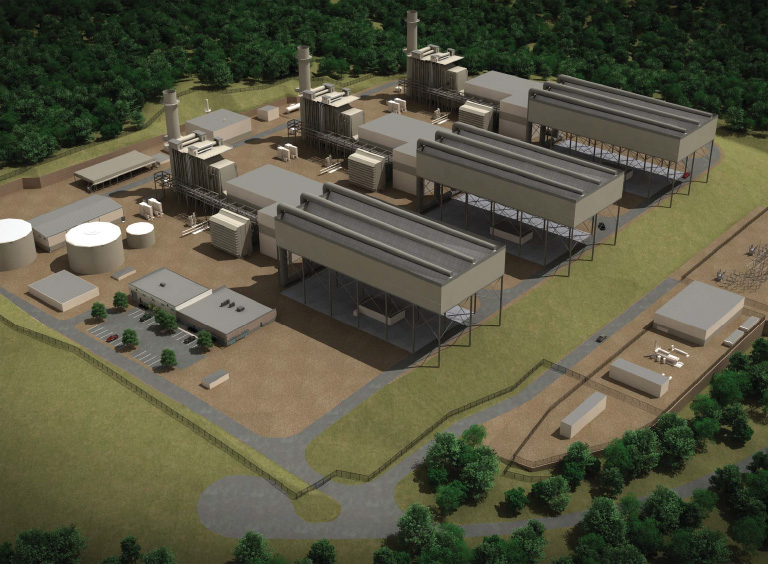
 In July 2012, the PA Department of Environmental Protection (DEP) announced a one-year study that will look at impacts on air quality from Marcellus drilling and the infrastructure (pipelines and compressor plants) that comes with shale gas drilling (see
  You don’t often read about pipeline projects that seek to flow more Pennsylvania Marcellus gas into the Ohio Utica region. In January, Dominion Energy filed a request with the Federal Energy Regulatory Commission (FERC) to expand capacity along the existing Dominion Energy Transmission Inc. (DETI) pipeline from Pennsylvania to Ohio (see
  In August 2016, Millennium Pipeline, which stretches from Corning, NY to just outside New York City, filed an application for what it calls its Eastern System Upgrade (see
  The Marcellus/Utica region produces a prodigious volume of ethane, a “natural gas liquid” (NGL) that comes out of the ground along with methane. That’s a good thing and a bad thing. It’s good because that ethane can be cracked (chemically) to produce ethylene–or raw plastics. It’s bad because we don’t have any crackers, currently, in our region–and just a small volume of our ethane travels via pipeline to the Gulf Coast or Canada for cracking. So right now ethane is a waste produce for most Marcellus/Utica drillers–something that costs money to dispose of. Shell is currently building a $6+ billion cracker in Monaca (Beaver County), PA, which will go online sometime after 2020. PTT Global Chemical is seriously considering, some say will finally commit, to building our region’s second cracker project in Belmont County, OH. At the Appalachian Storage Hub Conference held in Southpointe in June, an expert said we will see three more cracker plant projects announced within the next 12 months (see