
EQT Hits “Net Zero” for Scopes 1 & 2 Second Year in a Row

EQT Corporation, the largest Marcellus/Utica producer by the volume of M-U-specific molecules produced, published its 2025 Sustainability Report, titled “Built for What’s Next,” yesterday. According to the announcement and the report, this is the second consecutive year EQT has sustained “net zero” Scope 1 and Scope 2 greenhouse gas emissions across its upstream operations. What, exactly, does that mean? We’ll say right up front that we’re not fans of net zero nonsense. However, shale drillers (and pipeline companies) must engage in the market as it is, not as we’d like it to be. If customers (utility companies, power companies, etc.) insist on buying natural gas from “low carbon” and “net zero” producers and transporters, then we have to play along. Read More “EQT Hits “Net Zero” for Scopes 1 & 2 Second Year in a Row”
 Despite rising Northeast gas demand from retiring coal plants and new data centers, plus added Appalachian pipeline capacity, production growth isn’t guaranteed—operators prioritize capital discipline, debt reduction, and shareholder returns over volume. Appalachia has held flat at roughly 33-36 Bcf/d since 2020. Can anything tempt Marcellus/Utica drillers to drill and produce more than they are now? According to RBN Energy, sustained Henry Hub prices above $4/MMBtu (versus the current $3.50-$3.60 long-dated curve) and better takeaway infrastructure could be enough of a temptation.
  Thanks to the work of David Hess at the PA Environment Digest Blog, which tracks Department of Environmental Protection (DEP) notices published in the Pennsylvania Bulletin, we know of two water pipeline projects (for EQT and Expand Energy) approved by the DEP related to drilling new shale wells in two different northeastern PA counties: Lycoming and Bradford. Water is used for fracking. New water pipelines mean new fracking is on the way in those locations.
  Diversified Energy and real estate firm Maverick Holdings have secured an option on 100 acres at Letcher County’s Gateway Industrial Park near Jenkins, aiming to use an existing natural gas compressor station to fuel an off-grid, 100-megawatt power plant that could attract data centers or manufacturers. The Appalachian Industrial Development Authority signed an 18-month joint development agreement in March, though some board members were asked to sign NDAs. Local officials remain cautiously optimistic, citing potential tax revenue and infrastructure funding, but stress the project is still in early, unproven stages.
  The Marcellus/Utica region received a piddly 7 new drilling permits last week, July 6 – 12, down 21 from two weeks ago. Last week, Pennsylvania issued just 1 new permit. Ohio issued 5 new permits. And, West Virginia issued 1 new permit. The drillers who received new permits included: Antero Resources (1), Expand Energy (3), and Gulfport Energy (3).
 Infinity Natural Resources announced the appointment of Timothy Dugan to its Board of Directors, effective July 13, 2026. Dugan brings more than four decades of experience in the Appalachian energy industry, spanning upstream operations, midstream infrastructure, capital allocation, and strategic transactions. He most recently served as President and CEO of Olympus Energy, leading its sale to EQT Corporation for $1.8 billion in July 2025 (see
 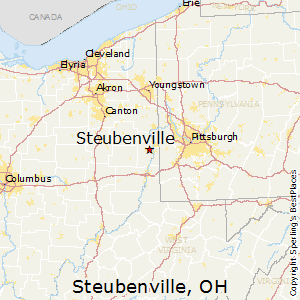 After months of deliberation, Steubenville (Jefferson County), Ohio, City Council voted to accept a bid and proceed with leasing the city’s mineral rights to the oil and gas industry, including areas near residential neighborhoods and Beatty Park. Some residents voiced strong opposition, citing threats to the park’s ecosystem, health concerns, and insufficient public involvement, urging the council to reject bids or form a resident-inclusive committee. Fourth Ward Councilman Royal Mayo voted against it, questioning fracking’s health effects. First Ward Councilman David Albaugh supported it, noting that surrounding areas are already fracked and that no well pad would be built in Steubenville. The money (over $1 million!) is expected within 90 days.
 In early May, Devon Energy completed its buyout of and merger with Coterra Energy, paying $21.4 billion in Devon stock (see
  In a recent interview with Bloomberg, EQT CEO Toby Rice declared that natural gas is poised to surpass petroleum as America’s top energy source by 2030, ending oil’s 75-year dominance that began in 1950 when it overtook coal. In 2025, gas accounted for 36% of U.S. energy consumption, compared with petroleum’s 37%, with Rice predicting a crossover within a couple of years. The shale revolution’s cheap gas has displaced coal in power generation, fueled economic electrification, and complemented intermittent renewables, while flat gasoline demand — partly due to EVs — has stalled oil consumption. The EIA projects gas demand growing 3.4% through 2027 versus 0.6% for petroleum, and booming LNG exports add further momentum.
  Following its May merger with Coterra Energy, Devon Energy is positioning AI as central to integration efforts while targeting $1 billion in annual pre-tax synergies by the end of 2027. The combined company—valued at over $60 billion with 1.6 million boe/d production—is concentrated in the Delaware Basin (70% of oil output), recently bolstered by a $2.6 billion New Mexico acreage acquisition, and includes Coterra’s 190,000-acre Marcellus position, which reportedly drew an $8 billion offer.
 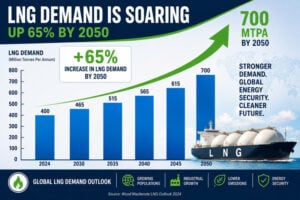 Shell, which dropped “Royal Dutch” from its name after leaving the Netherlands in 2022 due to high taxes and overregulation, is one of the world’s supermajors (oil and gas driller). Shell is also one of (perhaps THE) largest producers and vendors of LNG, or liquefied natural gas, worldwide. The company has just released its tenth annual LNG Outlook 2026 (full copy below), which highlights key trends in 2025 and hauls out the crystal ball to predict where things are heading over the next 25 years. Shell’s annual LNG outlook says shipping disruptions in the Strait of Hormuz from the Iran war—which shut in roughly one-fifth of global monthly LNG supply—could keep 2026 global LNG trade flat if flows normalize within three months, with growth resuming in 2027.
 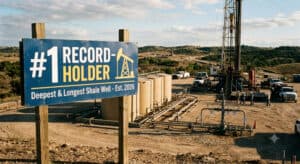 EQT Corporation, the largest driller in the Marcellus/Utica (based on M-U production), recently achieved two records with the same Marcellus well. EQT drilled not only the “deepest” shale well in the continental U.S. (by “measured depth”), but also the longest horizontal shale well (by lateral length). EQT’s Longwell 9H well, located in Wetzel County, West Virginia (near the Pennsylvania border), eclipses a record set by Expand Energy in 2025 in Marshall County, WV.