
Canada Should KEEP Its Natural Gas, Not Export It to U.S. for LNG
 This one makes us white-hot with anger. Our “cousins” to the north, who have bashed fossil energy repeatedly and have disrespected the Trump administration on numerous occasions, now want to export more of their natural gas to the U.S. so we can use it in our LNG exports to other countries. NO THANKS. You can keep your gas and stick it where the sun doesn’t shine. We have PLENTY of our own gas, and we could extract even more (from the Marcellus/Utica, other plays, too) if we had available pipelines to flow it. We don’t need or want Canadian gas that would displace existing molecules in our limited pipelines. Read More “Canada Should KEEP Its Natural Gas, Not Export It to U.S. for LNG”
 Norway’s Equinor (formerly Statoil) is expanding its U.S. shale gas footprint, specifically targeting the Marcellus Shale to increase “portfolio longevity.” This strategic move is part of a broader global reshuffling in which Equinor is divesting from mature assets in regions such as Azerbaijan and Nigeria to reinvest in high-growth areas. The U.S. remains Equinor’s largest international development hub, and the company aims to boost non-Norwegian production to 900,000 barrels per day by 2030. By focusing on non-operated positions in Appalachia and the Gulf of Mexico, Equinor is “high-grading” its portfolio to relocate capital toward more sustainable, long-term production assets.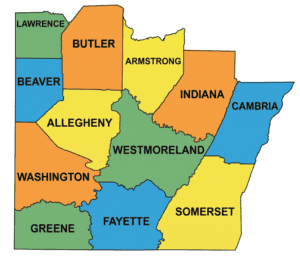
 In July 2022, MDN brought you news of a possible frac-out, or “inadvertent return” that happens when drilling mud pops out of places where it’s not supposed to — places outside the borehole being drilled (see
  Hull Street Energy (HSE) has entered an agreement to acquire two peaking power plants from Rockland Capital, LP, significantly expanding its Milepost Power portfolio. The acquisition includes the 677-megawatt (MW) Lee County Generating Station in Illinois and the 586-MW Tait Electric Generating Station in Ohio. Both facilities operate within the PJM electricity market, providing essential fast-start resources and grid stability amidst tightening supply-demand dynamics. Upon closing later this year, HSE’s total generation capacity will reach nearly 5,000 MW, establishing it as one of the largest private power producers in the United States.
 Dr. Kelvin Kemm is a South African nuclear physicist and past Chairman of the South African Nuclear Energy Corporation (Necsa). In an article on the Committee For A Constructive Tomorrow (CFACT) website, Kemm highlights a political exchange in which Senator John Kennedy exposed a climate advocate’s lack of knowledge about atmospheric CO2 concentrations. Kemm clarifies that CO2 levels are merely 0.04% of the Earth’s atmosphere, illustrating this with a 10,000-golf-ball analogy in which only one “yellow-dotted” ball represents human-added emissions since the 1860s.
 Last April, Knighthead Capital Management, Homer City Redevelopment (HCR), and Kiewit Power Constructors Co. announced a plan to convert the former Homer City Generating Station, previously the largest coal-fired power plant in Pennsylvania (Indiana County, 50 miles east of Pittsburgh) into a more than 3,200-acre natural gas-powered data center campus, designed to meet the growing demand for artificial intelligence (AI) and high-performance computing (see
  One of the great ironies of the Marcellus Shale is that THE TOP two natgas-producing counties in the state, Susquehanna (#1) and Bradford (#2), both of which are rural, don’t, for the most part, offer the gas extracted from under their residents to their residents for everyday use. It costs a lot of money to run local distribution pipelines to homes and businesses for natural gas. Leatherstocking Gas Company is on a mission to change that. Leatherstocking provides natural gas utility service in Susquehanna and Bradford to some 500+ customers. More customers will soon be added to Leatherstocking’s service in Wyalusing (Bradford County) following a recent PIPE grant.
  Connecticut’s Department of Energy and Environmental Protection (DEEP) has determined that Eversource Energy’s plan to install a natural gas pipeline through Hurd State Park and the Connecticut Valley Railroad State Park Trail requires a formal Environmental Impact Evaluation, unnecessarily delaying a tiny portion (1.1 miles) of a critically-important reliability project (34.5 miles long). This 16-inch pipeline, a segment of the Southeast Resiliency Project, is designed to provide energy redundancy and security for the region.
  The province of Québec, Canada, with a huge supply of Utica Shale gas sitting beneath it, passed a new law in 2022 outlawing all oil and natural gas production throughout the province, called Bill 21 (see
  Yesterday, the Trump administration announced “South Mon,” a $17 billion natural gas-fueled facility in southwestern Pennsylvania intended to expand domestic energy production. Part of a $550 billion trade deal with Japan, the hub will be operated by NextEra Energy Resources and generate 4.3 gigawatts (GW) of power. By tapping into the Marcellus and Utica shale regions and connecting to the PJM regional transmission network, the project aims to meet rising demand, lower energy costs, and create local jobs. South Mon is one of three major energy hubs planned nationwide to enhance power affordability and infrastructure across the Mid-Atlantic market.
 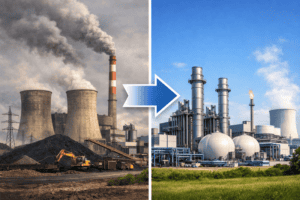 Eastern Shore developer TeraWulf has reached a deal to acquire the retired Morgantown Generating Station in Charles County (on the Potomac River), proposing to transform the site into a massive natural gas-powered data center campus. The plan aims to generate one gigawatt (GW) of power and 500 megawatts of battery storage, bypassing the aging regional grid. While TeraWulf claims support from Governor Wes Moore’s administration, the project faces intense scrutiny from environmental groups and local residents concerned about fossil fuel emissions and transparency. Critics also question the financial stability of the cryptocurrency-focused firm, though company leadership maintains they have the expertise to remediate the site.
  This is one of those “man bites dog” stories. When was the last time you heard about Democrat state legislators from one of the bluest of blue states voting to roll back funding for “green” programs in order to save money? Yeah, like NEVER. At least, until now. Funny how even Dems will throw their precious green philosophies out the window if their job (getting reelected) is on the line. That’s what is happening in Maryland.
  No one should be surprised that far-left Democrat Josh Shapiro, currently the Governor of Pennsylvania (but with a major passion to become President), joined his fellow radicals from other blue states in launching a lawsuit against the Trump administration for moving to eliminate the extremist “endangerment finding” concocted by Lord Obama and the Obamadroids of the EPA. Trump’s move to overturn the finding will save Americans roughly $3,800 each. Yet Shapiro and his fellow cabal members want to keep Americans poor and subservient (to them).