
Framing for 4.5-GW Gas-Fired Plant in Homer City Under Construction
 Homer City Redevelopment, LLC has reached a significant milestone with the commencement of vertical construction, known as “first steel,” at the Homer City Energy Campus in Pennsylvania. Following extensive foundation work, the project has transitioned to above-ground construction, starting with the Gas Insulated Switchgear building. This facility is currently the largest natural gas-powered energy project under construction in the United States, replacing a decommissioned coal plant. Read More “Framing for 4.5-GW Gas-Fired Plant in Homer City Under Construction”
 The Kosciusko Junction Pipeline Project, led by Gulf South Pipeline Company, LLC (a subsidiary of Boardwalk Pipelines), involves the construction of approximately 110 miles of 36-inch natural gas pipeline. The project has an estimated cost of $1 billion and is supported by a 20-year agreement with an anchor customer. It is designed to transport up to 1.16 billion cubic feet per day (Bcf/d) initially, with the potential to expand to 1.58 Bcf/d. The pipeline aims to connect gas supplies from key basins, including the Marcellus/Utica, Haynesville, and Fayetteville, to power markets in the Southeastern United States. In December 2024, Boardwalk pulled the trigger and made a final investment decision (FID) to move forward with the Kosciusko Junction project (see
  The Abu Dhabi (United Arab Emirates) investment group 2PointZero, via its subsidiary ePointZero, has agreed to acquire U.S. natural gas infrastructure firm Traverse Midstream Partners for $2.25 billion. This acquisition includes stakes in the Rover Pipeline and Ohio River System, which connect the productive Utica/Marcellus shale region to major demand centers and export hubs. Despite escalating Middle East geopolitical tensions and global energy disruptions, the deal underscores the UAE’s commitment to commercial partnerships with the United States.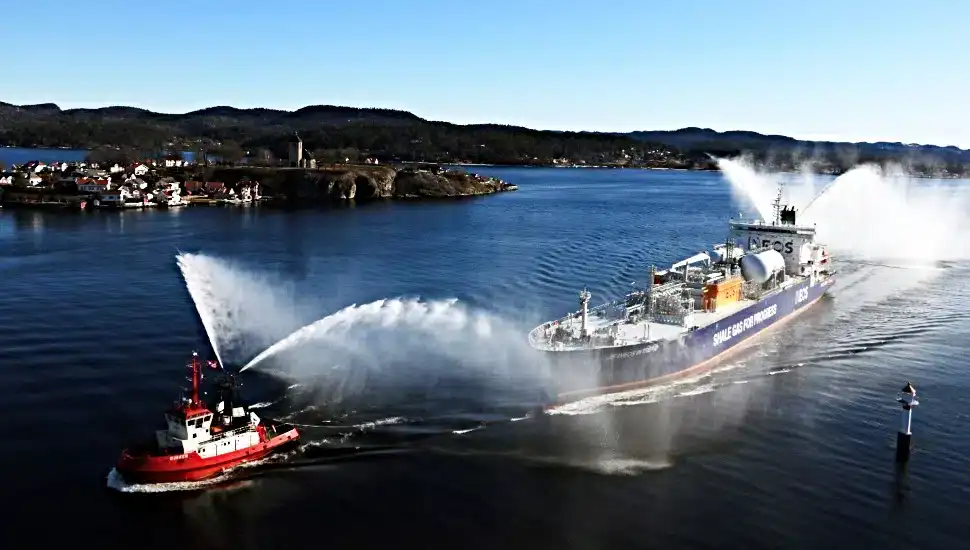
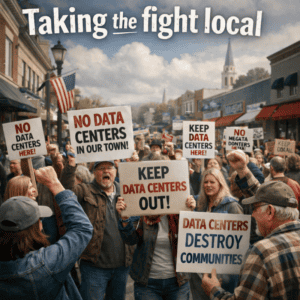 Anti-progress and anti-fossil energy Democrats in Pennsylvania are doing their darndest to try to block new AI data centers from getting built in the state. Just last week, the Democrat-controlled House passed a bill to block new data centers (see
  In January, MDN broke the news that Duke Energy is considering constructing a 1,360-megawatt natural gas power plant on 1,600 acres in Davidson County, North Carolina (see
  The Rockwood Area School District in Somerset County, Pennsylvania, has been awarded a $570,084 state grant to extend natural gas service to its facilities. The project will install around 15,100 feet of natural gas pipeline. Announced by State Representative Carl Walker Metzgar and Senator Pat Stefano (both Republicans), the funding comes from the Pipeline Investment Program (PIPE). The project is designed to replace the district’s current heating system (an old coal-fired boiler), effectively resolving the environmental issues caused by coal burning.
  Southwestern Pennsylvania voters chose poorly when they elected a Communist radical as their representative to the U.S. Congress: Democrat Summer Lee. She and two other far far far far far left radicals, Congresswoman Rashida Tlaib (Democrat from Michigan), and Congresswoman Adelita Grijalva (Democrat from Arizona), together just launched what they euphemistically call the People’s Environmental Justice Caucus in Congress. A better name is the “oil and gas is racist” caucus, an attempt to smear the oil and gas industry with the label of racism, claiming that O&G projects only get built in communities of color or where the residents are poor—people who (says Lee & co.) can’t fight back against the industry.
  CERAWeek 2026 was held in Houston, Texas, from March 23–27, 2026, focusing on “Convergence and Competition: Energy, Technology and Geopolitics”. The conference highlighted the accelerated pace of the “energy transition,” centering on energy security, skyrocketing AI power demand, infrastructure bottlenecks, and natural gas as a durable, competitive asset. In reviewing the reports published following CERAWeek, it’s obvious that natural gas was the belle of the ball.
 The ongoing saga of Eureka Resources’ now-closed frack wastewater treatment facilities in Pennsylvania — two in Lycoming County and one in Bradford County — continues to unfold. The PA Department of Environmental Protection (DEP) recently assessed two fines against Eureka for violations of cleanup deadlines at two of its facilities. One facility in Lycoming County was fined, and one in Bradford County. The fines were $60,000 and $40,000.
  In September 2022, MDN told you about a new 53-mile pipeline project in Western Kentucky — a 16-inch natural gas pipeline to feed natgas to the southern Pennyrile Region (see
 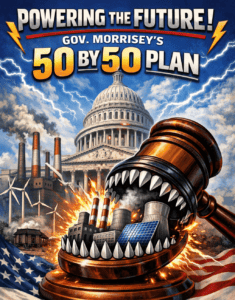 West Virginia Governor Patrick Morrisey is spearheading what he calls the “50 by 50” energy initiative, a plan for the state to grow its electric energy production from a current 16 gigawatts (GW) of generation to 50 GW by 2050 (see
 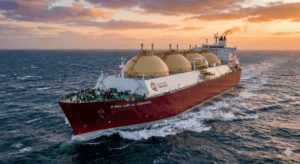 Two bits of LNG news to share with you, both of which affect the Marcellus/Utica because both use our molecules. Last Friday, Cheniere Energy announced that Train 5 at its Corpus Christi LNG expansion project is now operating at full capacity. Yesterday, Golden Pass LNG, a joint venture between QatarEnergy and ExxonMobil, produced its first LNG at its new facility. Golden Pass expects to begin exports early in the second quarter.