
U.S. & M-U Natural Gas Liquids Exports Hit Record Highs in 2025
 U.S. natural gas liquids (NGL) exports climbed 7% to 3.1 million barrels per day in 2025, fueled by high domestic production and rising global demand for petrochemical feedstocks. Ethane exports grew 19% due to new international cracker projects, while propane reached a record 1.8 million b/d, supported by significant growth in India. Butane also hit record highs, serving as a vital cooking and industrial fuel in emerging markets like Indonesia and India. While China and Canada remain top destinations, the United States continues to dominate the global market by leveraging low domestic prices to meet diverse international energy needs. NGL exports from the M-U region also hit a new record-high last year. Read More “U.S. & M-U Natural Gas Liquids Exports Hit Record Highs in 2025”
 The Ohio Oil and Gas Land Management Commission (OGLMC) voted on Friday to open more than 8,700 acres of public land, including an additional 513 acres under Salt Fork State Park and 8,236 acres under Egypt Valley Wildlife Area, for shale fracking. This move makes Egypt Valley the largest fracking project *under* (not on) state-owned land, despite vociferous public opposition from citizens and left-wing environmentalists. The next step in the process is to put the parcels out for bid.
  In a March 25, 2026, decision in the Omni Energy Group, LLC v. Ohio Department of Natural Resources court case, Judge Algenon L. Marbley from the U.S. District Court for the Southern District of Ohio dismissed Omni’s amended complaint regarding Class II injection well permits. Omni alleged that the ODNR unlawfully set injection pressures too low, rendering its multimillion-dollar investment in two injection wells inoperable. This case goes back to events that began in 2019, events we previously covered in a 2024 post (see
  Venture Global (VG) and Edison S.p.A., an Italian electric utility company headquartered in Milan, have signed a commercial agreement to fully resolve their pending arbitration regarding the Calcasieu Pass LNG project. Expected to conclude by the end of Q2 2026, the settlement terminates all legal disputes between the companies. As part of the deal, VG will deliver additional LNG cargoes to Europe, specifically targeting the Italian market through the Adriatic LNG Terminal starting in May 2026. This agreement strengthens their long-term partnership and enhances Italy’s energy security amidst global geopolitical disruptions.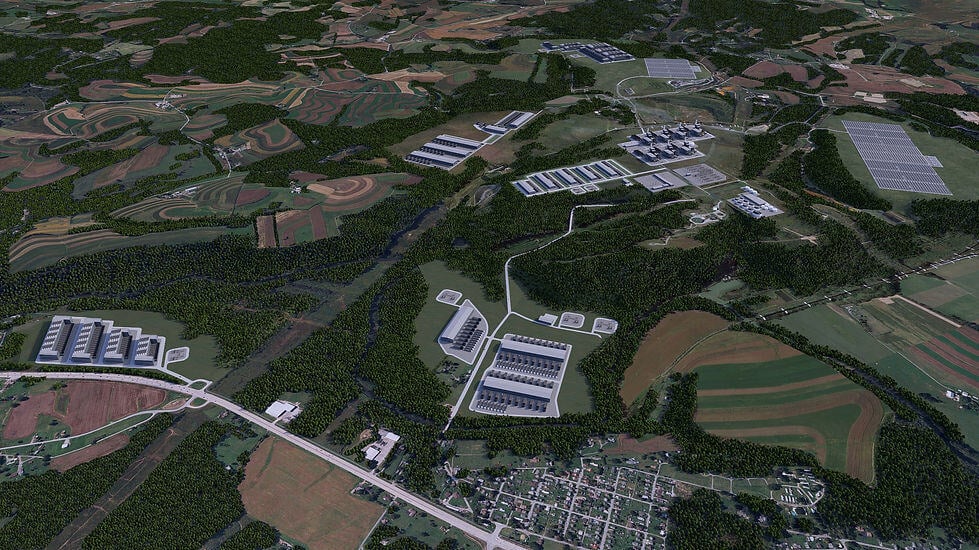
 Last week, we told you that a supposed “group of rural Ohioans” in Adams and Brown counties was seeking a constitutional amendment to ban data centers exceeding 25 megawatts, citing concerns over resource consumption and a lack of local control (see
  Speaking at this week’s CERAWeek event in Houston, industry groups express cautious optimism that permitting reform, specifically the SPEED Act, could pass within a narrow eight-week window. While Senate negotiations recently resumed after disputes over offshore wind, experts warn that looming midterm elections may soon stall progress. Proponents argue that streamlining environmental reviews is vital for infrastructure and energy affordability. However, if a deal isn’t reached before July or during the “lame duck” session, shifting House leadership could deprioritize the reform. The appointment of energy veteran Alan Armstrong to the Senate provides a final push for the legislation.
  Pennsylvania State Senator Gene Yaw is introducing legislation to modernize Pennsylvania’s 1961 Oil and Gas Conservation Law, which currently relies on standards predating modern horizontal drilling. By aligning the statute with contemporary practices, the bill aims to accelerate permit reviews for Utica wells and treat them consistently with Marcellus shale operations. Yaw argues that updating these outdated rules will reduce resource waste, minimize surface impacts, and prevent natural gas from being left underground.
  Williams is addressing the surging energy needs of data centers by deploying modular natural gas-fired power units. In fact, the company has a 6-gigawatt (GW) project backlog by the early 2030s. Williams executive Jaclyn Presnal highlights that modularization provides essential “speed to power” and extreme reliability through built-in redundancy, outperforming traditional large-scale plants for phased projects. These initiatives incorporate batteries to manage AI-driven loads and leverage pipeline expansions, such as the Transco Power Express (see
  The Marcellus Shale Coalition writes that Pennsylvania sits at the center of U.S. Liquefied Natural Gas (LNG) development, as highlighted by the EU–U.S. LNG Cooperation 2.0 Summit held in February in Pittsburgh. Utilizing the Appalachian Basin’s vast resources, the state has driven the shale revolution, making the U.S. a leading global energy exporter. This production has been vital for European energy security, providing a critical alternative to Russian gas.
  Morningstar DBRS has published an interesting commentary that will be of interest to MDN readers and those with an interest in LNG: “From Risk to Relevance: Middle East Disruption Elevates North American LNG.” The escalating conflict in the Middle East has disrupted global LNG supply, damaged infrastructure in Qatar, and constrained shipping. These developments have heightened buyer concerns around supply security and transit risk, prompting a reassessment of LNG sourcing strategies. As a result, North American LNG has gained strategic relevance (preference), supported by jurisdictional stability and expanding export capacity.
  In December, representatives from Chesapeake Utilities and BHE GT&S, a subsidiary of Berkshire Hathaway Energy, presented a proposal to the Port Canaveral Authority to construct a new LNG liquefaction facility in Brevard County, FL (see
  Last week, MDN told you about one landowner in Luzerne County, PA, who became an overnight millionaire after selling his small farm to a company planning to build a data center on the land (see
  We just happened across another XTO Energy lawsuit in which leased landowners sued over post-production deductions being taken from their royalty checks. Salvatora v. XTO Energy Inc. is a pivotal Pennsylvania case tackling the messy business of natural gas royalties. Western Pennsylvania landowners from Mercer and Butler counties sued XTO, arguing the company unfairly deducted “post-production costs”—like compression and transport—from their checks. The core debate hinged on “at the wellhead” lease language.