
National Truck Stop Chain Buys M-U Wastewater Hauler
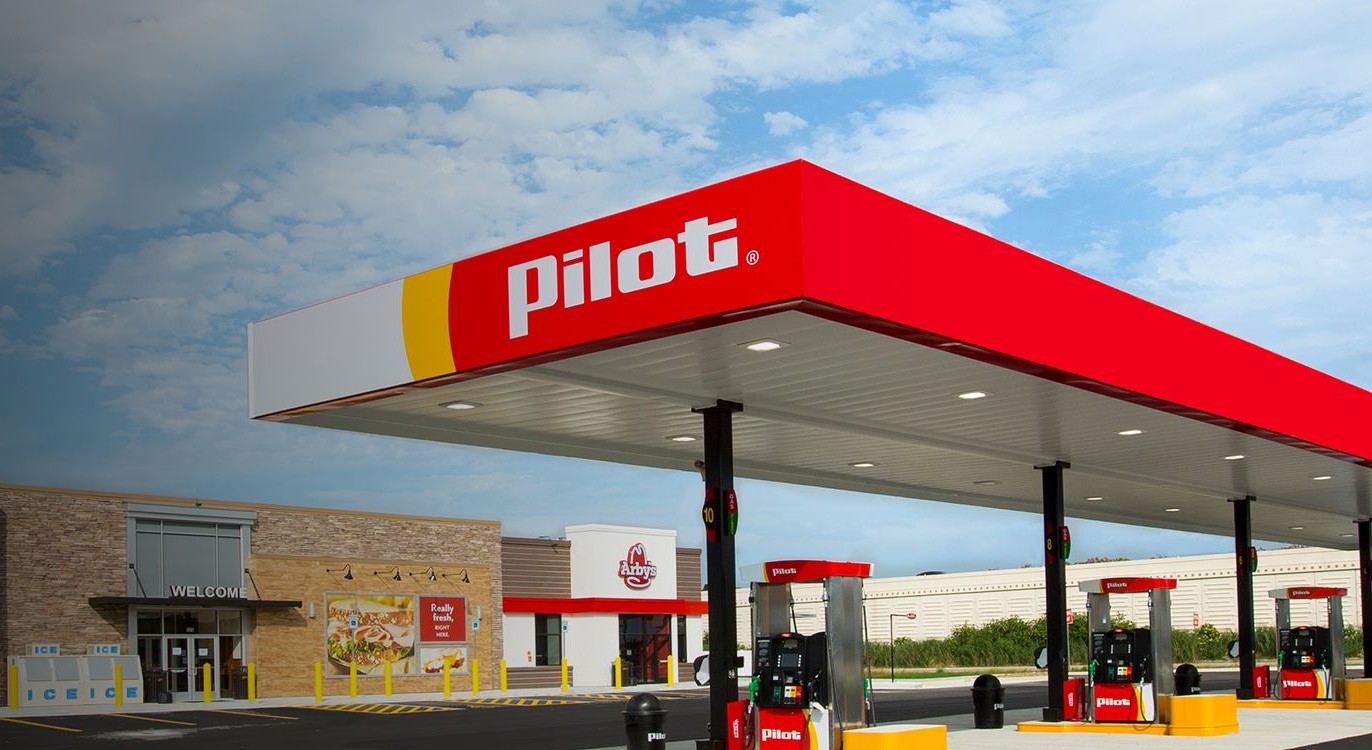 You know those Pilot Flying J truck stops you sometimes visit to fill up as you’re traveling along our nation’s interstate highways? They’re not just big gas stations with convenience stores. Pilot Flying J has its own fleet of trucks. One of the divisions of Flying J targets the exploration and production (E&P) sector, i.e. drillers. Flying J has just announced it has bought out Equipment Transport, LLC, which hauls shale wastewater in the Marcellus, Utica and Permian Basin. Now your favorite truck stop is also your favorite wastewater hauler!
Read More “National Truck Stop Chain Buys M-U Wastewater Hauler”
 Both Pittsburgh and Philadelphia were in the running to become Headquarters 2 (HQ2) for online shopping behemoth Amazon. But neither got it. They both bent over backward, forward, and sideways, wined and dined Amazon people, and in general did everything they could short of bribery to attract Amazon to their respective cities. In the end, Amazon decided to split HQ2 between New York City and a suburb of Washington, D.C. Now that the distraction of pursuing Amazon is gone, a couple of energy industry players in Pittsburgh say it’s time to focus again on reality. Amazon offered 50,000 jobs to the winner(s) of HQ2. The PA Marcellus industry offers 100,000 jobs that pay way more, IF we hurry to capitalize on it. So says Morgan O’Brien, president and CEO of Peoples Natural Gas, and Stacey Olson, president of Chevron Appalachia.
 MDN previously told you about a natural gas-fired electric plant planned for the socialist paradise of Rhode Island, home to old money and people who oppose change of any kind (see
  Emera Inc., an energy services company headquartered in Halifax, Nova Scotia, has just signed a deal to sell three natural gas-fired electric plants that it owns in New England to investment firm Carlyle Group for $590 million. The three plants–Bridgeport Energy, Tiverton Power and Rumford Power–collectively generate 1,100 megawatts of electricity. We’re always interested in such transactions because of the potential to sell Marcellus/Utica gas to feed the plants. The Carlyle Group owns a number of assets in the M-U region, perhaps most prominently the Philadelphia Energy Solutions (PES) refinery.
 Last week MDN told you about seven anti-fossil fuelers in the Philadelphia area who have filed a request with the PA Public Utility Commission requesting the PUC shut down both the Mariner East 1 pipeline, which has been flowing since 2016, and Mariner East 2 pipeline, which is about to go online any day now (see
  In November 2015, MDN first reported on a zoning court case in Westmoreland County, PA that’s still playing out (see
  Pennsylvania has had a seriously bad problem with acid mine drainage for years–water that washes through old/abandoned coal mines that comes back out heavily laden with minerals that make it acidic and a danger to the environment. More recently, with the shale revolution, PA has also found itself with an abundance of shale wastewater–most of it “produced” water that comes from deep in the earth (not surface drinking water), also laden with all sorts of minerals. Both acid mine water and shale wastewater are not easy to treat. Some sharp kids and their professors at the University of Pittsburgh got the bright idea to combine the two together, and treat them together, at the same time. Why? Because they have opposite amounts of barium and sulfates. Combine the two and you can more easily remove the nasty stuff via “precipitation.” How cool is that?
 Still no sign from PTT Global Chemical that they will announce a final decision to proceed with building a $6 billion ethane cracker in Belmont County, OH, by the end of this year. The project was first announced in April 2015 (see
  This one will make your head explode. We’ve been warning about this for some time, or rather, RBN Energy has been warning about it (and we’ve brought you their warnings). During a recent three hour period of natural gas trading at the Waha Hub (in West Texas), the price of gas went to negative 1 cent per thousand cubic feet (Mcf). You read that right. Someone was paying someone else to buy the gas from them! Why? Too much “associated gas” being produced in the prolific Permian Basin, and not enough pipelines to carry it to other markets. The Permian is all about oil drilling. Natural gas is a byproduct, to the point it may be worth giving it away for free just to get rid of it so a driller can keep pumping oil. The proliferation of natgas in the region is driving prices into the subbasement.
 In December 2014, Massachusetts-based utility Berkshire Gas Company announced the amount of natural gas they could purchase from the Tennessee Gas Pipeline (TGP) was at full capacity. There’s no additional gas supplies to buy–unless TGP should build their Northeast Energy Direct (NED) expansion project. So Berkshire was forced to tell new customers for natural gas in portions of Franklin County they would not be able to tap into Berkshire’s line (see
  Ever notice how the antis apply a different set of rules and standards to those who support fossil fuels than they do to themselves? Here’s a great example. Virginia Natural Gas (VNG) wants to complete a decades-old project by building the final nine miles of the project from Norfolk, VA to Chesapeake, VA–called the Southside Connector Project. Those who oppose the project paid big bucks to “consultants” to write a report smearing the project as unsafe (see
 Earlier this month MDN brought you the exciting news that New Fortress Energy (NFE) is planning to build an LNG (liquefied natural gas) liquefaction plant in Wyalusing (Bradford County), PA in order to export Marcellus gas (see
  In a pattern that has repeated itself with both the Mountain Valley Pipeline and (now) the Atlantic Coast Pipeline (ACP), a key permit that allows ACP to build under and through streams and rivers and wetlands has been, for now, revoked. The permit is called a Nationwide Permit (NWP) 12 and was previously issued by the U.S. Army Corps of Engineers to allow ACP to build through streams, etc. in all three states where it runs–West Virginia, Virginia and North Carolina. Earlier this month the U.S. Fourth Circuit Court of Appeals put a temporary stop on constructing the pipeline across/under/through streams and rivers in WV (see