
Is Private Equity About to Return to Oil/Gas Drilling in Big Way?
 In our headline we pose a question asking if private equity (PE) money is about to be lavished on the oil and gas sector once again. The short answer, according to an analyst who writes about these things, is YES! Anthony Mirhaydari, a senior financial writer at PitchBook, says because of the current high price of oil, “After a drought of investment as management teams aggressively trimmed expenses to stay afloat, an aggressive ramp-up in spending is needed.” According to Deloitte, the oil and gas industry will need to spend on the order of $3 trillion in capital expenditures from now until 2020 (two short years away). Some of that money comes from profits or is already in hand from other sources. But, according to Deloitte, “there is a funding gap of $750 billion to $2 trillion that will need to be met with outside capital.” That trillion dollar delta is where private equity comes in–private investors once again opening up their wallets so more oil and gas drilling can happen. And that’s good news for the entire industry, including the Marcellus/Utica region. More money = more drilling…
Read More “Is Private Equity About to Return to Oil/Gas Drilling in Big Way?”
 An interesting development in the pipeline wars. Kinder Morgan has just agreed to sell its Trans Mountain Pipeline system to the Canadian government for C$4.5 billion ($3.5 billion U.S.). Why? Kinder is tired of the ongoing civil war in Canada over extending Trans Mountain from the oil sands of Alberta through British Columbia to the coast for exporting to Asia. As we reported last week, British Columbia is blocking the project and Alberta is now fighting back–and it’s nasty, a civil war in every way except armed conflict (see
  As MDN reported last Friday, fossil fuel opponents finally located a liberal judge that they could persuade to abuse her judicial power to shut down not only construction on the 98% complete Mariner East 2 (ME2) pipeline project, but also shut down Mariner East 1 (ME1), a pipeline that has been working with no issues or problems for over a year (see
 In February 2016 there was an accidental release of a hazardous chemical at the MarkWest Energy cryogenic processing plant in Mobley (Wetzel County), WV (see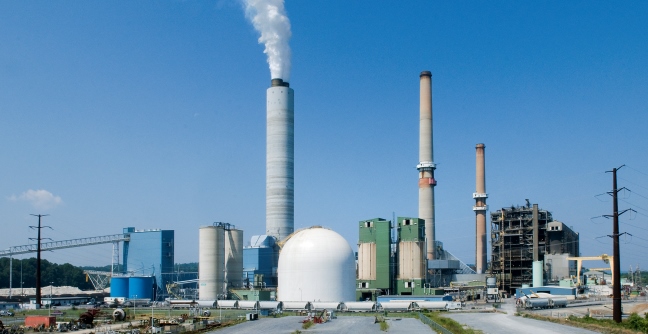
 The United Nations–essentially America’s enemies–recently issued a false report (full copy below) that tells the countries of the world to forget about shale energy as a way to lower carbon emissions and increase the standard of living among its peoples. Why? Because natural gas is methane and methane, according to UN warmists, is “worse” for the precious climate than CO2. Far worse. And because “everyone knows” that the world needs to dump the use of all fossil fuels sooner rather than later. So just forget about shale. Don’t give it a second thought. That about sums up the idiotic conclusions of this totally false, totally misleading report by the UN. Why are we not surprised? According to the wizards of smart issuing the report, it’s far better for counties to invest in solar (even though the sun doesn’t always shine) and wind (even though the wind doesn’t always blow)–and, you know, just keep your impoverished people living in mud huts. All in an effort to keep Mom Earth from toasting to a cinder. Even though the earth hasn’t been warming for 20 years!! Frustrating. Hard, actual science plays no role. This is a political report, not a scientific report. Bear that in mind as you read it…
 Anti-fossil fuel nutters have finally, after months and years, scored a minor victory. They’ve been shopping to locate an ultra-liberal judge who would ignore the law and instead issue edicts from the bench–to shut down both the Mariner East 1 (ME1) and Mariner East 2 (ME2) pipeline projects. Yesterday Elizabeth Barnes, an administration law judge for the Pennsylvania Public Utility Commission (PUC), unilaterally ordered Sunoco Logistics Partners to “cease and desist all current operation, construction, including drilling activities on the Mariner East 1, 2 and Mariner East 2X pipeline” in West Whiteland Township (Chester County, PA). The judge also moved to shut down all operations of Mariner East 1 across the state, ruling that she is “enjoining Respondent from operating Mariner East 1.” It is a breathtaking display of arrogance and seizure of power that does not belong to her. The ruling runs counter to other decisions regarding these critical pipeline projects–projects that have been thoroughly vetted by numerous regulatory agencies. Construction of ME2 is 94% complete! ME1 has been flowing NGLs for over a year–with ZERO problems! And yet Barnes has shut it all down, with the stroke of a pen. We predict it won’t last long…
 The radical Sierra Club is claiming a victory in temporarily stopping construction work of the Mountain Valley Pipeline (MVP) at four river crossings in West Virginia. On Tuesday the Sierra Club and a mishmash of other radicalized groups filed a motion asking the Fourth District U.S. Circuit Court of Appeals to suspend a permit issued by the U.S. Army Corps of Engineers that allows MVP to construct the pipeline across streams and rivers in the Mountain State. The Clubbers’ tortured logic is this: When construction of the pipeline across a river, the stated standard is that construction can take no longer than 72 hours. MVP says it will need longer when constructing the pipeline across four rivers–Elk, Gauley, Greenbrier and Meadow. Therefore (say the Clubbers), MVP is in violation of the general permit issued by the Corps and that means ALL (not just those four rivers) construction should be stopped, immediately. The Fourth Circuit has not yet rendered a decision, however, the Corps itself said they had reviewed the standards and have (for now) rescinded the permit as it applies ONLY to those four rivers, NOT to any locations. So it’s a partial, and temporary, victory for the Clubbers…
 It’s been seven long years since Windfall Oil and Gas first floated a plan to drill a shale wastewater injection well near Dubois, in Brady Township (Clearfield County), PA. After all that time, the PA Dept. of Environmental Protection (DEP) finally approved the project in March of this year (see
  All New England states are in desperate need of more natural gas–for both consumers (residences and businesses that use it to heat and cool) and for power generating plants. Yet each New England state in one fashion or another has actively opposed any new interstate pipelines to bring in more gas. Two major pipeline projects were proposed to help alleviate the situation. Kinder Morgan’s Northeast Energy Direct (NED) was canceled in April 2016 (see
  Private equity firm EnerVest owns a lot of acreage and wells (most of them conventional) in the Marcellus/Utica region. In addition to investing in land and wells, EnerVest also has its own drilling subsidiary, EV Energy Partners (EVEP), with operations and assets in OH, PA and WV. EVEP is an MLP–a master limited partnership. While EVEP is joined at the hip with EnerVest, they are (on paper) two different companies. EnerVest has vast holdings and is in the top 25 oil & gas companies in the nation. Last July the Wall Street Journal ran a story that said EnerVest was worth nothing on paper. EnerVest pushed back on that story saying it wasn’t true–at least not completely true. EnerVest chief administrative officer, Ron Whitmire, said the company’s vast holdings are structured as more than a dozen companies. Although some of EnerVest’s companies are in trouble, the entire pie, according to Whitmire, is not in danger of bankruptcy. Conversely, Whitmire’s comment also meant that at least one or more of the EnerVest companies were/are in danger of bankruptcy. EVEP was one of them, filing in early April (see
 Although Shell has hired a few permanent workers for its mighty $6 billion ethane cracker complex currently under construction in Monaca (Beaver County), PA, the company has just (for the first time) posted a job notification for bulk hiring of permanent positions. The job notice, posted on the BrassRing HR website, provides a detailed job description for “Shell Production Operators” in Monaca–40 of them. The job includes, “monitoring, controlling, starting and stopping equipment (such as furnaces, pumps, compressors, etc.), conducting activities that pertain to unit operation, and taking corrective action when necessary to ensure that all unit conditions and operations are in compliance with safety, environmental, and operating policies and procedures.” In order to qualify, prospects must jump through a several hoops (mechanical aptitude tests). If selected, candidates will go through extensive training from now until the plant opens some 2-3 years from now. Here’s the deets, including the full job description…
 It’s about time! One of the favorite tactics of antis to fall back on when they don’t win in court is to simply take the law into their own hands (i.e. anarchy). If the courts or a regulatory body (like FERC, or the PA DEP) refuse to stop a critical energy infrastructure project, like a pipeline, antis take it upon themselves to trespass, illegally, in an attempt to block work on the project. They call it “free speech.” It’s nothing of the sort. To trespass is, by definition, breaking the law. Antis know this. However, such a violation of the law is currently only a misdemeanor–a lessor penalty. The PA Senate has just approved a bill that would make infrastructure trespass for pipelines and other key energy infrastructure a felony, giving antis more incentive to behave themselves. Most Republican Senators (except a few Philly RINOs) voted for the bill. Most Democrat Senators (who prefer to be lawless), voted against it. We can only hope the bill gets adopted–it now goes to the House–although with Wolf as governor, we’re not confident it will get signed into law…