
Anti-Drilling/Fossil Fuel | Energy Services | Industrywide Issues | Litigation | PennEast Pipeline | Pipelines | Regulation
The War to Build PennEast Pipeline Continues
 It’s been almost a year since the Federal Energy Regulatory Commission (FERC) granted final approval for the PennEast Pipeline project, a $1 billion, 120-mile natgas pipeline that will stretch from northeast PA to the Trenton area of New Jersey (see FERC Grants Final Approval for PennEast Pipe – Real Battle Begins). DTE Energy’s NEXUS Pipeline, a 255-mile pipeline from Columbia County in Ohio to Southern Michigan, received its FERC approval around the same time. NEXUS is already built and flowing, PennEast hasn’t turned the first shovelful of dirt yet. What’s going on?
Read More “The War to Build PennEast Pipeline Continues”
 On January 29, 2017, EQT used underground horizontal directional drilling (HDD) to drill a hole under State Route 136 in Allegheny County, PA, to install a water pipeline. As they were drilling, using what we now know was an out-of-date map, EQT hit an abandoned coal mine full of water, and four million gallons of acid mine drainage (AMD) leaked into the Monongahela River. EQT worked hard and fast to stop the leak (stopping it two days later) and set up a system to prevent any further leaks. Now, nearly two years later, it’s time to pay the piper. EQT just agreed to a fine of $294,000 for violating the Clean Streams Law, and payment of an additional $100,000 to the Clean Streams Foundation to provide for maintenance, operation, and replacement of a system to keep AMD from leaking at the site in the future.
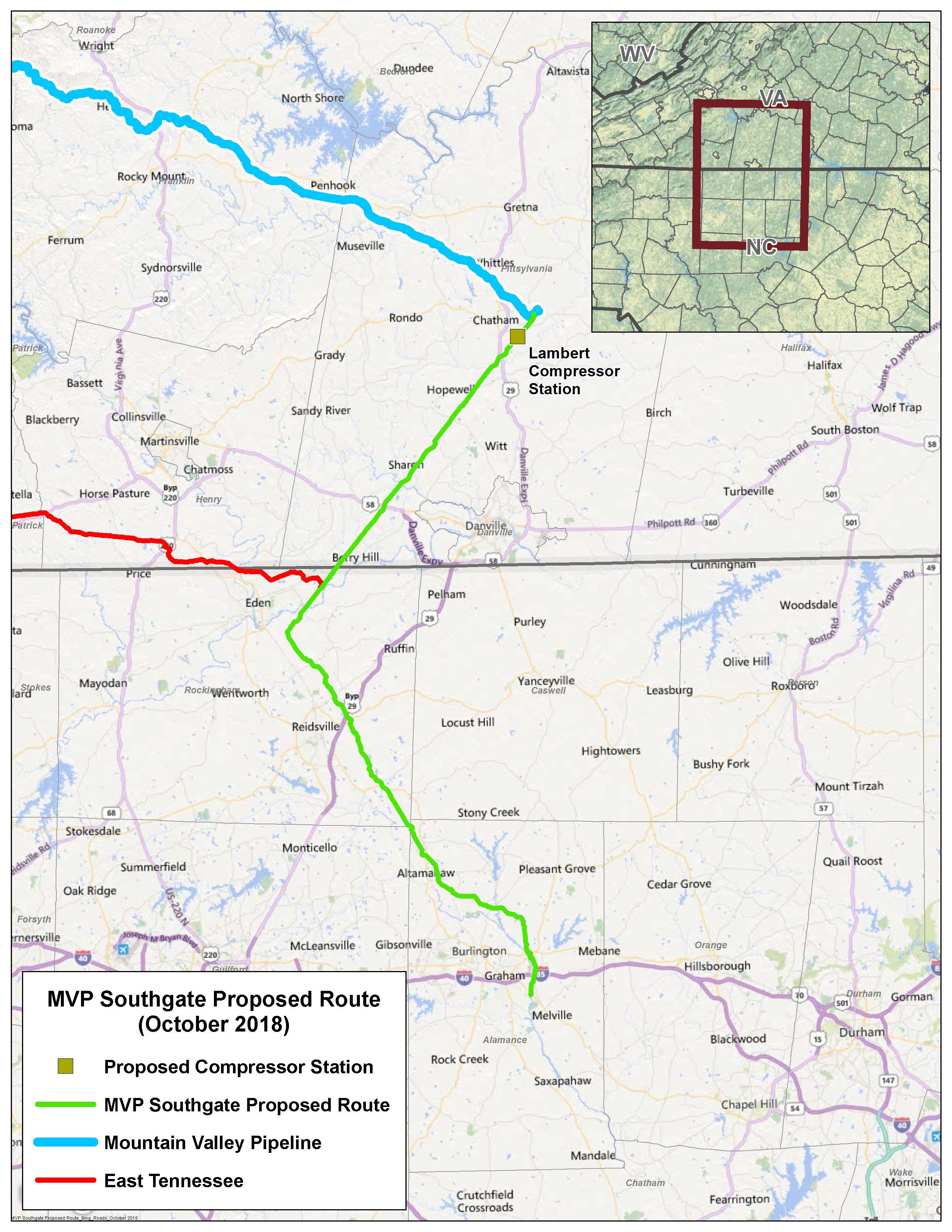
 We’ve covered, it seems endlessly, news about two important new pipeline projects coming in the Marcellus. One is EQT Midstream’s (now Equitrans Midstream) Mountain Valley Pipeline (MVP), a 303-mile pipe from West Virginia to southern Virginia. The other is Dominion Energy’s 600-mile Atlantic Coast Pipeline (ACP), from West Virginia through Virginia and into North Carolina. MVP will, when it’s done, carry 2 billion cubic feet per day (Bcf/d) of natural gas to southern markets, and ACP will carry 1.5 Bcf/d. Both pipelines chart a similar path south. And both pipelines are now stalled, dogged by frivolous lawsuits filed by so-called environmental groups. Both have announced delays for their final completion dates. Our friends at RBN Energy look in detail at both projects, and what a delay may mean for drillers in the Marcellus/Utica. Are more pipeline constraints on the way in our region?
 Utility giant Eversource (formerly Northeast Utilities), one of the companies backing the Access Northeast pipeline project, is calling it quits on the project. At least for the foreseeable future. Access Northeast, a proposed ~$3 billion project, would connect four different pipeline systems: Texas Eastern, Algonquin Gas Transmission, Iroquois and Maritimes & Northeast. Eversource desperately needs the gas that would flow through the connected system, but after the Columbia Gas tragedy near Boston in September (see
  Last week MDN picked up on news shared by top management for Energy Transfer that their long-delayed Mariner East 2 pipeline system will be up and running by the end of the year (see
  Yesterday the muckety-mucks from Energy Transfer (ET) held a conference call with Wall Street analysts to discuss the company’s third quarter 2018 update. Inevitably on such calls there’s talk about what’s coming up in addition to what happened in the previous quarter. ET is a big midstream (pipeline) company. Among their projects are the mighty Rover Pipeline, which reaches from Pennsylvania, West Virgina, and eastern Ohio all the way into Michigan, and the Mariner East 2 Pipeline, which runs from eastern Ohio all the way through Pennsylvania to the Philadelphia area. Rover flows natural gas, ME2 (and ME2X) will flow NGLs, mainly ethane and propane. According to Tom Long, ET’s Chief Financial Officer, ME2 will be up and running sometime this quarter. Since the end of this quarter is around Christmastime, we prefer to think of ME2 as a Christmas present for Marcellus/Utica drillers.
 It would be great when you are drilling a well, or building a pipeline, that when a state government inspector swings by to check up on the project, they don’t spot any problems. Especially for big projects like pipelines that run hundreds of miles. It would be nice, but not reality. Something always happens here and there. Unforeseen. Like weather with torrential rain, resulting in runoff from a ditch you just dug. The inspector swings by the next day and notices water and dirt where it’s not supposed to be, and voila, a “notice of violation” (NOV) is issued. It happens. That’s the way the world works. For Mountain Valley Pipeline (MVP) and Atlantic Coast Pipeline (ACP), both with segments in West Virginia, NOVs have been and no doubt will continue to be issued. How many NOVs would you imagine have already been issued for each project in WV? How many is “too many” and indicates the project builders are being sloppy?

 Miracle of miracles, two (!) Democrat FERC commissioners (Cheryl LaFleur and Dick Glick), along with one Republican commissioner (Chairman Neil Chatterjee), voted unanimously to extend the time frame by another two years for Williams to build the Constitution Pipeline. As you may recall, the Constitution was stopped cold by corrupt NY Gov. Andrew Cuomo and his lackeys at the state Dept. of Environmental Conservation (DEC). Constitution is planned to run from Susquehanna County, PA up into, and mostly situated in, New York State. Cuomo won’t be happy with this decision because it’s a very loud and clear signal that FERC believes the project *will* some day get built.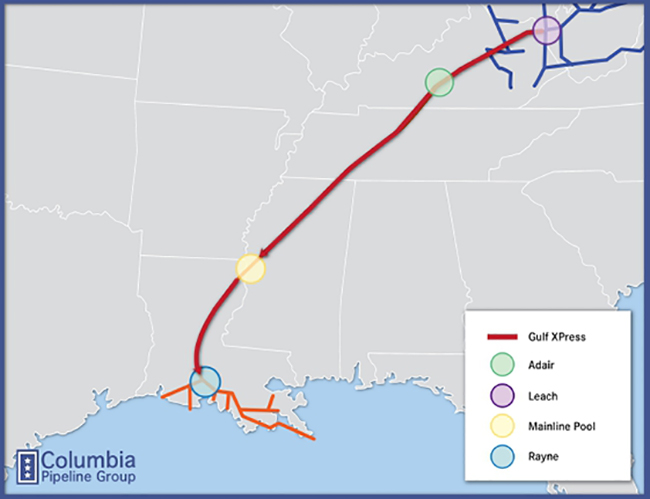
 Last week National Fuel Gas Company (NFG), which operates drilling subsidiary Seneca Resources and pipeline subsidiary Empire Pipeline, issued its fourth quarter 2018 (everyone else’s 3Q18) update. Via Seneca Resources, NFG drills wells in northcentral and northwestern PA. Via Empire Pipeline, they build and maintain hundreds of miles of pipelines in PA and New York, where the company is headquartered. NFG operates a utility (gas and electric) company in addition to Seneca and Empire. A lot of spinning plates to watch. But they do a great job. Much of the focus of the update was on the upstream–on Seneca Resources. According to CEO Ron Tanski, in 2019 more than half of the company’s capital expenditures will go for Seneca’s drilling program. Seneca has and will continue to operate three drilling rigs, with plans to expand production by 24%.
 A number of times we’ve highlighted a cool training program offered by the The Gas Technology Institute (GTI). The
  Flashback: In May of this year, Energy Transfer CEO Thomas Long said Rover Pipeline would be fully online by June 1st (see