
VA Tree Sitting Continues in Failed Attempt to Stop MV Pipeline
 Here’s the latest update in the ongoing story of “protesters” who are trying to stop progress in cutting trees for the Mountain Valley Pipeline (MVP), which will run from West Virginia into Virginia. We previously reported on illegal tree-sitters that judges and law enforcement refuse to remove (see WV Judge Refuses to Eject Tree Sitters Blocking Pipeline Work). The latest to join the tree sitting movement is a 61 year-old woman who calls herself “Red” and claims her family has owned land in the area for seven generations. When MVP workers began removing a ladder on the tree where Grandma Red planned to sit, she began screaming like a petulant three year-old child. Her histrionics got them to stop. She subsequently climbed the ladder and is still perched up a tree. The bald truth of the matter is this: Regardless of this nonsensical display by (a) misguided locals like Grandma Red, and (b) movement anti fossil-fuel radicals, MVP is in the process of getting built and will be completed. Tree sitting protesters are not going to stop it. So let’s grab some popcorn and enjoy the show in the meantime!…
Read More “VA Tree Sitting Continues in Failed Attempt to Stop MV Pipeline”
 You’ve got questions about major pipeline projects planned or under construction in West Virginia? The WV Dept. of Environmental Protection has answers. WVDEP has just launched a website to help residents learn more about five major interstate natural gas pipeline projects: Atlantic Coast Pipeline, Mountain Valley Pipeline, Mountaineer Gas Eastern Panhandle Expansion Project, Mountaineer Xpress Pipeline, and Rover Pipeline. The website includes maps of pipeline routes, a searchable database for information such as inspection and enforcement actions and permit modifications, public hearing transcripts, and news releases. It’s all in there! Head on over to
  We’ve read warnings about the potential for cyber (computer) attacks on the U.S. energy industry for several months. We understand how such an attack might affect a nuclear plant, or perhaps the electric grid. Screw up the computers managing and running a nuke plant or a significant portion of the electric grid and you have a class-one serious situation on your hands. However, we didn’t really think about pipelines. Did you know that pipeline networks, like electric grids, are monitored and controlled by computers and those computers can be compromised? We have to admit it was not on our radar screen. But that has now happened–and it affects not only pipeline systems in other parts of the country, but right here in the Marcellus/Utica. Energy Transfer Partners uses a third party service called Energy Services Group to manage all of its pipelines–a massive nationwide network. Energy Services provides EDI (electronic data interchange) services that reportedly cut costs and increases the speed with which companies exchange documents that used to be paper-based. Documents like those used in buying and selling natural gas at various trading hubs along major pipelines. On Monday, Energy Services was attacked electronically, knocking the service out of commission until further notice. Note that gas flowing through pipelines has not been affected. The affected computers don’t turn valves on and off. However, the ability to know who’s gas is flowing through the pipeline (who bought and who sold) has been slowed–on all of ET’s pipelines, including the newly-minted Rover Pipeline…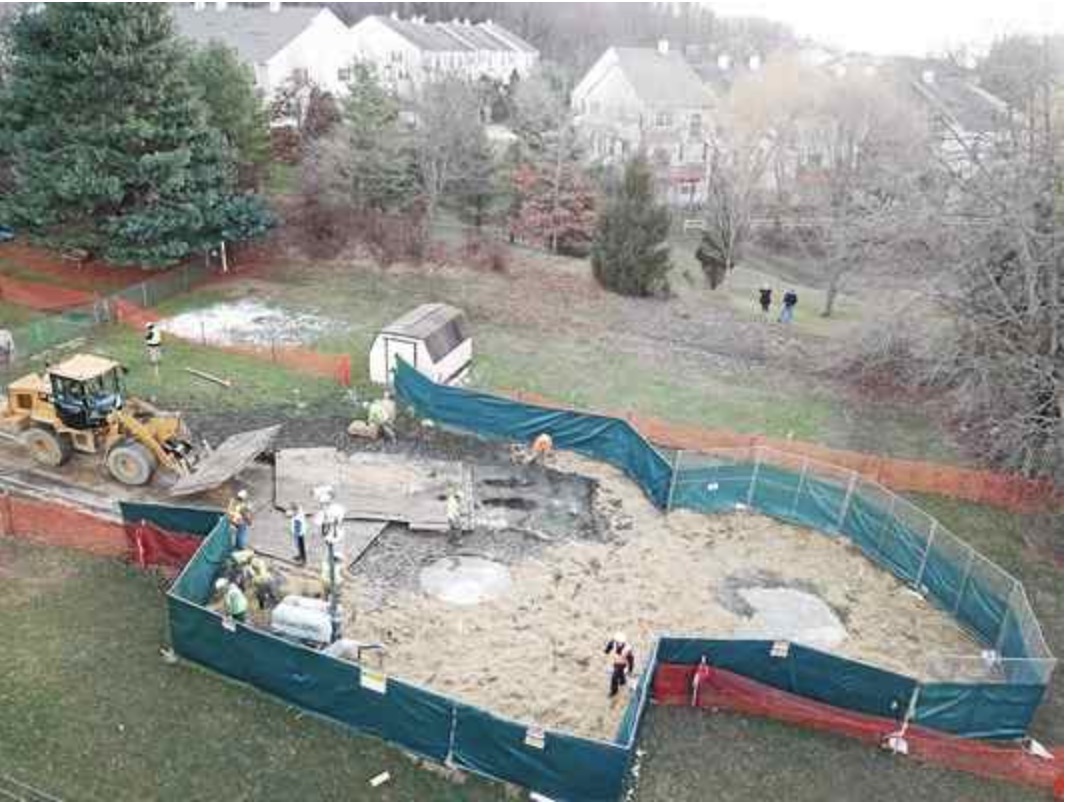

 Last December the Pennsylvania Dept. of Environmental Protection (DEP) issued “draft final language” for the proposed General Permit 5A (GP-5A) and the revised General Permit 5 (GP-5)–regulations that supposedly will cut down on fugitive methane from escaping from drill pads and pipelines (see
  Two weeks ago Dominion Energy asked the Federal Energy Regulatory Commission (FERC) for permission to extend tree cutting/felling season by an extra 45 days, from March 31 to May 15, in West Virginia, Virginia and North Carolina (see
  The Gas Technology Institute (GTI) has previously offered a 100% free training program for those interested in a career building pipelines in the Marcellus/Utica region (see
  We are a country governed by the rule of law. Part of our system of laws (for better or worse) invests government bureaucracies with delegated power to make rules and regulations–which carry the weight of law. Children who are not disciplined (at home and at school) grow up to be adults who think silly things like rules don’t apply to them–because they don’t want them to. THE Delaware Riverkeeper falls into that camp. The Federal Energy Regulatory Commission (FERC) has rules and regulations in place to keep the agency from descending into chaos in reviewing and approving pipeline projects. One of FERC’s rules, which has been on the books for years, is that if a person or group wants to “intervene” (become an intervenor) in a project, they must file with FERC “in a timely manner.” FERC sets the amount of time, which varies with each project. It’s been our observation FERC gives at least 30 days, sometimes more, for folks to file to intervene. One of the sleazy strategies used by Riverkeeper is to get thousands of individuals (including children) to sign up as intervenors for a project in a quest to flood and overload the FERC system, slowing or stopping progress on a given project (see
  Last week MDN brought you the news that the Federal Energy Regulatory Commission (FERC) had taken “significant action” to address the Trump tax cut legislation enacted last December (see
  In January, MDN reported that Mountain Valley Pipeline (MVP)–a $3.5 billion, 301-mile pipeline that will run from Wetzel County, WV to the Transco Pipeline in Pittsylvania County, VA–had received permission from the Federal Energy Regulatory Commission (FERC) to begin tree clearing and construction of access roads and construction yards in five West Virginia counties (see
  Sunoco Logistics Partners has had its share of problems in building the Mariner East 2 (ME2) twin NGL pipelines that run from eastern Ohio all the way to Marcus Hook, near Philadelphia. The main issue with construction of the pipeline has been underground horizontal directional drilling (HDD)–drilling under things like roads and bridges and streams and rivers–places where you can’t just dig a trench to lay pipeline. Some early problems with HDD caused the Pennsylvania Dept. of Environmental Protection (DEP) to shut down all ME2 HDD work (indeed all work period) for an extended period in January (see
 Earlier this month MDN reported that the Southern Environmental Law Center and Appalachian Mountain Advocates, on behalf of a mishmash of second tier radical groups, filed a “hail Mary” request with the federal Fourth Circuit Court of Appeals to stop construction of Dominion Energy’s Atlantic Coast Pipeline until a lawsuit sitting before the Fourth Circuit questioning the validity of the permits granted for the project is played out (see
  In March 2017 (one year ago), Williams filed a full, official application for the Northeast Supply Enhancement project (see
  The Adorers of the Blood of Christ, a group of nuns in Lancaster County, PA, simply can’t stay away from sacrificing Christ on the alter of politics. The Sisters didn’t want the Atlantic Sunrise Pipeline project passing through their property. They own several buildings (one of them an old folks home heated with natural gas) on the very same property. The pipeline was due to run through a nearby field owned by the Sisters that they lease to a local farmer who grows corn on it. The Sisters took up with radical anti-fossil fuelers from Lancaster Against Pipelines to protest the project, putting a few wooden park benches and a flower tressle in the middle of the corn field, calling it a “chapel” (see