
PA House Dems to Hold Hearing on Dead-as-a-Doornail Setback Bill
 The Pennsylvania House Environmental & Natural Resource Protection Committee will hold a hearing on November 17 for House Bill 1946, sponsored by Rep. Greg Vitali (Democrat from Delaware County), which proposes to significantly increase setback distances for unconventional shale gas wells to “better protect public health and the environment.” The bill mandates a minimum setback of 2,500 feet from homes and 5,000 feet from schools, hospitals, and long-term care facilities, a substantial increase from the current 500 feet. It also raises setbacks for drinking water sources from 1,000 to 2,500 feet and for natural bodies of water from 300 to 750 feet, affecting everything, from lakes and ponds to mud puddles. Vitali knows his bill would be a de facto ban on new shale drilling in 95-97% of the state. That’s his objective. Read More “PA House Dems to Hold Hearing on Dead-as-a-Doornail Setback Bill”
 Donald Trump once famously said, “We’re gonna win so much. You’re gonna get tired of winning. And you’re going to say, ‘Please, please, it’s too much winning. We can’t take it anymore. Mr. President, it’s too much.’ And I’ll say, ‘No, it isn’t. We have to keep winning. We have to win more!'” He’s keeping his promise to win! However, we’re not tired of winning just yet. 😉 Last Friday, Williams announced that both New York and New Jersey have issued the required federal water permits needed to build the Transco pipeline project called the Northeast Supply Enhancement (NESE). President Trump made a deal (so the rumor goes) with NY Gov. Kathy Hochul, allowing her to continue building a $5 billion offshore wind farm boondoggle in return for building NESE and another project, the Constitution Pipeline (see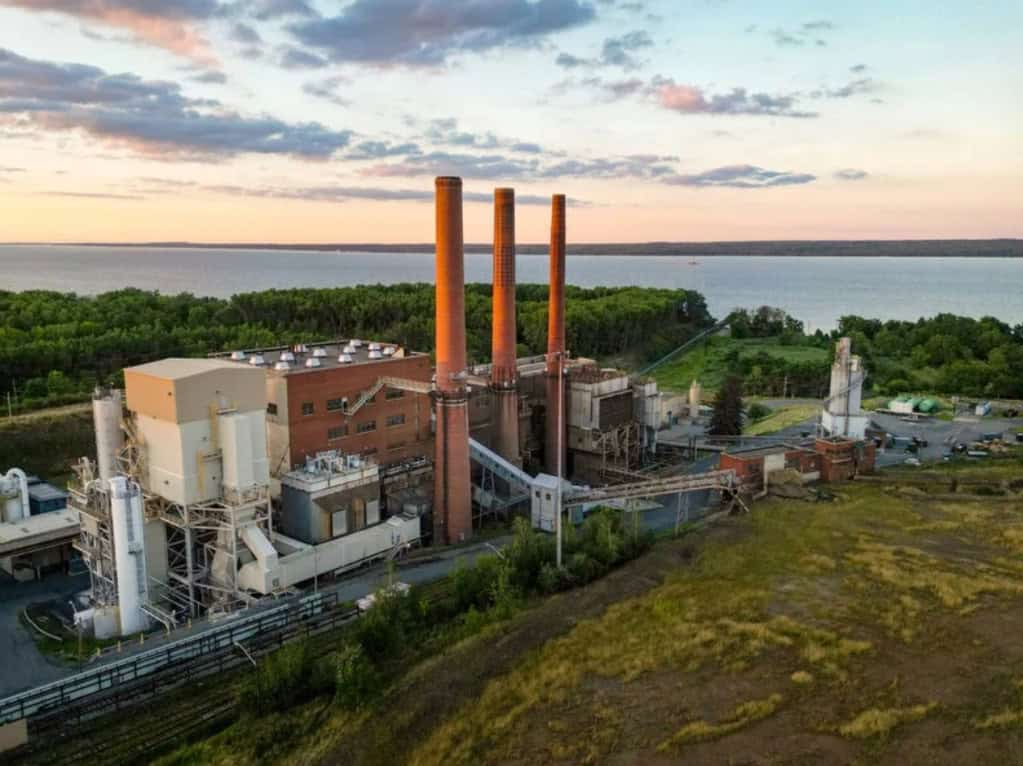
 Last week, the Pennsylvania Public Utility Commission (PUC) approved a Tentative Order by a 3-2 vote, proposing a statewide model tariff (tax) to manage the growing impact of large-load customers, such as AI data centers, on the electric grid. The goal is to encourage investment and job growth while protecting existing ratepayers from cost-shifts and ensuring reliability. The PUC failed. The proposed order was passed on a partisan basis, with the three Democrat commissioners voting to make it harder and more expensive for data centers to locate in the Keystone State, potentially jeopardizing $92 billion of investments promised to the state related to data centers (see
  We may finally, after seven long years of torture, have a resolution to the issue of forcing Pennsylvania to join the Regional Greenhouse Gas Initiative (RGGI) carbon tax scheme. The rumors are swirling around Harrisburg that the Democrats (including Governor Josh Shapiro) and Republicans in the state Senate are close to a budget deal. The budget was supposed to be adopted by July 1st. It’s now over four months late, and school districts and government agencies dependent on state funding are hurting. The rumor is that the budget deal includes a provision to dump PA’s participation in RGGI. Lefty environmentalists are having a CO2-emitting cow at the news.
  We are SO tired of activist judges appointed by Obama/Biden ruling against the will of the majority (and against the Constitution). It just happened again earlier this week. Before leaving office, the Biden Department of Energy (DOE) implemented new regulations that essentially ban gas-fired furnaces and water heaters (see
  In January 2023, Ohio House Bill (HB) 507 became law with the signature of Gov. Mike DeWine (see
  Following some intense conversations between President Trump and New York Governor Kathy Hochul earlier this year, she caved (according to the White House) and agreed to allow two long-stalled pipeline projects—the Constitution and NESE—to get built in NY in return for Trump allowing her to continue to sink $5 billion into an offshore wind project (see
  Hell has officially frozen over. New York Governor Kathy Hochul is seeking to revise the state’s 2019 Climate Act, recognizing that its mandates for a 40% reduction in greenhouse gas emissions by 2030 are financially unsustainable for New Yorkers and have become a major election issue due to rapidly rising energy costs. This move follows a court ruling compelling the state to either change the law or issue the “infeasible” regulations by a February 2026 deadline, a task the Department of Environmental Conservation (DEC) had previously avoided due to the “extraordinary and damaging costs” it would impose. The law’s implementation is further complicated by state electric power “plans” that rely on non-existent technology, highlighting the impossibility of meeting the 2030 target and setting the stage for a significant political battle as the law finally hits an economic wall. But that’s not all…
 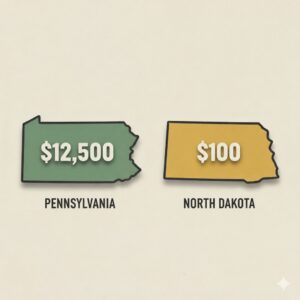 North Dakota’s regulatory framework is a model of simplicity. Companies pay a modest $100 fee for drilling permits, compared to $12,500 in Pennsylvania, and typically receive approval in 20 to 30 days. That efficiency has proven pivotal since 2010, when horizontal drilling and hydraulic fracturing significantly expanded the Bakken Formation’s potential for commercial-scale production. Of course, there’s a big difference between PA and ND—companies drill for oil in ND and natural gas in PA. So it’s not like a driller would say, “Screw it, we’ll leave PA and go drill in ND where it’s easier, faster, and cheaper.” However, drillers can/are leaving PA for Ohio and West Virginia, where it’s easier, faster, and cheaper. We bring you this masterclass on how ND makes drilling better, so perhaps, just perhaps, someone at the PA DEP (and the politicians involved in approving permit fees) will wake up and improve the experience in the Keystone State.
  On October 22, Coterra Energy reported a well control incident during fracking the 12H well on the Lauer pad in Susquehanna County to the Pennsylvania Department of Environmental Protection (DEP). A loss of control resulted in the high-pressure release of an unknown quantity of fracking and production fluids, along with natural gas, causing the fluid to “spray” on and off the well pad. Coterra, which was fracking five wells simultaneously, called in Cudd Well Control Services and did not regain control until 49 hours later on October 24, after installing a second bridge plug.
  On August 17, Eureka Resources’ Williamsport Second Street facility (one of the three plants previously operated by Eureka) leaked some of its stored untreated wastewater, which ended up in the nearby Susquehanna River via a storm drain (see
  Cayuga Station, owned by Duke Energy, is a three-unit coal-fired power plant built between 1970 and 1993 in Vermillion County, Indiana. The existing plant produces up to 1,040 megawatts (MW) of electricity. Earlier this year, Duke filed a request with the Indiana Utility Regulatory Commission (IURC) for permission to build two new gas-fired units at the Cayuga site to replace the coal-fired units (see
  The Northeast Supply Enhancement Project (NESE), part of the mighty Transco pipeline system, is alive once again. A decade after Williams Cos. first proposed the $1-billion-plus natural gas pipeline and a year after the company scrapped it, the 400 MMcf/d capacity expansion for New York City and Long Island has been revived. This revival, primarily attributed to a shift in Washington’s political climate, resulted in a new FERC approval. Now, state regulators in New York and New Jersey are deliberating on the necessary water-quality permits. Once both NY and NJ issue those permits, it will be (more or less) smooth sailing to the construction and completion of the project.
 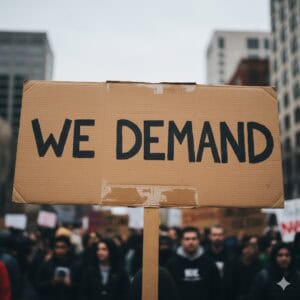 Representatives from Clean Air Council, Earthworks, Environmental Health Project, Environmental Integrity Project (EIP), and Protect PT, some of the worst of the worst radical “green” groups in the Keystone State, rallied at the Pennsylvania State Capitol yesterday to demand (they always demand) that Pennsylvania’s Environmental Quality Board (EQB) accept their petition to consider drafting a new setback regulation in the state that would effectively ban all new shale drilling.