
SRBC Approved 76 Shale Gas Well Pad Water Use Permits in Sep/Oct
 The highly functional and responsible Susquehanna River Basin Commission (SRBC), unlike its highly dysfunctional and irresponsible counterpart, the Delaware River Basin Commission (DRBC), continues to support the shale energy industry by approving water withdrawals and consumptive use requests for responsible and safe shale drilling. The SRBC published a notice in the December 6 Pennsylvania Bulletin that the Executive Director of the SRBC approved and/or renewed 76 general water use permits from September 1 through October 31 for individual shale gas well drilling pads in Blair, Bradford, Cameron, Centre, Clearfield, Clinton, Elk, Huntingdon, Lycoming, McKean, Sullivan, Susquehanna and Tioga counties in Pennsylvania and one permit to withdraw water in Steuben County, New York. Read More “SRBC Approved 76 Shale Gas Well Pad Water Use Permits in Sep/Oct”
 In January, Constellation Energy (a huge power-generating company) announced a deal to buy out and merge with Calpine (another huge power-generating company). Calpine owns 79 energy facilities across the country, generating some 27 gigawatts (GW) of electricity, with a significant number located in the eastern U.S. Many of Calpine’s facilities use natural gas to produce electricity. The two companies combined would own almost 60 GW of nuclear, natural gas, geothermal, hydro, wind, solar, cogeneration, and battery storage. The Federal Energy Regulatory Commission (FERC) signed off on the deal in July, with conditions (see
 Here we go again. The environmental left is attacking the shale industry by accusing it of shipping drill cuttings (the leftover rock and dirt that comes out of a borehole) to local landfills in the Buckeye State (Ohio), where it will irradiate everyone and everything close to it. According to the left, drill cuttings “could be contaminated with radioactivity and other chemicals.” And, according to the same people, lack of regulations in Ohio “allows it [radioactive drill cuttings] to slip by regulators, especially in Ohio,” and end up in the same landfills as “household trash.” Is there anything to the claim that drill cuttings are radioactive and a threat to those who live near landfills?
 Three anti-shale drilling groups—the PA Council of Trout Unlimited, the Keystone Trails Association, and the Responsible Drilling Alliance—have requested the Pennsylvania Department of Environmental Protection (DEP) hold a hearing on the Chapter 105 permit requested for a 3.9-mile shale gas access road and staging area proposed by PA General Energy in Gamble and Cascade Townships, Lycoming County. The aim of their request is not to elicit information or express concerns that can be addressed to achieve a better outcome; rather, it is to flood the hearing with bombastic charges in hopes of blocking the project altogether.
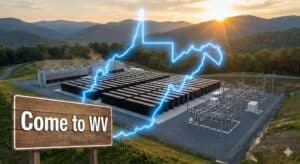 Pennsylvania and Ohio should be looking over their shoulders regarding new data centers and their decisions on where to locate them. West Virginia is making serious efforts to be THE destination for new AI data centers to locate in the Marcellus/Utica region. The West Virginia Office of Energy’s recent summit highlighted the state’s unique position to power the booming AI and data center sectors through its vast natural gas reserves. Like PA and OH, WV’s homegrown natural gas offers a reliable, cost-effective, and flexible solution for necessary baseload power. What’s beginning to set WV apart from its neighbors is legislation that explicitly targets data centers.
 We suppose it’s no surprise that left-wing Congressional Democrats from North Carolina and Virginia are attacking two natural gas pipeline projects that are close to final approval and the start of construction. One project is Williams’ Transco Southeast Supply Enhancement Project (SESE), the other is EQT’s MVP Southgate project. Both projects would be built in the same general area, starting at the same point near Chatham, Virginia, and ending near Eden, North Carolina. Both have customers ready to take their gas. Southgate recently received a favorable environmental assessment (EA) from the Federal Energy Regulatory Commission (see
 New York’s “cap and invest” Climate Act law effectively rations fossil fuels while taxing them heavily. The system limits fuel sales through caps and requires distributors to buy allowances, passing costs on to consumers. With a mandated 30% emissions reduction by 2030, the Climate Act will cause dangerous shortages of essentials such as fuel oil and natural gas for heating and gasoline for transportation. There is a real danger that households will run out of heating fuel during cold winters. Even Gov. Hochul is now criticizing the law as “infeasible.” Capping the state’s main energy sources is an impractical and ruinous strategy that threatens the state’s standard of living.
 Congressman Troy Balderson (R-OH) and Senator Tom Cotton (R-AR) have introduced a bill that is critical to correcting a long-standing abuse of our justice system. The Curtailing Litigation Excess and Abuse Reform (CLEAR) Act of 2025 will streamline American energy infrastructure projects. The legislation targets “serial litigation” by activist groups, ensuring that once a court rules on a project, opponents cannot repeatedly delay it through additional legal battles. By limiting these indefinite delays while still preserving environmental protections, the bill aims to restore investor certainty, lower energy costs, and support national goals regarding AI competitiveness and grid reliability. The bill balances accelerated construction with legitimate oversight.
 Today is data center day here at MDN, given that most of our main stories today revolve around the issue of data centers, facilities full of computers that need enormous amounts of electricity, most of which will be generated by gas-fired power plants. This past summer, Pennsylvania’s newest U.S. Senator, Dave McCormick, convened the Pennsylvania Energy and Innovation Summit in Pittsburgh. Together with the Trump administration, McCormick announced a mind-blowing $92 billion of promised new investment for PA mostly related to AI data centers (see
 Continuing on our data center theme, a new article by MDN friend Gordon Tomb, a senior fellow with the Commonwealth Foundation, makes the case that Pennsylvania needs more energy and sensible regulation to lure data centers. There is a stark contrast to what PA legislators are offering. On the Republican side, legislators are offering a bill that would expedite permits for data center projects that meet or exceed federal standards (see
 More “noise” that will discourage data center development in Pennsylvania: PJM Interconnection’s market monitor, Monitoring Analytics, filed a complaint with the Federal Energy Regulatory Commission (FERC) urging that large data centers be barred from connecting to the grid unless they can be reliably served. The monitor argues that PJM’s consideration of allowing loads that might necessitate periodic blackouts violates its reliability obligations and is unjust. While Monitoring Analytics is independent of PJM, they are usually on the same “side.” Not this time.
 Two weeks ago, Pennsylvania finally passed a budget, four months late. As part of the deal struck between Democrats and Republicans, the Regional Greenhouse Gas Initiative (RGGI) carbon tax scheme was permanently ash-canned (see
 In September, MDN told you that two major Kinder Morgan pipeline projects that will flow Marcellus/Utica molecules in the southeastern U.S. took a big step forward at the Federal Energy Regulatory Commission (FERC) with FERC actively working on an environmental impact statement (EIS) for both projects (see
 U.S. Secretary of Energy Chris Wright issued an emergency order on November 25 directing PJM Interconnection and Constellation Energy to keep Units 3 and 4 at Pennsylvania’s Eddystone Generating Station (near Philadelphia, in Delaware County) operational through the winter. Effective from November 26, 2025, to February 24, 2026, the mandate aims to ensure grid reliability following PJM’s record winter demand in January 2025. This directive follows two previous orders that kept the aging, dual-fuel units online to support energy security during summer heatwaves. The DOE asserts that despite planned retirements, these 380-MW units remain essential for stabilizing the regional power supply. Big Green is unhappy.
 A couple of weeks ago, we told you that a pending lawsuit had stalled the implementation of the All-Electric Buildings Act (passed in 2023), which was supposed to require that any new home or business being built in New York could not (by law) connect to natural gas (see
 In June 2023, Dominion Energy announced plans to build four small “peaker” electric generating plants in Chesterfield County near Richmond (see