
PA DEP Signals It Won’t Renew Permit for Eureka Wastewater Plant
 On August 17, Eureka Resources’ Williamsport Second Street facility (one of the three wastewater treatment plants previously operated by Eureka) leaked some of its stored untreated frack wastewater, which ended up in the nearby Susquehanna River via a storm drain (see ‘Black Goop’ Spills into Susquehanna River from Closed Eureka Plant). That event led to the Pennsylvania Department of Environmental Protection (DEP) launching an investigation into all three of Eureka’s shuttered plants, two in Williamsport (Lycoming County), and one in Bradford County. The DEP found untreated wastewater stored at each facility—over 4.6 million gallons in total—and demanded Eureka dispose of it within 90 days. In September, Eureka outlined a plan to do just that (see Eureka Proposes Plan to Clean Up, Close All 3 PA Wastewater Plants). Disposal, at least in Bradford County, has just become more difficult and expensive for Eureka. Read More “PA DEP Signals It Won’t Renew Permit for Eureka Wastewater Plant”
 The highly functional and responsible Susquehanna River Basin Commission (SRBC), unlike its highly dysfunctional and irresponsible counterpart, the Delaware River Basin Commission (DRBC), continues to support the shale energy industry by approving water withdrawals and consumptive use requests for responsible and safe shale drilling. The SRBC published a notice in the October 11 Pennsylvania Bulletin that the commission voted to approve 11 water withdrawal requests related to shale gas development and two for gas-fired power plants.
  Radical environmentalists once again have their knickers in a twist. When don’t they? In August, the Federal Energy Regulatory Commission (FERC) reissued a certificate for the Northeast Supply Enhancement (NESE) project, a billion-dollar-plus project designed to increase Transco pipeline capacity and flows of Marcellus gas heading into New York City and other northeastern markets by an extra 400 MMcf/d (see
  Governor Josh Shapiro’s Streamlining Permits for Economic Expansion and Development (SPEED) program, launched in August 2024, aimed to expedite Pennsylvania’s permitting process (see
  In September, a blaming and bullying “summit” was convened by one of the biggest bullies on the political scene today, Pennsylvania Governor Josh Shapiro, to complain about high electricity prices in the PJM Interconnection grid (see
  One of the environmental left’s favorite tactics to defeat fossil fuel projects is to challenge every single infrastructure project (pipeline or otherwise) connected to fossil energy at the Federal Energy Regulatory Commission (FERC). As soon as a company files an application to build a new project, and FERC approves it, Big Green will challenge it, first at FERC, and eventually via the courts. FERC has an internal rule, called Order No. 871, that states a company cannot begin construction (even though FERC has approved the certificate) until all such legal challenges are resolved, which can take YEARS. Which is the point—delay, and eventually, some of the projects will give up and won’t build. Run out the clock. Two days ago, FERC issued a new rule eliminating Order No. 871 rule, meaning construction can now begin months and years sooner, even while appeals continue. The enviro-left just lost one of its most potent weapons.
 PJM Interconnection, the U.S.’s largest regional transmission operator, has proposed an Expedited Interconnection Track (EIT) to let large power generation projects over 500 MW bypass the grid’s traditional interconnection queue. Open to any fuel type, the EIT requires projects to be state-sponsored, seek Capacity Interconnection Rights, and achieve operational readiness within three years. Any fuel type that can meet those criteria, including natural gas, nuclear, renewables, and even battery storage, will qualify for the program. However, the reality is that natural gas is the most likely source to be built and brought online.
  Commonwealth LNG is developing a 9.5 MTPA (million tonnes per annum) liquefied natural gas (LNG) export terminal project located near Cameron, Louisiana. In September, Commonwealth announced it had signed a deal with EQT Corporation to provide 1.0 MTPA of LNG for EQT to resell (see
 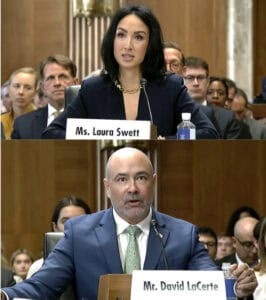 We finally have all five members in place for the Federal Energy Regulatory Commission (FERC). Yesterday, the U.S. Senate, despite the best efforts of Democrats to further delay confirmation votes for *any* Trump appointments, voted to confirm a slate of over 100 new appointments, including two new members of FERC, on a party-line vote of 51-47. In June, President Trump nominated Laura Swett of Vison & Elkins to replace Republican Mark Christie, who had been elevated to Chairman under Trump (see
  Last week, FERC voted to sunset 53 outdated and unnecessary regulations to advance the Commission’s core mission of ensuring reliable, safe, secure, and economically efficient energy for consumers at a reasonable cost. The actions respond to President Trump’s Executive Order “Zero-Based Regulatory Budgeting to Unleash American Energy” issued in April 2025, which directs agencies to incorporate a sunset provision into their regulations governing energy production to stimulate innovation and deliver prosperity to everyday Americans. Bear in mind, this action comes from the current three FERC commissioners, which include two Democrats and one Republican.
  The Europeans have tried to regulate the U.S. oil and gas industry for more than a year (see
 What is it about the modern Democrat Party that seeks the total destruction and annihilation of that which they perceive as a political threat? The party, or perhaps more accurately, the radical left elements of the party (which increasingly is all of the party), wants to destroy law and order, including our police departments. Just look at the “protests” (i.e., violent riots) in places like Portland, Oregon. Look at the violence against ICE (U.S. Immigration and Customs Enforcement) employees in places like Chicago. And look at the dangerous talk of politicians like Pennsylvania Governor Josh Shapiro, who is threatening to force the state out of the PJM Interconnection electric grid (see
  Carrie Crumpton, Vice President of Environmental Strategy, presented on behalf of CNX Resources at the recent 2025 Shale Insight Conference. Carrie provided an overview and update on CNX’s
  Disappointingly, the Trump Federal Trade Commission (FTC) voted 3-0 to maintain a “consent order” that prevents private equity firm Quantum Energy Partners from owning stock in EQT and prohibits the CEO of Quantum from serving on EQT’s Board of Directors. This is all to do with EQT’s purchase of fellow driller Tug Hill in 2023. In September 2022, EQT announced a deal to buy privately owned Tug Hill Operating’s West Virginia shale assets (90,000 acres and 800 MMcf/d of production in West Virginia) for roughly $5.2 billion (see