
Rover Pipeline Says Part of Phase 1 Will be Delayed Nearly a Month
 Rover is Energy Transfer’s $3.7 billion, 711-mile Marcellus/Utica natural gas pipeline that will run from PA, WV and eastern OH through OH into Michigan and eventually into Canada. The Federal Energy Regulatory Commission (FERC), charged with overseeing interstate pipeline projects, granted final approval for the project in early February (see ET Rover Pipeline Gets Final Approval by FERC). Since then, the company has aggressively moved forward with construction. Energy Transfer has maintained, from the beginning, it will complete Phase 1 of the project in “July 2017” (usually quoted by Rover ET officials as July 1st), and the rest of the pipeline will be done in “November 2017” (Nov. 1st). Phase 1 will build the pipeline as far west as Defiance, OH. Phase 2 finishes the pipeline–all the way to the Dawn Hub in Canada. Some say the company has moved too quickly, resulting in accidents (see Rover Pipeline Accident Spills ~2M Gal. Drilling Mud in OH Swamp). Rover has put new procedures in place to prevent more accidents like the 2 million gallon drilling mud spill, asking FERC for permission to drill underground in two locations key to completing Phase 1 (see Rover Gets Serious About Mud Spills, Asks FERC for OK to Drill). Yesterday MDN brought you the news that FERC denied permission to begin new underground horizontal drilling (see FERC Responds to Rover Request to Begin Drilling in 2 Locations: NO). So that begs the question: Can Rover keep to its schedule? ET officials are now modifying the date for completion of Phase 1…
Read More “Rover Pipeline Says Part of Phase 1 Will be Delayed Nearly a Month”
 It was full speed ahead for Energy Transfer’s Rover Pipeline construction project in Ohio–until a series of drilling mud spills hit, including one that dumped some 2 million gallons of bentonite mud into a wetland near the Tuscarawas River in Stark County, OH (see
 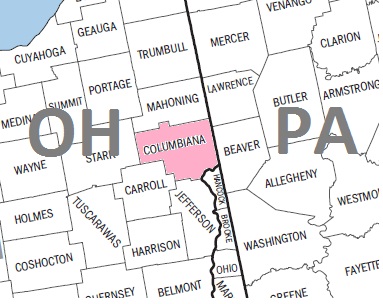 Hilcorp has woken up and come alive in the Ohio Utica Shale–for the first time this year. The company recently filed for permits to drill three new Utica wells in Columbiana County. Which is interesting. Hilcorp zigs when everyone zags. Most drilling in the Ohio Utica currently happens in southeastern Ohio–in counties like Belmont, Monroe and Guernsey. When the play first became active for shale drilling, much of the early action happened in Carroll County, and Columbiana. But lately (over the past 2-3 years) most drilling moved south. But Hilcorp, with acreage in the northern Utica in both Ohio and Pennsylvania, continues to make money staying north. In fact, Hilcorp has been called the “dominant active prospector” in the northern tier area of the Utica Shale–an area including Columbiana, Mahoning and Trumbull counties in OH and Lawrence and Mercer counties in PA. Hilcorp is strong and steady. They make money when they drill. So we take this as a good sign that drilling is heating up in the northern Utica…
 Radical environmental groups are seeking to stop the Energy Transfer Rover Pipeline project by using recent violations as leverage. The FreshWater Accountability Project, begun in Ohio after the Muskingum Watershed Conservancy District signed agreements to sell water to the shale industry, along with Michigan Residents Against the ET Rover Pipeline, filed a complaint with the Federal Energy Regulatory Commission (FERC) on Wednesday asking the federal agency to stop all construction on Rover. The request will almost certainly go nowhere–but Rover’s own actions have opened the door to this action. We understand that accidents happen when drilling horizontally underground for pipelines and that sometimes you get an “inadvertent return” (leak) of drilling mud slipping up to the surface. But it’s tough to explain away a 2 million gallon leak (see
  Here we go again. A new “study” published today by Harvard University researchers supposedly indicates that Pennsylvania, Ohio, and West Virginia are loaded with underground natural gas storage sites that may leak like the Aliso Canyon debacle in California. The new study published in the journal Environmental Research Letters, titled “A national assessment of underground natural gas storage: identifying wells with designs likely vulnerable to a single-point-of-failure” (full copy below), says there are 14,138 active underground storage (UGS) wells in 317 locations/facilities in the U.S. The study identifies 2,715 active UGS wells across 160 facilities that, like the failed well at Aliso Canyon, were not originally designed for gas storage. (Gasp) Even worse: The majority (88%) of these repurposed wells are located in OH, MI, PA, NY, and WV. (Double gasp) Here’s the thing: Aliso Canyon was one facility that had a catastrophic failure (a failure which, by the way, hurt no one–it just released some extra methane into the air). While it may be interesting and useful to know (for accident prevention) that there are other facilities constructed years ago, like Aliso Canyon, that were later repurposed to be used for underground storage–each and every location is different, with unique characteristics. No two storage sites are the same geologically. It does not follow, as implied in the report, that because Aliso Canyon leaked, that these other “similar” facilities will eventually fail and leak. However, our main objection to this research–and why we call it fake research–is that the researchers never bothered to go into the field and take air samples to see if there is any ACTUAL leaking going on at any of these thousands of other sites! Fake mainstream news sources are just now picking up on the story and running it. Nothing sells newspapers (or grabs online eyeballs) like fear. And hey, it serves the mainstream narrative that fossil fuels are the ultimate evil. Here’s the kicker: This latest “research” was funded, in large part, by the virulent anti-fossil fuel Heinz Foundation and The Nature Conservancy. That tells you all you need to know about this latest bought-and-paid-for “research” study with a Harvard label slapped on it…
 We’ve written a number of times about DUCs–otherwise known as drilled-but-uncompleted wells. When a shale driller drills a new well, it doesn’t always happen all in one go. You first drill the hole down, and then curve the drillbit and drill the horizontal portion–called the lateral. Then you pull the drill bit out of the ground and (at some point) the fracking process begins. Fracking doesn’t always happen right away. Sometimes wells are initially drilled but not fracked–essentially putting them in inventory to be fracked later. Those wells are DUCs. Since a lot of the cost to develop the well has already been spent in preparing the site and drilling the hole, to come along at a later time and frack is much “cheaper” if you (as a driller) want to bump up your production. Price of gas low right now? Drill the initial hole, mothball the project, and come back later when the price of gas goes up and finish it off and hook it up to production. The DUC inventory is a closely watched number. Analysts at Platts have been watching and have noticed something interesting. In most shale plays–particularly oil plays like the Permian in Texas–drillers are sinking initial holes as fast as they can and the DUC inventory numbers are going up up up. The Permian has seen 476 new DUCs added since January! But in the Marcellus, only 3 new DUCs have been added since last December. Which is “puzzling.” What does it mean?…
 You know how money-grubbing, cheap, careless and in general no-good those Big Oil companies are, right? They only care about themselves. They seek to rape and pillage Mom Earth, keeping piles of gold in their coffers, killing humankind in the process. That’s the picture painted by anti-fossil fuel nuts. Here’s the real picture: In 2016, between employees and the corporation, Exxon Mobil donated more than $50 million to colleges and universities across the United States. That is a staggering number. Many of those colleges and universities were located in the Appalachian basin (Marcellus/Utica), including $2.7 million in PA, $800K in OH, $1.4 million in VA, $3.2 million in NY and $1.2 million in NJ. Just the opposite of the negative picture painted by the enemies of fossil fuels…
  More trouble for Energy Transfer and the Rover Pipeline project as the company is working against a tight deadline to get the $3.7 billion, 711-mile Marcellus/Utica natural gas pipeline that traverses Ohio up and running this year. It appears as if the Ohio Environmental Protection Agency (OEPA) is hellbent on picking a fight with the project. Perhaps some of OEPA’s criticisms are justified–perhaps some are not. We’ll give you the “lay of the land” (pun intended) as we see it. Early on Rover appeared to rush too much, resulting in numerous drilling mud spills in locations where Rover was drilling underground to avoid creeks and rivers and other structures. One of those spills dumped 2 million gallons of drilling mud (i.e. bentonite) in a wetland next to the Tuscarawas River (see
  We spotted a story that makes reference to an ethane storage facility currently under construction in Monroe County, OH. That got our attention. The story said that Energy Storage Ventures has plans to begin storing ethane in the underground facility by the end of 2018. Who’s Energy Storage Ventures? We went looking and discovered it’s another name for the Mountaineer NGL Storage project that we’ve been covering. In April 2016, Mountaineer NGL Storage (aka Energy Storage Ventures) announced an open season for a new underground NGL storage facility in Monroe County, Ohio, near Clarington, along the Ohio River (see
  While reviewing documents filed with the Federal Energy Regulatory Commission (FERC) for the Energy Transfer Rover pipeline project, we came across a letter filed by ET yesterday. The letter (full copy below) addresses the recent “inadvertent return” (i.e. major leak) of 2 million gallons of drilling mud in a swamp next to the Tuscarawas River (Stark County, OH). Following that leak and other leaks, FERC told Rover to stop any new underground drilling not already under way (see
  We’re not sure we have the full, 100% story, but we have enough of it to have some righteous anger. In May 2015, Rover purchased a house in Carroll County, OH, located near where the pipeline, and a compressor station for that pipeline, is due to run. Rover bought the house to use for offices for several Rover affiliate companies. After buying it, Rover determined the house was “ill-suited for its intended purpose” and decided to demolish it. Problem was/is, that house was under consideration to be added to the National Register of Historic Places (see
  A nation without laws is not a nation. Virulent anti-drillers in Youngstown, OH have now tried six times to pass a so-called Community Bill of Rights ballot measure–and have failed all six times, the most recent last November (see
  Early last week MDN brought you the news that Energy Transfer’s Rover Pipeline project has been fined by the Ohio Environmental Protection Agency (OEPA) for $431,000 for “18 incidents involving mud spills from drilling, stormwater pollution and open burning at Rover pipeline construction sites have been reported between late March and Monday” (see
  As MDN began reporting last week, Energy Transfer’s Rover Pipeline, a $4 billion, 711-mile Marcellus/Utica natural gas pipeline that will run from PA, WV and eastern OH through OH into Michigan and eventually into Canada, has quickly become a soap opera. MDN brought you the news that Energy Transfer’s Rover Pipeline project has been fined by the Ohio Environmental Protection Agency (OEPA) for $431,000 for “18 incidents involving mud spills from drilling, stormwater pollution and open burning at Rover pipeline construction sites have been reported between late March and Monday” (see
  A group of landowners in Ohio calling themselves the Coalition to Reroute Nexus (CORN), whom we affectionately call CORNballs, have filed a lawsuit in court against the NEXUS pipeline project. Not to actually reroute NEXUS, but to kill it. To stop it. The landowners are asking a federal court to block the Federal Energy Regulatory Commission (FERC) from allowing the project to proceed–which of course is not going to happen–and to legally bar the NEXUS Gas Transmission project from building the pipeline. Which has been the aim of the CORNballs from the beginning–contrary to the party line that they just want it rerouted around them. The CORNballs seem to be in league with antis in the City of Green, OH, who recently voted to give $100,000 of taxpayer money to high-priced Cleveland lawyers to try and stop NEXUS (see