
Baker Hughes | Energy Services | Industrywide Issues | Ohio | Pennsylvania | Research | West Virginia
U.S. Rig Count Gained 4th Week in a Row, Up 7 @ 549; M-U Up 1 @ 38
 For the fourth week in a row, the Baker Hughes U.S. national rig count gained, instead of losing, rigs. Last week, the count increased by seven, to 549. The last time the count was higher was June 20. The even more exciting news is that the Ohio Utica picked up another rig, boosting the total in Ohio to 13, the highest it’s been in well over a year. Pennsylvania maintained its count of 18 active rigs, which it has maintained since July 25 (two months). West Virginia kept its seven active rigs, the same number since May 30 (four months). The combined M-U count was 38 rigs, with 24 rigs targeting the Marcellus layer and 14 targeting the Utica. Read More “U.S. Rig Count Gained 4th Week in a Row, Up 7 @ 549; M-U Up 1 @ 38”
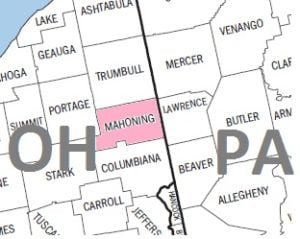 The Youngstown Vindicator is reporting that one of the first new horizontal gas and oil wells to be drilled in Mahoning County, OH, in recent years has begun producing gas and oil at its well pad. The Wehr Spring Valley Farm well is producing oil and natural gas. However, the Ohio Department of Natural Resources (ODNR) has not yet released any production numbers for the well. The big news here is that drilling is migrating well north of the traditional locations for Utica drilling—to the “northern part” of the Utica. Is this a foretaste of good things to come in the northern Utica?
  For the week of September 15 – 21, the number of permits issued to drill new wells in the Marcellus/Utica decreased from the previous week, but not by much. There were 24 new permits issued across the three M-U states last week, down from 26 issued two weeks ago. Pennsylvania finally improved a bit, but only because of one driller. PA issued 11 new permits last week, with 10 of the 11 going to Range Resources. Range’s permits were spread across three counties, with one permit in Allegheny, five in Beaver, and four in Washington. The other PA permit went to Beech Resources for a well in Lycoming County.
  In early April, MDN brought you the exciting news that pipeline giant Williams, via its subsidiary, Will-Power, is planning to build two Utica/Marcellus gas-fired power plants in the New Albany International Business Park in Licking County, Ohio (see
  Earlier this month, we brought you the bombshell news that Antero Resources, the country’s fifth-largest natural gas producer and largest producer in West Virginia, is preparing to market its Ohio Utica assets, hoping to fetch $900 million to $1 billion (see
  Two weeks ago, Marietta, OH, officials, including the city’s Republican mayor, law director, water superintendent, and a majority of city council members, asked the Ohio Department of Natural Resources (ODNR) Oil and Gas Chief Eric Vendel to deny a permit application from DeepRock Disposal Solutions for the Stephan #1 injection well, which would be the company’s fifth injection well in the area (see
  Two weeks ago, Marietta, OH, officials, including the city’s Republican mayor, law director, water superintendent, and a majority of city council members, asked the Ohio Department of Natural Resources (ODNR) Oil and Gas Chief Eric Vendel to deny a permit application from DeepRock Disposal Solutions for the Stephan #1 injection well, which would be the company’s fifth injection well in the area (see
  There is a disagreement brewing between those who operate the PJM Interconnection power grid and Big Tech, including Amazon, Google, Microsoft, and others, regarding the issue of adding data centers to the PJM grid. PJM recently proposed a fast-track stakeholder process to develop rules by the end of the year for interconnecting data centers to its system while ensuring the region has enough power supplies. The proposal would treat new data centers over 50 megawatts (MW) as “non-capacity-backed load” (or NCBL). Under the proposal, PJM could curtail (reduce or cut off) power deliveries to data centers with NCBL status before the grid operator moves to pre-emergency load curtailments for other electricity users. Big Tech doesn’t like it one little bit.
 Two weeks ago, the Baker Hughes U.S. rig count resumed a downward trend, which continued last week. The count lost another two rigs to end the week at 536. The count has been down (bleeding) 16 of the last 18 weeks. Fortunately, the Marcellus/Utica count has remained constant for the past six weeks, at a combined 36 active rigs. PA operated 18 active rigs. OH ran 11 rigs. And WV operated 7 rigs. Twenty-four rigs targeted the Marcellus and 12 rigs targeted the Utica last week. The overall downward trend in the national count is due to a slowdown in oil-focused drilling, although last week’s figures reversed this trend. Baker Hughes said oil rigs rose by one to 412 last week, while gas rigs fell by three to 119.