
Energy Services | Ethane | Industrywide Issues | Ohio | Processing Plants | PTT Global | Statewide OH
PTT Pays JobsOhio $20M for Failing to Build OH Cracker Plant
 PTT Global Chemical has reimbursed JobsOhio, the state’s private economic development office, $20 million for failing to make a final investment decision (FID) to build a multi-billion-dollar ethane cracker plant project in Belmont County, OH. JobsOhio paid Bechtel Corp. $20 million in 2019 to complete site engineering and site preparation for the project, with a promise from PTT that it would soon make an FID and move forward with construction. That never happened, so PTT is paying up because it didn’t live up to its end of the bargain. Interestingly, PTT maintains it is “committed to building the multi-billion dollar project.” Right.
Read More “PTT Pays JobsOhio $20M for Failing to Build OH Cracker Plant”
 It’s been about 3½ years since Encino Energy in partnership with the Canada Pension Plan Investment Board closed on buying Chesapeake Energy’s Ohio Utica assets for $2 billion (see
  Public company Gulfport Energy, the third-largest driller in the Ohio Utica Shale (by the number of wells drilled), emerged from bankruptcy less than a year ago, in May 2021, with a new board and new top management (see
 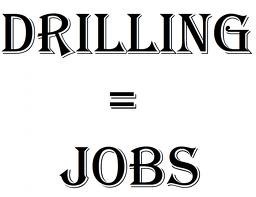 In the early days of the Marcellus and Utica Shale, a number of studies and predictions were made about how the industry would bring tens of thousands of jobs and inject billions of dollars into state economies. In Ohio, a Cleveland State University (CSU) report issued in 2012 predicted that Ohio’s then-growing fracking industry would add 66,000 direct and indirect jobs and $5 billion a year to the state’s economy by the end of 2014 (see
  Last November MDN told you about a brand new organization called the Utica Energy Alliance (see
 Pennsylvania, Ohio, and West Virginia are all scrambling to form working groups or other alliances in an attempt to be THE state chosen for one of four regional hydrogen hubs funded by the recently passed so-called Biden infrastructure bill. The new law provides $8 billion for four regional hubs. It’s a safe bet one of those hubs will be located in either PA, OH, or WV. The race is now on to attract that investment money. On Friday, WV’s new Hydrogen Hub Working Group held its first meeting to plot a strategy to snag the project. However, PA and OH are in the hunt too, with their own dedicated groups.
 Part of the so-called Biden infrastructure bill (now a law) provides $4.7 billion to plug old abandoned and orphan oil and gas wells. We previously reported on initial payments from the program for both Pennsylvania and West Virginia. When we spotted an even higher number for Ohio’s portion of that program, we smelled that something is wrong, and indeed it is. We will explain below.
 Last year Big Green lobbyists using the City of Oberlin, Ohio contested the Federal Energy Regulatory Commission (FERC) decision to approve the Enbridge/DTE Energy NEXUS pipeline, a a $2 billion, 255-mile pipeline from the Ohio Utica Shale into Michigan that’s been flowing for years connecting to a pipeline that exports some of the gas into Canada (see
  In late 2020, ExxonMobil released the outlines of its development plan for the next five years (see
  Our friends at NGI (Natural Gas Intelligence) are running an excellent series providing expert forecasts for the global natural gas and oil markets in 2022. The latest installment interviews several experts about the prospects for the Marcellus/Utica. With the Shell ethane cracker plant coming online sometime this year, the prospects for NGL sales in the M-U have picked up. Also in the discussion: capping Pennsylvania’s orphaned wells, drilling in the Wayne National Forest, and the Mountain Valley Pipeline coming online.
 BCCK Holding Company (BCCK) has been granted a contract to upgrade a cryogenic gas processing plant in the Marcellus/Utica, in southeastern Ohio. The name of the customer was not disclosed but we’re guessing it is MarkWest Energy (now MPLX). BCCK says it has developed a simple and effective modification to improve the existing cryogenic plant design and equipment with the aim of increasing propane recovery.
 The Ohio Oil and Gas Energy Education Program (
 Economists are still analyzing the impact of the coronavirus pandemic from 2020, let alone assessing impacts from 2021. Cleveland State University researchers have run the numbers and have discovered something interesting. Of Ohio’s 88 counties, only 18 grew their economies in 2020. Of those 18, two counties stood head and shoulders above the rest for increases in economic activity. Both counties have something in common: Utica Shale drilling.
 Yesterday Tennessee Gas Pipeline (TGP), a subsidiary of Kinder Morgan, filed a proposal with the Federal Energy Regulatory Commission (FERC) to implement a “responsibly sourced natural gas (RSG) supply aggregation pooling service” at select locations across the TGP system. Translation: Utilities and other buyers will be able to buy RSG certified natural gas for their customers, costing them more money.