
MarkWest Loses 28K Barrels of Non-Toxic Drilling Mud in PA Coal Mine
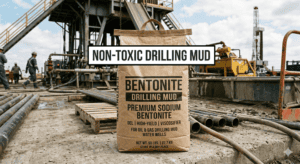 If a tree falls in a forest and no one is around to hear it, does it make a sound? Similarly, if a pipeline being drilled loses 28,500 barrels (1.2 million gallons) of nontoxic drilling mud into an abandoned coal mine void, does it matter? The environmental left is attempting to make a big deal out of MarkWest Liberty Midstream’s drilling project in Washington County, PA, in which the company has, over a series of 19 different episodes, lost a cumulative 28,500 barrels of nontoxic bentonite drilling mud into an old coal mine void as it drilled the Chiarelli to Imperial Pipeline Project, between October 2025 and January 2026. Bentonite is the same stuff used to make kitty litter and toothpaste. Read More “MarkWest Loses 28K Barrels of Non-Toxic Drilling Mud in PA Coal Mine”
 Thanks to the work of David Hess at the PA Environment Digest Blog in tracking Department of Environmental Protection (DEP) notices published in the Pennsylvania Bulletin, we spotted three new water pipeline projects related to drilling new shale wells in three different northeastern PA counties: Lycoming, Bradford, and Wyoming. Water is used for fracking. New water pipelines mean new fracking is on the way in those locations.
  Just coming to light now, more than a month after it happened, the Pennsylvania Department of Environmental Protection (DEP) is investigating whether there is any connection between a low-level earthquake (“seismic event”) near Murrysville in Westmoreland County, PA, and the Penneco Environmental Solutions LLC Sedat 3A injection well in Plum Borough in Allegheny County. Operators of injection wells in PA are (usually) required to maintain on-site seismometers. On Feb. 7, the seismometer at the Penneco Sedat 3A site registered a “seismic event” about six miles away near Murrysville.
 The Marcellus/Utica region received a combined 11 new drilling permits last week, Feb. 23 – Mar. 1, down 6 from the 17 permits issued two weeks ago. Pennsylvania issued 10 of the 11 new permits. West Virginia issued the other permit. Ohio got skunked last week. The drillers receiving new permits last week included: Antero Resources, CNX Resources, EQT, JKLM Energy, and STL Resources.
  A Syracuse University study (full copy below) reveals that conventional oil and gas extraction in Pennsylvania poses a greater long-term threat to stream biodiversity than modern shale fracking. By analyzing over 6,800 aquatic samples, researchers found that legacy infrastructure (old conventional oil and gas wells) is more strongly linked to declining ecosystem health and the loss of sensitive species. While public concern often centers on newer fracking methods, these findings highlight the persistent impact of older, conventional wells. The study, titled “
 Big Solar, as in big solar farms (which are ugly and eat up farmland), can’t exist in a fair and open energy market. It’s too expensive. Big Solar fails unless there are massive taxpayer subsidies—you supporting it with your tax dollars. Nowhere is that more evident than what just happened in Centre County, Pennsylvania. The Centre County government agencies that had worked together for years on plans to buy solar energy are ending the initiative after the company they were working with sought to end the current contract amid a “changing financial landscape.” Taxpayer subsidies disappeared, and so, too, has this project.
  We won’t bore you with links to numerous stories we’ve written pointing out how the environmental left has pivoted from anti-fracking to anti-data center. We believe we were one of the first to make that observation (about a year ago). At any rate, one of the worst of the worst “environmental” organizations, Food & Water Watch (FWW), has all but abandoned its anti-fracking work to focus on opposing and blocking AI data centers. It’s absolutely, positively, anti-progress (not to mention anti-American). FWW’s latest campaign is aimed at convincing Congress and state legislatures (like Pennsylvania) to pass a three-year moratorium on building new data centers.
  The Pennsylvania Independent Oil & Gas Association (PIOGA) is the comprehensive trade association representing nearly 400 members across Pennsylvania’s oil and natural gas industry. Tracing its roots to 1918, it serves as a unified voice for shale and conventional producers, service companies, and distributors. PIOGA will host its
  A study by the Allegheny Conference on Community Development indicates that a proposed 500 to 700-megawatt hyperscale data center at the Zediker site in Washington County, PA, could generate $407 million for the local economy and create 2,364 jobs. Owned by CNX Resources Corp., the former coal mine is being marketed for generative AI facilities, leveraging nearby natural gas supplies and remediated mine gas to power the operation. While no official deal has been struck, the project is expected to yield $67.5 million in tax revenue, positioning the site as a transformative hub for high-tech investment and regional prosperity.
 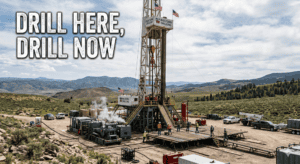 During the Pennsylvania House Appropriations Committee hearing held on March 2, House Republicans advocated for expanded shale gas drilling on state forest lands and beneath state parks to bolster revenue. Department of Conservation and Natural Resources (DCNR) Secretary Cindy Adams Dunn, a radical leftist, noted that current drilling provides an average of $95 million annually but has already caused the “loss” of 30,000 acres of core forest land. Republican members suggested that revising the long-term leasing moratorium could generate an additional $250 million, which fell on deaf Democrat ears.
  Olympus Energy (now owned by EQT) drills in the Greater Pittsburgh region, in Allegheny and Westmoreland counties. In 2021, Olympus applied to build a new well pad in a rural part of Allegheny County, in West Deer Township. So-called “concerned citizens” got amped up to oppose the project. They succeeded when town supervisors rejected the Dionysus well pad (see
  Although there are legitimate concerns over data centers locating in populated communities (noise, water use, etc.), make no mistake: The anti-data center movement is nothing more than the anti-fracking movement in new clothes (see
  On Friday, Baker Hughes reported that the U.S. rig count lost 1 rig and now stands at 550 active rigs. Three weeks ago, the Pennsylvania Marcellus added a rig, bringing PA’s total to 20 active rigs, the most it has operated in well over a year. PA kept its new/higher total last week. Both Ohio and West Virginia remained at 13 and 7, respectively. The combined M-U count was 40 rigs last week, the most operated rigs in well over a year, now for a third week in a row. The M-U’s primary competitor (for attention and money), the Haynesville, continues to operate 52 rigs (12 more than the M-U).
  Marking the tenth anniversary of U.S. liquefied natural gas (LNG) exports, European Union (EU) and American officials convened in Pittsburgh on Friday for an all-day conference, “EU-U.S. LNG Cooperation 2.0,” which was held at the Heinz History Center. The purpose of the meeting was to reinforce a critical strategic energy partnership. Since the first shipment in 2016, and accelerated by Russia’s invasion of Ukraine, U.S. LNG has transformed European energy security by enabling a dramatic shift away from dependence on Russian gas. As Europe seeks to eliminate Russian gas entirely, the U.S. has become the world’s leading exporter.