
Coterra 4Q: Marcellus Drilling Picks Up as Production Drops
 Coterra Energy issued its fourth quarter and full-year 2025 update yesterday. For this latest update, there was no earnings conference call with analysts due to the impending merger of Coterra into Devon Energy. Companies don’t want to face questions about the merger or risk screwing it up, so they keep mum. Can’t blame them. What we noticed about Coterra’s 4Q update is that the company continues to treat its Marcellus gas production as a cash cow to fund oil drilling in the Permian Basin. Even so, we were encouraged to see an increase in the number of new wells drilled in 4Q and for full-year 2025, although Marcellus production slipped in 4Q and for full-year 2025 relative to 2024. Call it maintenance mode. Read More “Coterra 4Q: Marcellus Drilling Picks Up as Production Drops”

 Yesterday, the Pennsylvania Independent Fiscal Office (IFO) released its latest quarterly Natural Gas Production Report for October through December 2025 (full copy below). There were 129 new horizontal wells spud (drilled) in 4Q25, a big increase of 46 wells (+55%) compared to 4Q24. Natural gas production volume was 1,934 billion cubic feet (Bcf) in 4Q25 (same as 3Q25), up 63 Bcf (+3.4%) from 1,871 Bcf produced in 4Q24. The average Pennsylvania spot hub price was $3.08, an increase of $1.07 (+53%) from the prior year’s $2.01. All in all, it was a great fourth quarter for the PA Marcellus. The numbers are going in the right direction. However, the big news is annual production.
  Yesterday, Expand Energy and Evolution Well Services announced a new agreement to deploy Evolution’s 100% electric hydraulic fracturing technology (e-fracking) in Expand’s Northeast Appalachia (northeast Pennsylvania) drilling program. Evolution, headquartered in Houston with a regional office in Pittsburgh, specializes in “electric” fracking — using natural gas from the well pad (instead of diesel) to power turbines that generate electricity to drive fracking pumps. We’ve written about Evolution’s e-fracking work in the Marcellus/Utica for years (
 On Friday, Baker Hughes reported that the U.S. rig count remained unchanged at 551 active rigs. That’s three weeks in a row at the same number (pretty much unheard of). Two weeks ago, the Pennsylvania Marcellus added another rig, bringing the total to 20 active rigs, the most it has operated in well over a year. PA kept its new/higher total last week. Both Ohio and West Virginia remained at 13 and 7, respectively. The combined M-U count was 40 rigs last week, the most operated rigs in well over a year, now for a second week in a row. The M-U’s primary competitor (for attention and money), the Haynesville, added 2 rigs two weeks ago and kept them last week, operating 52 rigs (12 more than the M-U).
  The Texas Eastern Transmission Pipeline (TETCO), operated by Enbridge, is a major 8,580-mile interstate natural gas system connecting Gulf Coast/Texas supplies to the Northeast US. Originally designed for northbound flow, it now heavily supports bidirectional, southbound, and regional supply, including Marcellus/Utica gas. A short 5.3-mile section of TETCO (actually four separate pipelines that make up TETCO) running through Greene County, PA, needs a fix to protect it from coal mining activities set to begin directly underneath the pipeline in that area.
  The Marcellus/Utica region received a combined 43 new drilling permits last week, Feb. 9 – 15, up 19 from the permits issued two weeks ago. The most recent high in permits (going back at least a year) occurred during the first week of December, when 60 new permits were issued (see
 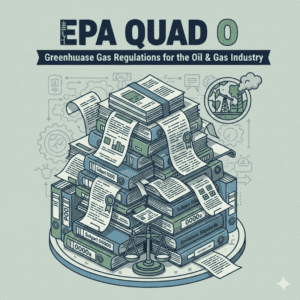 Today, we revisit a topic that (at first glance) is a bit complex: a federal EPA regulation called Subpart OOOOc (“Quad O”), which addresses methane emissions from existing sources. Under the Biden administration, Quad O was twisted and used in an attempt to force oil and gas drillers, especially small conventional drillers, out of business. The policy was set, and the individual states were instructed to bring their own regulations and policies into compliance. But then the Democrats lost the White House. No worries…the Dems running the Pennsylvania Department of Environmental Protection (DEP) eagerly developed onerous regs to comply with the Biden EPA’s Quad O standards. The DEP’s regs are ready to go and could be adopted at any time. However, the Trump EPA delayed implementation of Quad O until 2027 while it works to revise or scrap it.
  In early 2024, we reported that Penn America Energy CEO Franc James, the potential builder of the proposed Penn LNG export facility in the Philadelphia area, said that he “pumped the brakes” on the project but that it wasn’t dead yet (see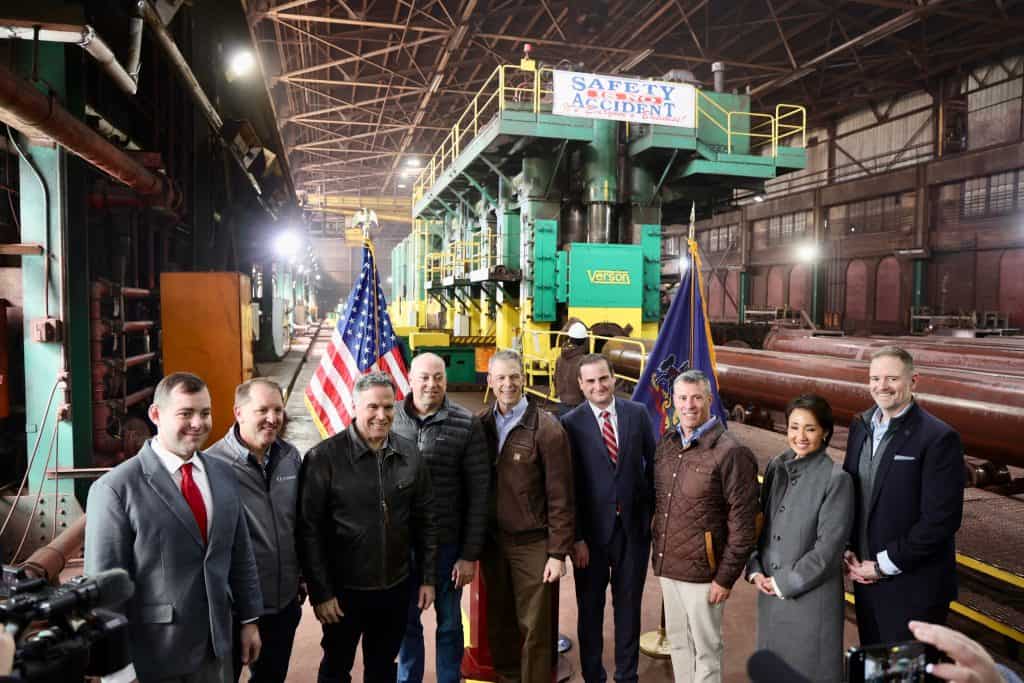
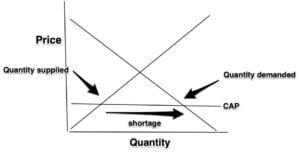 PJM Interconnection, the electrical grid operator that covers Pennsylvania (along with all or parts of 12 other states and the District of Columbia), has once again caved to the political demands of PA Gov. Josh Shapiro to artificially cap prices in its upcoming capacity auctions for the next two years. PJM caved for the July 2025 auction (see
  In December, MDN told you that three anti-shale drilling groups—the PA Council of Trout Unlimited, the Keystone Trails Association, and the Responsible Drilling Alliance—requested the Pennsylvania Department of Environmental Protection (DEP) hold a hearing on the Chapter 105 permit requested for a 3.9-mile shale gas access road and staging area proposed by PA General Energy (PGE) in the Loyalsock State Forest (see
  Antis somehow got to the board of commissioners in Montour County, PA. Yesterday, the commissioners voted unanimously to reject Talen Energy’s request to rezone empty agricultural land near Talen’s Montour Power Plant (converted from coal to run on Marcellus gas in 2023) for a proposed data center. This decision followed community concerns stoked by lying groups like Food & Water Watch regarding “potential environmental impacts” on the nearby Montour Preserve.
  We stumbled across a mention of a lawsuit (Kriley v. XTO Energy) that we previously were not aware of—a lawsuit that had its beginning back in 2019 and involves seven landowners in Butler County, PA. The landowners claim that XTO Energy (a subsidiary of ExxonMobil) systematically underpaid natural gas royalties. Over the past six years, the lawsuit has evolved and was certified as a class action in late 2025, meaning it has expanded from affecting seven landowners to potentially hundreds. XTO, in its latest court filing, is attempting to limit the class action.