
M-U Rig Count Stays @ 39 But PA & OH Swap 1 Rig; Nat’l Count @ 546
 The Marcellus/Utica rig count gained 1 rig eight weeks ago in the Ohio Utica, bringing the regional total to 39 rigs. The combined number of 39 remained the same last week, however, there was an important change. The Pennsylvania Marcellus picked up one rig last week, while the Ohio Utica lost a rig. PA is now operating 19 rigs, OH is operating 13 rigs, and WV maintains its 7 rigs, which it has operated since May of last year. There were 25 rigs targeting the Marcellus and 14 targeting the Utica last week. The national count gained 2 rigs last week, bringing the national total to 546 active rigs. Read More “M-U Rig Count Stays @ 39 But PA & OH Swap 1 Rig; Nat’l Count @ 546”
 The Marcellus/Utica region received a combined 10 new drilling permits last week, Jan. 19 – 25, down significantly from the 27 issued two weeks ago. Pennsylvania issued 6 new permits, Ohio issued 4, and West Virginia issued none. The drillers receiving new permits last week included: Ascent Resources, EOG Resources, Expand Energy, and Pennsylvania General Energy.
  National Fuel Gas Company (NFG) is an integrated natural gas company with a regulated utility business, a shale drilling business (Seneca Resources), and a pipeline business (NFG Midstream, Empire Pipeline). The company issued its fiscal first quarter update yesterday, which is everyone else’s calendar fourth quarter update. The company reported that Seneca produced 109 Bcf of natural gas, an increase of 11 Bcf, or 12%, from the prior year, due to new Utica pads that came online in Tioga County.
  Last weekend, EQT CEO Toby Rice showcased the shale gas industry’s resilience during a major winter storm, taking to social media to highlight field efforts to maintain natural gas production at a well pad in Washington County. Despite record price spikes and the looming threat of “freeze-offs,” major producers like EQT, Range Resources, and CNX currently report stable operations. With natural gas fueling 40% of the PJM grid, maintaining pipeline pressure is critical to preventing regional power outages. Industry leaders emphasize that proactive winterization and dedicated crews are essential to ensuring energy security and keeping furnaces running during extreme cold.
  In 2025, the Pennsylvania Department of Environmental Protection (DEP) achieved “historic success” by eliminating a longstanding permit backlog of over 2,400 applications. The DEP acted on more than 40,000 permits and conducted 116,364 inspections to ensure environmental safety. Key initiatives included the launch of the Streamlining Permits for Economic Expansion and Development (SPEED) program. The DEP is celebrating its success by creating a brand new bureaucracy: the Bureau of Permitting Coordination. Kind of a bureau of coordinating bureaus. (You know, the word bureaucracy comes from bureau, meaning a government department, and cracy, meaning rule. Literally, to be ruled by government bureaucrats who are not elected.)
 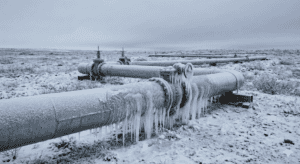 We’ve recently begun to highlight flow restrictions along pipelines that carry Marcellus/Utica molecules. When flows slow or stop (can’t reach other markets), the price typically falls because supply exceeds demand. But sometimes, the opposite happens. If pipelines are restricted due to outages and freeze-offs (as is happening right now with Winter Storm Fern), the supply of natural gas is diminished, leaving insufficient supply to meet increased demand due to the cold weather. When that happens, spot prices for natural gas soar. Wood Mackenzie reported that natural gas freeze-offs across the country reached a single-day high of 17 billion cubic feet (Bcf) on January 25th, approaching the record 18 Bcf set during Winter Storm Uri, as an intense Arctic weather system sweeps across the United States. What about the situation in the M-U?
 There’s just no other way to say this: Pennsylvania is on the cusp of flushing $92 billion down the toilet because resistance is preventing new data centers from being built. We’ve been warning about this danger for months (see
  Last Friday, the Trump administration officials joined several governors from the 13 states that are part of the PJM Interconnect grid to outline a broad plan they say will ensure customers of the grid will not face skyrocketing electric prices due to new AI data centers getting built in the region (see
  There are two universal, unavoidable truths of life: (1) death, and (2) Democrats love to tax anything and everything. Pennsylvania Democrats are urging state lawmakers to tax data centers to shield residents from rising energy bills. During a hearing held by PA House Democrats on January 20, so-called experts argued that data centers must “pay their own way” for grid upgrades necessitated by their high demand, rather than passing those costs to households. With grid operator PJM Interconnection warning that surging demand could cause blackouts, Democrats proposed legislation to protect ratepayers from price spikes. Although some officials value the industry’s job creation, tax proponents insist that ordinary consumers should not subsidize the infrastructure needed to support the state’s expanding and energy-intensive digital industry.
  Infinity Natural Resources, Inc. announced yesterday that it has acquired Chase Oil Corporation’s working interest in Infinity’s South Bend field in Pennsylvania in an all-stock transaction valued at approximately $36 million. The assets are located in Armstrong and Indiana counties. The transaction has an effective date of January 1, 2026, and represents the company’s first use of stock currency to execute its post-IPO growth strategy. Infinity is in the process of buying Antero Resources’ Ohio Utica assets (see
  On Friday, the White House joined with the 13 governors whose states in whole or in part are served by the PJM Interconnection electric grid, the largest grid in the country, to propose a solution that “protects consumers” from soaring electric rates due to the addition of new AI data centers (see