
PA DEP Issues Construction Permit for 4.5 GW Homer City Gas Plant
 Last April, Knighthead Capital Management, Homer City Redevelopment (HCR), and Kiewit Power Constructors Co. announced a plan to convert the former Homer City Generating Station, previously the largest coal-fired power plant in Pennsylvania (Indiana County, 50 miles east of Pittsburgh) into a more than 3,200-acre natural gas-powered data center campus, designed to meet the growing demand for artificial intelligence (AI) and high-performance computing (see Largest Gas-Fired Power Plant in the U.S. Coming in Western Pa.). At the time, it would have been the largest gas-fired power plant in the country, capable of producing up to 4.5 gigawatts (4,500 MW) of electricity. However, even bigger projects were subsequently announced for Texas and Ohio. Still, at 4.5 GW, this proposed gas-fired power plant is HUGE. Read More “PA DEP Issues Construction Permit for 4.5 GW Homer City Gas Plant”
 One of the great ironies of the Marcellus Shale is that THE TOP two natgas-producing counties in the state, Susquehanna (#1) and Bradford (#2), both of which are rural, don’t, for the most part, offer the gas extracted from under their residents to their residents for everyday use. It costs a lot of money to run local distribution pipelines to homes and businesses for natural gas. Leatherstocking Gas Company is on a mission to change that. Leatherstocking provides natural gas utility service in Susquehanna and Bradford to some 500+ customers. More customers will soon be added to Leatherstocking’s service in Wyalusing (Bradford County) following a recent PIPE grant.
  The Marcellus/Utica region received a combined 17 new drilling permits last week, Mar. 9 – 15, down 4 from the 21 permits issued two weeks ago. Pennsylvania issued 11 of the permits. Ohio issued 5. And, West Virginia issued 1 new permit last week. The drillers receiving new permits last week included: Arsenal Resources, BKV, CNX Resources, EOG Resources, Gulfport Energy, and Range Resources.
  Yesterday, the Trump administration announced “South Mon,” a $17 billion natural gas-fueled facility in southwestern Pennsylvania intended to expand domestic energy production. Part of a $550 billion trade deal with Japan, the hub will be operated by NextEra Energy Resources and generate 4.3 gigawatts (GW) of power. By tapping into the Marcellus and Utica shale regions and connecting to the PJM regional transmission network, the project aims to meet rising demand, lower energy costs, and create local jobs. South Mon is one of three major energy hubs planned nationwide to enhance power affordability and infrastructure across the Mid-Atlantic market.
  No one should be surprised that far-left Democrat Josh Shapiro, currently the Governor of Pennsylvania (but with a major passion to become President), joined his fellow radicals from other blue states in launching a lawsuit against the Trump administration for moving to eliminate the extremist “endangerment finding” concocted by Lord Obama and the Obamadroids of the EPA. Trump’s move to overturn the finding will save Americans roughly $3,800 each. Yet Shapiro and his fellow cabal members want to keep Americans poor and subservient (to them).
  The tagline (remit) of Marcellus Drilling News is “Helping People & Businesses Profit from Northeast Shale Drilling.” Sometimes people can make money apart from leasing land and drilling. As we have pointed out many times, there is a direct connection between shale gas and the power generation market. Gas-fired power plants use (are HUGE customers for) natural gas extracted in the Marcellus and the Utica. AI data centers, which have burst on the scene over the past year or so, have an enormous appetite for electricity. Most of the electricity used to power data centers comes from gas-fired power plants, whether those plants are owned and operated by independent power operators, or (increasingly) owned and operated on-site by the data center itself. This is the story of one farmer in northeastern Pennsylvania who became a millionaire apart from shale drilling—by selling his small farm to a data center company.
  In January, Constellation Energy Corporation finalized its acquisition of Calpine Corporation, becoming the largest private-sector electricity producer in the United States (see
 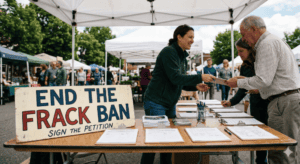 Shale drilling in Wayne and Pike counties in the northeastern tip of Pennsylvania has been blocked since 2010 (16 looooong years), denying landowners in those counties the right to benefit from leasing and drilling on and under their land. Those counties (parts of them) are within the Delaware River Basin, and the Delaware River Basin Commission (DRBC) implemented a moratorium in 2010 to block shale drilling. The moratorium became a full-blown, permanent ban on fracking in 2021. The DRBC added a prohibition on the disposal of oil and gas wastewater to the permanent ban in 2022. It’s time to overturn the ban. We have a
  Here’s a question: Do you want the government to be able to control your thermostat (turning it down in the winter, or up in the summer), controlling your water heater (making it cooler), or controlling your “smart” refrigerator (raising the ambient temp inside), or controlling other so-called smart appliances, bypassing *your* preferred settings? Would you like the government to be able to grab stored electricity from solar panels on your roof or from the battery in your charged-up EV during times of electric grid “stress”? That’s what Democrat members of the Pennsylvania state legislature want to do. It’s called a “virtual power plant,” and it’s being sold as a quick solution to power shortages without having to build new gas-fired power plants (or new windmills, solar farms, etc.). Creating a virtual power plant just takes a little software and a lot of apathy from citizens to make it work.
  Students at Allderdice High School launched the Dice Well Done Club to combat mythical climate change by plugging abandoned oil and gas wells. Led by junior Lucy Hurowitz, the group partners with the Well Done Foundation to address methane leaks, which supposedly contribute to Pennsylvania’s greenhouse gas emissions. After raising $5,000 (out of $15,000 needed) in 2025 to seal a well near Erie, the club is targeting another $5,000 to raise this year for a local project. By turning student-led fundraising into tangible environmental action, these teenagers are providing a blueprint for schools nationwide to tackle the massive problem of orphaned wells.
  Two weeks ago, the Marcellus/Utica saw a realignment in rig counts, at least in Ohio and West Virginia. Pennsylvania kept the 20 rigs it has had since early February. Ohio lost two rigs, from 13 to 11, the fewest active rigs in the Buckeye State since last September. And West Virginia picked up one rig, from 7 to 8 rigs, for the first time since last May! Overall, the M-U region had a net loss of one rig two weeks ago, going from 40 to 39 active rigs. The same numbers for the M-U held last week—no changes. One thing we didn’t mention last week (we just noticed this week) is that, along with the change in rigs between OH and WV, came a shift in Marcellus-focused and Utica-focused rigs. The Marcellus gained one rig (now runs 27), and the Utica lost two rigs (now runs 12).
  Can we PLEASE now put to bed the pervasive lie spread by anti-shale people that drill cuttings (the leftover rock and dirt that comes out of the ground when drilling a shale well) are somehow glow-in-the-dark radioactive and if disposed of in a landfill will cause people who live near such a landfill to die from radiation poisoning? A two-year study by the Pennsylvania Department of Environmental Protection (DEP) concluded that radium levels in landfill wastewater (leachate) do NOT pose a risk to human health.
 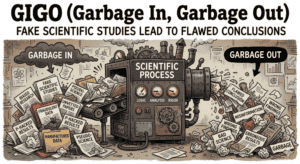 It’s time to make a LOT of noise with the Pennsylvania Department of Environmental Protection (DEP) if you care about Marcellus drilling continuing in the Keystone State. In December, the Pennsylvania Environmental Quality Board (EQB) accepted a petition by radical green groups, including the Clean Air Council and Environmental Integrity Project, to “study” the issue of increasing setbacks for shale drilling so far that it would ban ALL new Marcellus/Utica drilling in the Keystone State, which is no exaggeration (see
  Even a leftist liberal putz like Pennsylvania Governor Josh Shapiro can have a good idea every now and again. (Credit where credit is due.) Shapiro is introducing what he calls GRID (Governor’s Responsible Infrastructure Development) standards to incentivize Pennsylvania data center developers to voluntarily adopt higher environmental and transparency benchmarks. In exchange for committing to water conservation, local hiring, and independent power generation, projects can access “Fast Track” permitting to accelerate construction.