
Energy Services | Industrywide Issues | LDCs | Leatherstocking Gas | Pennsylvania | Pipelines | Susquehanna County
PA PIPE Grant Expands NatGas to 131 Susquehanna Co. Homes & Biz’s

Pennsylvania’s Pipeline Investment Program (or PIPE) grants cover part of the cost for building new natural gas pipelines to connect homes and businesses, typically in rural parts of the state, to homegrown Marcellus Shale gas supplies. We’ve written about many of these grants over the years (see our stories here). Last week, PA’s Department of Community and Economic Development (DCED) announced another PIPE grant, this one going to a community in Susquehanna County, PA—the state’s most productive natural gas producing county. Read More “PA PIPE Grant Expands NatGas to 131 Susquehanna Co. Homes & Biz’s”
 The highly functional and responsible Susquehanna River Basin Commission (SRBC), unlike its dysfunctional and irresponsible counterpart, the Delaware River Basin Commission (DRBC), continues to support the shale energy industry by approving water withdrawals and consumptive use requests for responsible, safe shale drilling. The SRBC published a notice in the May 23rd Pennsylvania Bulletin that the SRBC approved and/or renewed 33 general water use permits in April for individual shale gas well drilling pads in Bradford, Cameron, Lycoming, Sullivan, Susquehanna, Tioga, and Wyoming counties.
 Last week, the combined Marcellus/Utica Baker Hughes rig count maintained its cumulative count of 36 active rigs after dropping 1 rig two weeks ago in the PA Marcellus (see
 U.S. Secretary of Energy Chris Wright issued an emergency order on May 21 directing PJM Interconnection and Constellation Energy to keep Units 3 and 4 at Pennsylvania’s Eddystone Generating Station (near Philadelphia, in Delaware County) operational through the summer. Effective from May 25, 2026, to August 22, 2026, the mandate aims to ensure grid reliability. This directive follows four previous 90-day orders that have kept the aging, dual-fuel units online to support energy security. The DOE asserts that despite planned retirements, these 380-MW units remain essential for stabilizing the regional power supply. Big Green wants to close them down.
 NOTE: MDN will not publish on Friday, May 22, and Monday, May 25, in observance of the Memorial Day holiday. Therefore, we are publishing the weekly permits report a day early.
 On May 14, the Pennsylvania Department of Environmental Protection (DEP) issued a notice of violation to Sandstone Development LLC for operating the McKay 7A conventional well as an oil and gas wastewater injection disposal site in McKean County without a state permit. Which may sound like a major, flagrant (intentional) violation. But it’s not. Sandstone holds a federal EPA permit allowing daily injections of up to 10,500 gallons. Sandstone said it was unaware that, in addition to the federal EPA permit, it is also required to seek and obtain a state DEP permit for the same thing. In other words, Sandstone didn’t ask DEP, “Mother, May I?”
 Yesterday, MDN brought you the big news that NextEra Energy and Dominion Energy will combine in an all-stock transaction, creating the world’s largest regulated electric utility business serving approximately 10 million customer accounts across Florida, Virginia, North Carolina, and South Carolina (see

 If you live in Auburn Township in Susquehanna County, Pennsylvania, it’s a pretty safe bet that either there is or soon will be shale well drilling going on near you. The PA Department of Environmental Protection (DEP) published notice in the May 16 Pennsylvania Bulletin announcing it has issued a permit for one aboveground water pipeline for one driller and is seeking comments on a request for a second aboveground water pipeline for a second driller, both in Auburn Township.
 In March, the Pennsylvania Department of Environmental Protection (DEP) released the results of a two-year study that found radium levels in landfill wastewater (leachate) from landfills with drill cuttings do NOT pose a risk to human health (see
 Last November, the Pennsylvania Public Utility Commission (PUC) approved a Tentative Order by a 3-2 vote, proposing a statewide model tariff (tax) to manage the growing impact of large-load customers, such as AI data centers, on the electric grid (see
 According to RBN Energy, the Northeast natural gas market is entering a new phase after years of stalled pipeline development and Appalachian takeaway constraints. Once a premium destination for Gulf Coast and Canadian gas, the region became a major supplier as Marcellus/Utica production surged, reversing flows toward the Southeast and Gulf Coast. Recent legal, regulatory, and cost hurdles have frozen major projects, with the Mountain Valley Pipeline serving as both a milestone and a warning. Now, under a friendlier regulatory climate, new expansions toward New York/New Jersey and New England are advancing.
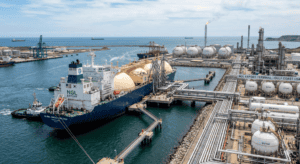 Energy Transfer LP (ET) owns and operates one of the largest and most diversified portfolios of energy assets in the U.S., with approximately 140,000 miles of pipeline and associated energy infrastructure. ET’s strategic network spans 44 states and includes assets in all major U.S. production basins, including the Marcellus/Utica. The company issued its first quarter 2026 update last week. ET sees the Marcellus/Utica region as a key source of NGL supplies for its export operations, particularly exports from the Marcus Hook terminal near Philadelphia.
 The Philadelphia Gas Commission, for a second time, has postponed a vote on Philadelphia Gas Works’ (PGW) $182 million proposal to replace and expand its natural gas liquefier (LNG plant) in Port Richmond. The commission’s staff and the Public Advocate recommend rejecting the project, arguing it is oversized and could burden customers with unnecessary debt. They also cite incomplete plant and project designs. PGW argues the upgrade is crucial for safety and affordability, preventing potential harm to customers during cold winters and avoiding the need to truck in liquefied natural gas (LNG). Instead of approving the project, the Commission voted to spend $1 million on an environmental impact study and $4 million for an engineering study. That is, they voted to procrastinate.