
PA Democrats Go Local with Opposition to $92B in Data Center Deals
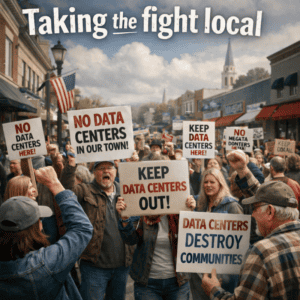 Anti-progress and anti-fossil energy Democrats in Pennsylvania are doing their darndest to try to block new AI data centers from getting built in the state. Just last week, the Democrat-controlled House passed a bill to block new data centers (see PA House Dems Pass Bill Aimed at Banning New Data Centers). However, even the most hardened radicals in the Democrat Party, such as State Senator Katie Muth (from the Philly suburbs), who have been pushing a “three-year moratorium” on building new data centers, admit the state legislature is unlikely to pass any of these hairbrained bills in both chambers. So they’ve changed tactics, taking the fight local, town by town, to block new data centers. Read More “PA Democrats Go Local with Opposition to $92B in Data Center Deals”
 The Rockwood Area School District in Somerset County, Pennsylvania, has been awarded a $570,084 state grant to extend natural gas service to its facilities. The project will install around 15,100 feet of natural gas pipeline. Announced by State Representative Carl Walker Metzgar and Senator Pat Stefano (both Republicans), the funding comes from the Pipeline Investment Program (PIPE). The project is designed to replace the district’s current heating system (an old coal-fired boiler), effectively resolving the environmental issues caused by coal burning.
  Southwestern Pennsylvania voters chose poorly when they elected a Communist radical as their representative to the U.S. Congress: Democrat Summer Lee. She and two other far far far far far left radicals, Congresswoman Rashida Tlaib (Democrat from Michigan), and Congresswoman Adelita Grijalva (Democrat from Arizona), together just launched what they euphemistically call the People’s Environmental Justice Caucus in Congress. A better name is the “oil and gas is racist” caucus, an attempt to smear the oil and gas industry with the label of racism, claiming that O&G projects only get built in communities of color or where the residents are poor—people who (says Lee & co.) can’t fight back against the industry.
  The ongoing saga of Eureka Resources’ now-closed frack wastewater treatment facilities in Pennsylvania — two in Lycoming County and one in Bradford County — continues to unfold. The PA Department of Environmental Protection (DEP) recently assessed two fines against Eureka for violations of cleanup deadlines at two of its facilities. One facility in Lycoming County was fined, and one in Bradford County. The fines were $60,000 and $40,000.
  Last week was not a good week for the national rig count nor the count in the Marcellus/Utica. The national count dropped by 9 rigs to 543, while Pennsylvania lost 2 rigs and now operates 18, a level it hasn’t seen since January of this year. Both Ohio and West Virginia maintained the same counts last week at 11 and 8, respectively. The combined M-U count was 37 rigs last week, the lowest number since the Nov. 18, 2025, rig count report. Yuck.
  Upper Burrell residents (Westmoreland County, PA) recently received notifications from consulting firm Verdanterra regarding upcoming surveying for natural gas lateral wells. These horizontal wells will be drilled from EQT’s Hermes well pad in neighboring Murrysville (also in Westmoreland County), following EQT’s recent acquisition of Olympus Energy. While Township Supervisor Chairman Ross Walker described the process as a standard, “innocuous” procedure conducted by foot without land disturbance, the project highlights the increasing length of well laterals in the Appalachian region.
  The Marcellus/Utica region received a combined 11 new drilling permits last week, Mar. 16 – 22, down 6 from the 17 permits issued two weeks ago. Pennsylvania issued 10 of the permits. Ohio issued 1. And, West Virginia issued no new permits last week. The drillers who received new permits last week included EOG Resources, EQT, and Laurel Mountain Energy.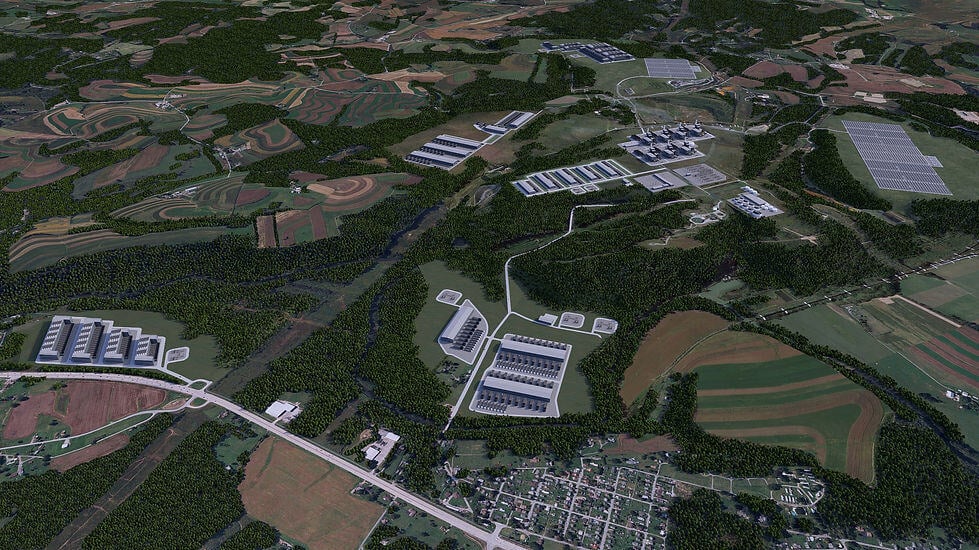
 Pennsylvania State Senator Gene Yaw is introducing legislation to modernize Pennsylvania’s 1961 Oil and Gas Conservation Law, which currently relies on standards predating modern horizontal drilling. By aligning the statute with contemporary practices, the bill aims to accelerate permit reviews for Utica wells and treat them consistently with Marcellus shale operations. Yaw argues that updating these outdated rules will reduce resource waste, minimize surface impacts, and prevent natural gas from being left underground.
  Epsilon Energy, a relatively small company, used to concentrate most of its effort on developing Marcellus Shale wells. However, over the past few years, the company has expanded into other plays and now owns assets in the Anadarko (Oklahoma), the Permian (Texas), the Powder River Basin (Wyoming), and the Western Canadian Sedimentary Basin (in Alberta, Canada). In the Marcellus, Epsilon does not do its own drilling. It is a joint venture partner with (gives money to) Expand Energy, and Expand does the drilling in the Marcellus. Epsilon issued its latest quarterly update yesterday, discussing what’s on the docket for 2026. And, what’s on the docket is that Expand plans to drill five new wells this year on Epsilon’s leased acreage in northeast Pennsylvania.
  The Marcellus Shale Coalition writes that Pennsylvania sits at the center of U.S. Liquefied Natural Gas (LNG) development, as highlighted by the EU–U.S. LNG Cooperation 2.0 Summit held in February in Pittsburgh. Utilizing the Appalachian Basin’s vast resources, the state has driven the shale revolution, making the U.S. a leading global energy exporter. This production has been vital for European energy security, providing a critical alternative to Russian gas.
  We just happened across another XTO Energy lawsuit in which leased landowners sued over post-production deductions being taken from their royalty checks. Salvatora v. XTO Energy Inc. is a pivotal Pennsylvania case tackling the messy business of natural gas royalties. Western Pennsylvania landowners from Mercer and Butler counties sued XTO, arguing the company unfairly deducted “post-production costs”—like compression and transport—from their checks. The core debate hinged on “at the wellhead” lease language.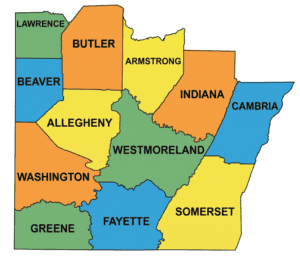
 In July 2022, MDN brought you news of a possible frac-out, or “inadvertent return” that happens when drilling mud pops out of places where it’s not supposed to — places outside the borehole being drilled (see