
Analyst Richard Zeits Reveals Why Marcellus Production has Soared
 One of our favorite Seeking Alpha author/analysts, Richard Zeits, has just published another sterling piece analyzing the profound impact the Marcellus/Utica has had on the natural gas market in the United States. In January 2014, Zeits wrote a piece predicting the Marcellus/Utica would hit 20 billion cubic feet per day (Bcf/d) of production “within 3-4 years,” which at the time seemed wildly ambitious (see Marcellus Shale: A 20 Bcf Per Day Natural Gas Tsunami). In October 2014, Zeits revised his estimate up by another 10 Bcf/d (see Natural Gas: Marcellus Pipeline Boom Sets Stage For A 30 Bcf A Day Tsunami). Bombshell: According to the U.S. Energy Information Administration, Marcellus/Utica production passed 20 Bcf/d in late August. Zeits’ newest article points out the Marcellus tsunami came 10 years early! What really piqued our interest about Zeits’ latest article is the reason why Marcellus/Utica production has increased faster than everyone, including Zeits, thought it would…
Read More “Analyst Richard Zeits Reveals Why Marcellus Production has Soared”
 We have a troubling development to report about the future of drilling in West Virginia–something that has happened largely under the radar, until now. More than 200 residents in WV (likely those who don’t own the mineral rights under their land) began filing “scores” of “nuisance” lawsuits over the past couple of years against Antero Resources and Hall Drilling, in places like Doddridge County. The lawsuits claim excessive traffic, odors and noise from nearby drilling make it “impossible” for them to enjoy their homes. Each lawsuit has its own unique circumstances and should be handled separately–one size does not fit all. The troubling development is that all of these lawsuits (dozens? hundreds?) have been rolled up into one mega lawsuit that sits before the WV Mass Litigation Panel…

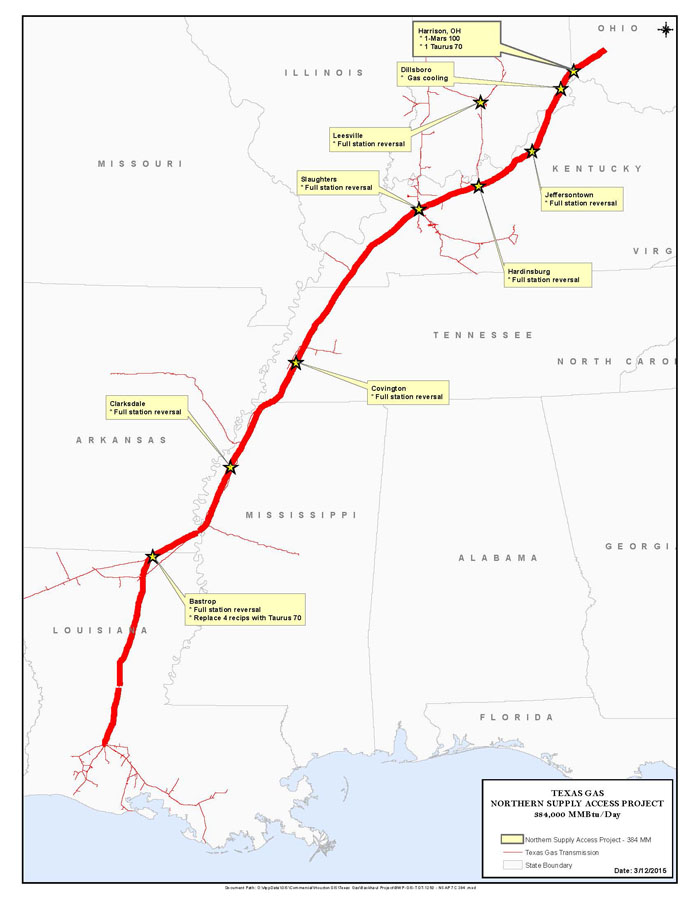
 In June MDN updated you on Kinder Morgan’s plans to repurpose part of the existing Tennessee Gas Pipeline that currently runs south to north, reversing the flow to send natural gas liquids (NGLs) southward (see
 Pennsylvania landowners Andrew and Sally Dewing signed a 10-year lease for 493 acres of land in Bradford County, PA with Central Appalachian Petroleum in April 2001. The lease was later sold to a consortium including Abarta Oil & Gas Co., Talisman Energy USA and Range Resources. The terms of the lease require rent payments of $5 per acre per year ($2,465) for each year when their property has not be drilled on or under. After not receiving payments on time in 2010, the Dewings served the drillers notice of nonpayment. Eventually the three partners figured out who was supposed to pay and made the payment–but because the payment was late (more than 60 days late), the Dewings claimed the lease was terminated under the original terms of the lease. To make a long story short, Pennsylvania Superior Court ruled last Friday that no, the terms of the lease do not allow the Dewings to get out of the lease because the payment was late…
 Kinder Morgan has just released a study that they commissioned (paid for), but researched by the independent ICF International. The study, titled “New England Energy Market Outlook: Demand for Natural Gas Capacity and Impact of the Northeast Energy Direct Project” (full copy below), finds that New Englanders would have saved $3.7 billion in wholesale electricity costs during the 2013-2014 ‘Polar Vortex’ winter had the proposed Northeast Energy Direct Project (NED) been in service at the time. The study also finds the additional gas capacity that NED would provide will generate $2.1 billion to $2.8 billion in annual savings going forward for New England electric consumers, under normal weather conditions. Plus there are many other benefits (aside from cost savings) from building NED, including lower air pollution throughout New England…

 Ohio and 15 other states sued the federal Environmental Protection Agency (EPA) to stop implementation of Obama’s draconian coal and natural gas-killing Clean Power Plan while their larger lawsuit challenging the entire CPP winds its way through court (see
 Pennsylvania-based Marcellus driller Rex Energy, which we’ve long called our “little energy company that could, and does,” has had a string of bad news this year. Even though production was up 61% in the second quarter of 2015, revenue was down 37% (see
 Grant Township in Indiana County, PA has a problem: They’ve hired a potty mouth lawyer to represent them who has a HUGE conflict of interest. Grant’s town attorney is also the lawyer for (and executive director of) the litigious and extreme left-wing group Community Environmental Legal Defense Fund (CELDF), a group committed to ending the use of fossil fuels. We’ve written plenty about the antics of the CELDF, including their lawsuit on behalf of an ecosystem (see
 Is Marcellus drilling about to come to a suburb of Pittsburgh? It appears the answer to that is a resounding, “Yes!” EQT, according to a landman that works for the company, plans to put a mega drill pad with up to 14 wells on an abandoned golf course in the eastern burbs of Allegheny County. EQT has approached neighbors surrounding the property, attempting to sign them to leases. Predictably, some of the neighbors are for it, and some are against it…

 Natural gas customers in Philadelphia could have had all of the outdated and unsafe pipes belonging to the aging Philadelphia Gas Works (PGW) pipeline network replaced within 5-10 years, paid for by UIL Holdings Corporation, a Connecticut-based gas and electric utility holding company that offered to buy PGW in a deal brokered by Democrat Mayor Michael Nutter. But the corrupt Philadelphia City Council torpedoed the deal (see
 A researcher with the California Institute of Technology has taken a close look at what would happen if five major universities–Harvard, Yale, MIT, Columbia and NYU–heeded the siren call of anti-fossil fuel nutters to divest their considerable endowments from holding any fossil fuel-related stocks. Just those five universities would lose a combined $200 million of value in their stock portfolios should they divest from fossil fuel stocks. Such efforts have been going on for some time. Not long ago Syracuse University divested all fossil fuel stocks, which will lead to losses in their endowment fund (see