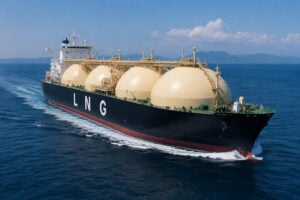
 Venture Global (VG), the Arlington, Virginia-based LNG exporter that operates the Calcasieu Pass and Plaquemines liquefaction plants in Louisiana — and is building a third, CP2 — reported second quarter 2026 results Tuesday that were, by any measure, a blowout. Revenue hit $4.6 billion (up 48% from 2Q25), net income came in at $1.3 billion (up 266%), and consolidated adjusted EBITDA reached $2.5 billion (up 79%), the largest quarterly EBITDA in company history. VG shipped 127 cargoes in the quarter and raised its full-year EBITDA guidance to $8.7-$9.1 billion, up from the $8.2-$8.5 billion it guided to in May. The company also passed its 1,000th cargo overall and jacked up its quarterly dividend by 122%. Why do we care in Appalachia? Because Plaquemines is fed by pipelines that carry Marcellus/Utica molecules south — and VG is planning to nearly double in size. Read More “Venture Global 2Q26: Record $2.5B EBITDA, 127 LNG Cargoes Shipped”

 Virginia’s environmental cops have hit Transcontinental Gas Pipe Line Company (Transco) with a $179,068.50 civil charge over erosion and sediment control violations on the Pittsylvania County stretch of the Southeast Supply Enhancement (SSE) Project — the single most important new outlet for Marcellus/Utica gas heading south. Read More “Virginia Fines Williams $179K Over Erosion Controls on Transco SSE”
 Something happened over the past ten days that ought to look awfully familiar to anyone who was around Marcellus country in 2009. A single advocacy shop dug a permit out of a state filing cabinet, handed it to a friendly reporter at the New York Times, and within a week roughly two dozen outlets were running the same three sentences about Amazon becoming “the largest single source of pollution in the United States.” It’s not a coincidence, it’s not organic, and it’s not staying in Texas. Big Green has told us, in print, that the data center fight is the anti-fracking playbook run a second time — and one of the projects already on their list belongs to Williams, in Ohio, burning Utica gas.
  Both federal and state regulators signed off last Thursday on PowerTransitions’ purchase of the 1,242-megawatt (MW) Roseton Generating Facility in Newburgh, New York — the sixth and by far the largest gas-fired plant the Houston-based company has grabbed in the Empire State this year. The Federal Energy Regulatory Commission (FERC) issued its order Aug. 13 (Docket EC26-95-000), and the New York Public Service Commission approved the transfer the same day. But the most interesting thing in the FERC order isn’t the approval. It’s the name of the company doing the buying.
  Epsilon Energy (NASDAQ: EPSN), the non-op partner that bankrolls a chunk of Expand Energy’s Marcellus drilling in Susquehanna County, PA, reported Q2 2026 results last week showing Pennsylvania gas production down sharply — but for a reason that’s actually good news for the wells coming next. Epsilon also sold off a package of small Marcellus overriding royalty interests for $3.9 million and confirmed five new wells are headed for completion by December, which should boost both production and Auburn Gas Gathering System throughput.
  PJM Interconnection, the grid operator that keeps the lights on for 67 million people across 13 states including Pennsylvania, Ohio, and West Virginia, filed its long-awaited data center framework with the Federal Energy Regulatory Commission (FERC) on Wednesday, August 13. The short version: if you’re a new data center and you don’t bring your own electricity to the party, you get switched off first when the grid gets tight. Homes and small businesses get cut last. It’s a rule that, read correctly, is one enormous purchase order for Marcellus/Utica gas.
  The rest of the country is drilling. We’re not. Well, at least not as much. The Marcellus/Utica held flat at 35 rigs for a second straight week — the lowest count on our 52-week chart — while the national count added five rigs to hit 593, the highest since March 2025. Pennsylvania stayed at 16 rigs, Ohio at 10, West Virginia at 9. Nobody moved. Meanwhile, the Haynesville, our chief rival for gas-directed capital, tacked on three more rigs to reach 59.
  Here’s a puzzle for you. The Trump EPA has spent 18 months dismantling the Biden administration’s carbon rules for power plants. The final repeal has been parked at the White House Office of Management and Budget since May 14 — and as of this writing it’s still sitting there, past the 90-day review window that ran out on August 12. Everybody in the business assumes it’s a done deal. So why are state regulators still writing those very same carbon limits into brand-new permits for brand-new gas plants — including two projects that will burn Marcellus and Utica gas?
  OTHER U.S. REGIONS: Diversified said to close in on Birch deal; How NY’s neighboring electric systems handled the July 2026 heat wave; Data centers are the factories of the intelligence age; NATIONAL: U.S. natural gas futures make modest gains; AI’s impact on the environment is absolutely horrifying, new paper finds; The delusional premises of woke greens; Trump refinery plan aims to cut fuel prices, boost security; New analysis ties blue-state climate policies to higher electricity rates, red states to lower costs; Michael Bloomberg and the pervasive conflicts of interest in his empire; INTERNATIONAL: Oil rises as US threatens Iran; Indian refiners in panic buying mode; JPMorgan says global gas turbine orders soar to record; Hoping for an energy-intensive future; Slow to start on LNG exports, Canada now has its pedal to the metal.
  The Marcellus/Utica region received 8 new drilling permits last week, August 3 – 9, down 7 from two weeks ago. Pitiful. (Cue Linda Ronstadt’s “
 Back in March, we brought you news that the Trump administration had announced “South Mon,” a $17 billion, 4.3-gigawatt (GW) natural gas-fired power hub headed for southwestern Pennsylvania, funded as part of Japan’s $550 billion U.S. investment commitment (see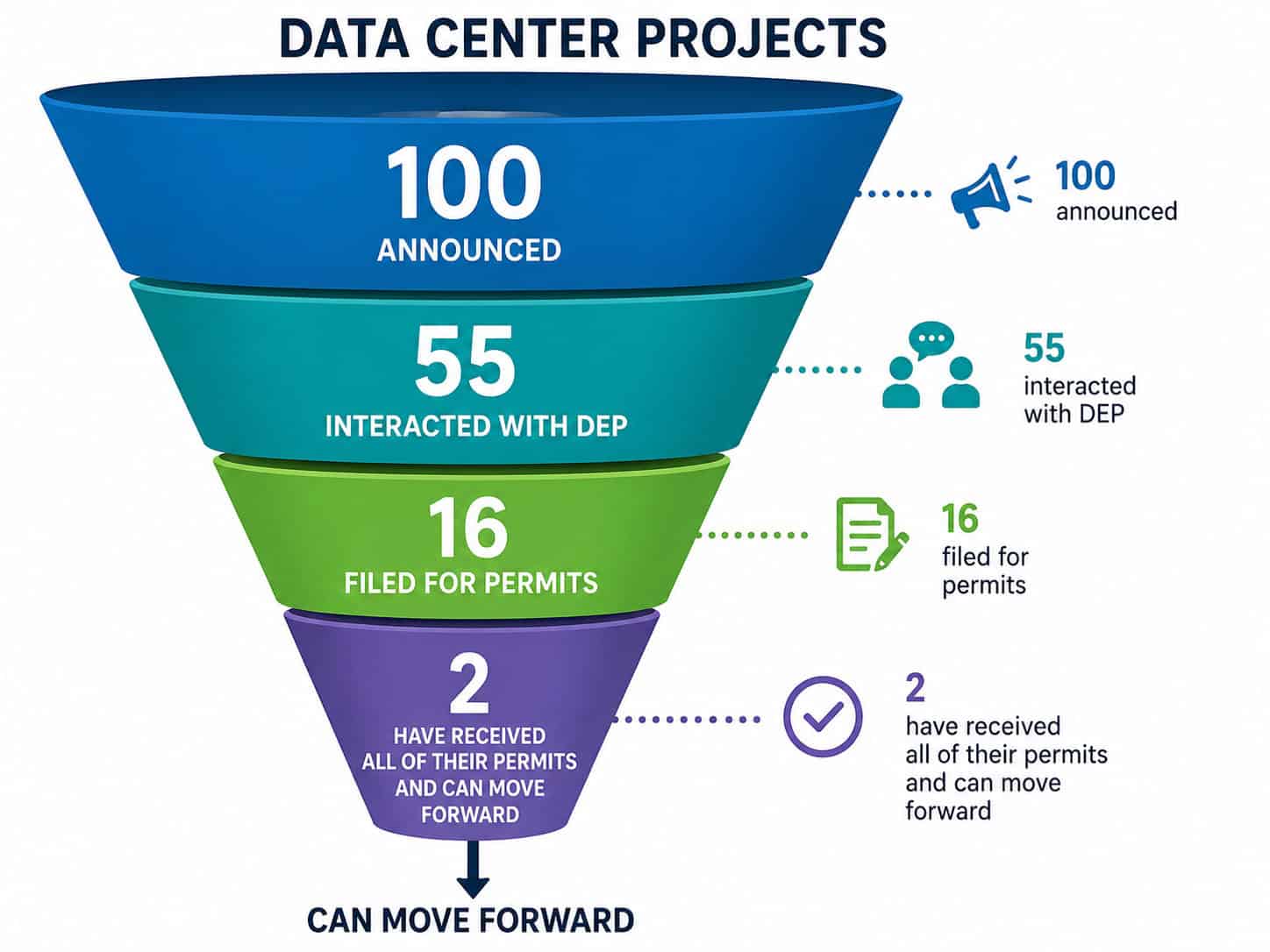
 WhiteHawk Minerals (NYSE: WHK), the Philadelphia company that has quietly become one of the largest mineral and royalty owners in the Marcellus, filed its first full quarterly report as a public company this week: $111.8 million of new acquisitions, record production of 70.0 MMcfe/d, and its first real dividend at $2.00 per share annualized. But the most interesting thing WhiteHawk said all week wasn’t in the press release. It came out of CEO Daniel Herz’s mouth on Thursday’s earnings call — some of the biggest drillers in Appalachia are now partnering with WhiteHawk to buy minerals ahead of the drill bit.
 The U.S. Energy Information Administration (EIA) released its August Short-Term Energy Outlook (STEO) on Tuesday — the agency’s monthly toss at the energy dartboard. Last month EIA nudged its Henry Hub natural gas price forecast up a few pennies. This month it took a real bite out of it. EIA now expects Henry Hub to average $3.44/MMBtu in 2026 (down from $3.67 last month) and $3.31/MMBtu in 2027 (down from $3.49). For the current quarter, the number is $2.87/MMBtu — a full 50 cents below what the agency predicted a month ago. The short version for landowners and royalty owners: gas is going to be cheap this fall. The longer version is more interesting, and it’s a story about where the gas is coming from.