
FERC Green-Lights $5.2B Kinder Morgan Southeast Gas Push
 We missed one, and it’s a big one. On July 31, the Federal Energy Regulatory Commission (FERC) handed Kinder Morgan certificates of public convenience and necessity for BOTH of its blockbuster Southeast projects — the Mississippi Crossing Project (MSX) on Tennessee Gas Pipeline, and the South System Expansion 4 Project (SSE4) on Southern Natural Gas and Elba Express. Put together, that’s roughly 500 miles of new steel, about $5.2 billion of capital, and something on the order of 3.8 million dekatherms per day of new firm transportation capacity aimed squarely at the fastest-growing gas market in the country. FERC issued the order right on time — the FAST-41 schedule said “no later than July 31,” and the Commission delivered on the last possible day. Read More “FERC Green-Lights $5.2B Kinder Morgan Southeast Gas Push”
 One of the biggest landowner-vs.-driller cases in Ohio shale history just ended — with no verdict, no dollar figure, and a two-page piece of paper. On July 29, a group of Belmont County mineral owners and Rice Drilling D LLC (owned by EQT) jointly asked a federal judge to throw out the case for good, roughly two months after it was supposed to go in front of a jury. Eight years, 580 docket entries, and one of the most consequential lease questions in the Utica — settled behind closed doors.
  Northern Oil & Gas (NOG) is a Minnesota company most people file under “Bakken,” so its quarterly report doesn’t usually land on our radar. It should have. NOG is the largest publicly traded non-operator in the country — it buys minority working interests and lets somebody else run the rig — and after last week’s second quarter release, Appalachia is its biggest gas engine. Marcellus-Utica volumes set another company record, and CEO Nick O’Grady said NOG has quietly spent north of $100 million buying Utica drilling locations in the past year, with lease bonuses up “50-plus percent” since the campaign began.
  Chesapeake Utilities Corporation (NYSE: CPK) is a Dover, Delaware utility holding company that most folks in our patch have never heard of — which is a shame, because CPK owns two systems that Marcellus and Utica molecules flow through every single day. The company posted second quarter results Aug. 6 and held its analyst call Aug. 7. Buried inside the slides are updates on an Ohio data center pipeline, a nearly finished LNG plant on the Delmarva Peninsula, and a fresh $100 million bump to this year’s capital budget. Here’s CPK’s M-U story.
  When a pipeline construction contractor tells you its gas transmission work has more than doubled in a single year, that’s not a stock story — that’s a leading indicator. Energy Services of America (Nasdaq: ESOA), the Huntington, WV-based contractor that actually digs the ditches and welds the pipe across Appalachia, reported fiscal third quarter results Monday afternoon. Revenue hit $130.0 million, up 25.5% from $103.6 million a year ago. But the number that matters for our readers is buried in the fine print of the 10-Q: revenue from Gas & Petroleum Transmission work jumped from roughly $9.7 million to $21.2 million — an increase of about 120%.
  Infinity Natural Resources (INR) put out two press releases Monday night. One was second quarter earnings (we’ll cover that separately after today’s call). The other one is the interesting one. Infinity announced that Cary Baetz will become Executive Vice President and Chief Financial Officer, and Andrew Judge will become Senior Vice President of Finance, both effective Aug. 12. Current CFO David Sproule — the man who financed Infinity from private company through its January 2025 IPO — is out the same day. In July, we wrote that Infinity was quietly assembling a board built for deal-making (see
  MARCELLUS/UTICA REGION: PA labor groups meet to plan abandoned well remediation; OTHER U.S. REGIONS: Dominion Energy Charitable Foundation fall grant cycle now open; NATIONAL: U.S. natural gas futures rebound as near-term weather warms; Which USA oil major produced the most in 2Q 2026?; The weather isn’t getting worse – the lawsuits are; INTERNATIONAL: Oil climbs as Hormuz deal remains elusive; The Green Climate Fund ran short of other people’s money; The UN Green Climate Fund is a wasteful fraud; Are you a loser with no friends? Blame climate change and buy a windmill.
 The Ohio Department of Natural Resources (ODNR) will ask the state Controlling Board on Monday, August 17, for authority to spend $105 million of oil and gas lease money on Ohio’s wildlife areas — construction, renovation and grants, on a budget line that currently has zero dollars appropriated for the year. It’s the biggest single deployment of shale money since Ohio started leasing public land, and it’s a good moment to revisit what the opposition told Ohioans would happen instead.
 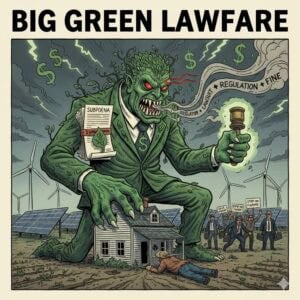 Here we go again. The Bureau of Land Management (BLM) finally issued three permits to drill on Wayne National Forest (WNF) land in Monroe County, Ohio, back in May — the first new drilling permits in Ohio’s only national forest in years. Predictably, the same coalition of green groups that has kept a lid on WNF for the better part of two decades ran straight back to federal court to try to stop them.
  A federal magistrate judge has excluded six people (well, five leases covering six people and one municipal authority) from the 2,300-plus-member class suing XTO Energy over royalty underpayments in Butler County — not because XTO won a big legal fight, but because both sides agreed these particular leases require arbitration, not a courtroom. This is the latest chapter in Kriley v. XTO Energy Inc., the six-year-old Butler County royalty case MDN has followed since February (see
  Rochester, NY-based Energy Concepts has unveiled a modular natural gas power system called “Plato5X” that lets AI data centers generate their own electricity, make their own water, cool themselves, and capture 90% of their carbon emissions — without touching the local power grid or municipal water supply. Each 5-megawatt module runs on natural gas and is aimed squarely at the exploding AI/data center market, which is straining power grids and water systems across the country (
 The last 18 months have been about as good as it gets for anyone who moves Marcellus and Utica molecules. President Trump’s Executive Order 14154 killed the Biden LNG export pause on day one. FERC rewrote its environmental review procedures in June 2025 to speed things up. And FERC finally drove a stake through Order No. 871, the Biden-era rule that let Big Green freeze construction on an approved pipeline just by filing an appeal (see
  Last week, the Pennsylvania Marcellus lost one rig, now down to 16 active rigs after running 17 rigs for 12 weeks in a row. Bummer. Ohio lost a rig two weeks ago and didn’t pick it back up last week, remaining at 10 active rigs for the second week. And West Virginia picked up Ohio’s lost rig two weeks ago, boosting its number to 9 active rigs, maintaining that number last week. All told, the M-U operated 35 rigs last week, which is 21 fewer than our biggest rival (for money and attention), the Haynesville, which operated 56 rigs last week.
  The Marcellus/Utica region received (as near as we can tell) 15 new drilling permits last week, July 27 – August 2, down 4 from two weeks ago. The reason for our hesitation is that the Ohio Department of Natural Resources didn’t issue a report for last week. They sometimes are tardy in their report filing, catching it up in the next week’s report. The drillers who received new permits included: Seneca Resources (6), Expand Energy (6), JKLM Energy (2), and Jay-Bee Oil & Gas (1).