
Microsoft to Build Data Center in Person County, NC with Own Energy
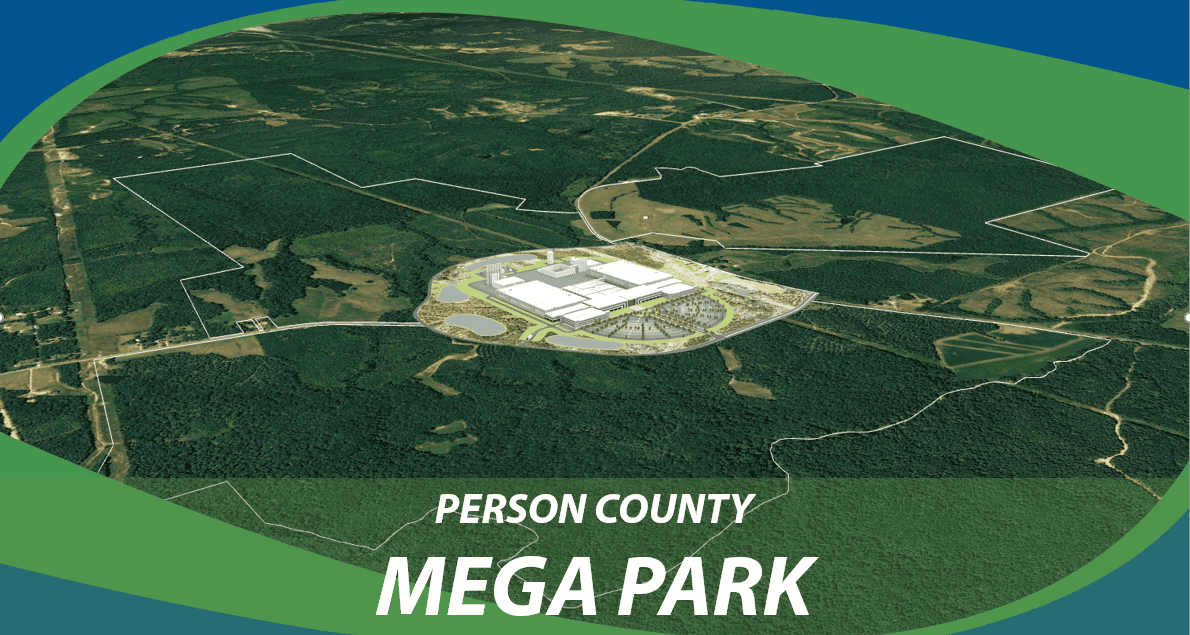
Microsoft is advancing plans for a large-scale data center campus in Woodsdale Township, Person County, NC, by initiating the permitting process. After purchasing the 1,350-acre Person County Mega Park for $26.85 million in late 2024, the tech giant is now moving toward development to support cloud computing and AI services. Microsoft has committed to ensuring the project does not increase local electricity bills, minimizing water usage while replenishing more than it consumes, and creating new jobs for area residents. County leaders anticipate the project will drive significant economic growth and enhance community well-being through strategic investment and responsible stewardship of resources. The question is, how will Microsoft power this new beast? Read More “Microsoft to Build Data Center in Person County, NC with Own Energy”
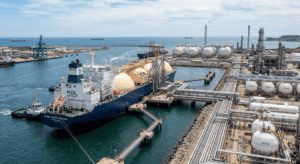 In December, we brought you the sad and unexpected news that Energy Transfer (ET) had suspended development of its Lake Charles LNG project to “focus on allocating capital to its significant backlog of natural gas pipeline infrastructure projects that Energy Transfer believes provide superior risk/return profiles” (see
  OTHER U.S. REGIONS: Judge says he will order Greenpeace to pay $345 million in protest case; Venture Global announces new long-term LNG partnership with Hanwha of Korea; Glenfarne, TotalEnergies sign Alaska LNG offtake agreement; Cheniere and CPC sign long-term LNG sale and purchase agreement; NATIONAL: U.S. natural gas futures fall on weather outlook; Smart Sand, Inc. announces fourth quarter 2025 and full year 2025 results; DOE announces $171 million to expand USA geothermal energy; BP goes big on shale oil drilling; LNG exports are not driving up prices, policy failures are; Why climate hysteria and far-left media are reaching their end; INTERNATIONAL: Oil settles mixed as Iran talks continue; Aramco starts gas production at Jafurah.
  Yesterday, the Pennsylvania Independent Fiscal Office (IFO) released its latest quarterly Natural Gas Production Report for October through December 2025 (full copy below). There were 129 new horizontal wells spud (drilled) in 4Q25, a big increase of 46 wells (+55%) compared to 4Q24. Natural gas production volume was 1,934 billion cubic feet (Bcf) in 4Q25 (same as 3Q25), up 63 Bcf (+3.4%) from 1,871 Bcf produced in 4Q24. The average Pennsylvania spot hub price was $3.08, an increase of $1.07 (+53%) from the prior year’s $2.01. All in all, it was a great fourth quarter for the PA Marcellus. The numbers are going in the right direction. However, the big news is annual production.
  Range Resources issued its fourth quarter and full-year 2025 update yesterday. Range’s production averaged 2.24 Bcfe/d in 4Q, approximately 69% natural gas. Range used two rigs and drilled ~225,000 lateral feet across 15 wells during the quarter. 4Q25 drilling and completion expenditures were $167 million. In addition to D&C spending, Range spent approximately $10 million on acreage and $6 million on infrastructure, pneumatic devices, and other investments. For the entire year, Range drilled 69 laterals with an average horizontal length of 14,800 feet, with total activity exceeding 1 million lateral feet drilled.
  Gulfport Energy is the third-largest driller in the Ohio Utica Shale (by the number of wells drilled). Gulfport released its fourth quarter and full-year 2025 update yesterday. The company reports delivering a strong performance during the period, with total net production reaching 1.10 Bcfe per day and net liquids production rising 12% over the fourth quarter of 2024 to 18.2 MBbl per day. Financial highlights included $132.4 million in net income and $234.8 million in adjusted EBITDA, supported by $185.4 million in net cash from operating activities and $120.2 million in adjusted free cash flow. Gulfport spent $25 million on drilling and completions (D&C) and $11.4 million on maintenance, land, and leasehold spending. The company spent an additional $55.7 million on discretionary appraisal and development. Furthermore, the company expanded its footprint through the acquisition of $47.2 million in opportunistic acreage.
  Several Big Green groups, including the Sierra Club, Wild Virginia, Appalachian Voices, and the Center for Biological Diversity, have filed a legal challenge against a permit issued by Virginia for the Mountain Valley Pipeline (MVP) Southgate extension. The Virginia Department of Environmental Quality (DEQ) approved a water permit for the project in January 2026. Big Green radicals argue that the pipeline “threatens” 138 streams, wetlands, and regional drinking water supplies. It’s the typical lawfare tactic used by the left to stall work on projects, hoping to delay them long enough that the builder (EQT in this case) gives up. Or if the builder won’t give up, they have to pay double or triple the price to construct it. That’s the game the radicals are playing.
  METLEN (Greek energy company) and Shell have signed a memorandum of understanding to cooperate on liquefied natural gas (LNG) supply and trading between 2027 and 2031. This partnership allows the Greek company to secure up to one billion cubic meters of LNG annually, leveraging domestic terminals and the Vertical Gas Corridor to supply Central Europe and Ukraine. The agreement highlights Greece’s growing importance as a strategic energy hub designed to replace Russian gas with U.S.-produced alternatives. This shift is further reinforced by increased Mediterranean exploration by major U.S. firms such as Chevron and ExxonMobil, solidifying the region’s role in European energy security. Believe it or not, there are implications for the Marcellus/Utica region.
  West Virginia Attorney General JB McCuskey is leading a 21-state coalition urging the U.S. Supreme Court to overturn Department of Energy efficiency standards adopted during the dark Biden years that effectively ban many natural gas furnaces and water heaters. Challenging a D.C. Circuit ruling, the states argue the mandate violates federal law by eliminating appliances with protected performance characteristics. McCuskey emphasizes that the rule would disproportionately burden low-income and rural families, forcing expensive structural renovations in older homes incompatible with new condensing technology.
  Yesterday, Expand Energy and Evolution Well Services announced a new agreement to deploy Evolution’s 100% electric hydraulic fracturing technology (e-fracking) in Expand’s Northeast Appalachia (northeast Pennsylvania) drilling program. Evolution, headquartered in Houston with a regional office in Pittsburgh, specializes in “electric” fracking — using natural gas from the well pad (instead of diesel) to power turbines that generate electricity to drive fracking pumps. We’ve written about Evolution’s e-fracking work in the Marcellus/Utica for years (
 Ohio’s Utica/Point Pleasant shale production reached a record 48 million barrels of oil in 2025, a 39% increase from the previous year. While natural gas output remained stable at 2 trillion cubic feet, oil volumes have tripled since 2021. This surge was fueled by high-performing wells in the Northern Tier, specifically Columbiana and Mahoning counties, largely driven by EOG Resources and Encino Energy (which EOG bought in mid-2025 for $5.6 billion). Although southern hubs like Harrison and Carroll counties remain major producers, the expansion into northern regions highlights a significant shift in Ohio’s energy landscape and drilling success. Go North, young molecule!
  Ohio’s Revised Code Section 5303.34 (part of House Bill 96, recently passed and signed into law) significantly shifts mineral trespass law, favoring oil and gas operators over landowners. Replacing common-law precedent, the new statute limits default damages to net revenue minus production costs, ensuring industry expense credits. Crucially, it creates a high bar for “bad faith,” requiring plaintiffs (landowners and rights owners) to prove an operator’s specific intent to steal minerals or actual knowledge of illegality. Since a “reasonable belief” in a lease or permit now negates bad faith, landowners face a difficult path to full revenue recovery.
  West Virginia continues to cement its status as a national energy powerhouse, ranking as the fifth-largest natural gas producer in the U.S. and providing 10% of the country’s total natgas supply. The 2025 “Gas Facts” report (copy below) from the Gas and Oil Association of WV (GO-WV) highlights a record production of 3.27 trillion cubic feet, fueling an industry that supports 73,000 jobs and contributes $14.7 billion to the state economy. The sector generates hundreds of millions in tax revenue for schools and infrastructure, alongside $1 billion in landowner royalties. Driven by counties like Wetzel and Tyler, the state remains vital to national energy security.
  The far-left Southern Environmental Law Center, representing three radical nonprofits, has appealed the Virginia State Corporation Commission’s (SCC) approval of Dominion Energy’s $1.47 billion natural gas plant in Chesterfield County. The challenge is the first under both the Virginia Environmental Justice Act and the Virginia Clean Economy Act. Antis argue the 1,000-megawatt facility would disproportionately “harm” marginalized communities through increased pollution and significant health risks, including premature deaths. Critics maintain that Dominion failed to prioritize renewable alternatives or demonstrate a genuine threat to grid reliability, potentially placing unnecessary financial and health burdens on the public.