
What’s Shaping Energy Strategy Across North America Right Now?
 Nearly half of North America’s energy leaders say political risk is the #1 barrier to growth. Yet confidence in the region rose modestly, making North America the only region in the world where confidence is rising. What’s behind this shift? Based on insights from 1,000+ global energy leaders and expert analysis, DNV’s 2026 Energy Industry Insights report shows where energy investment is accelerating, how organizations are balancing energy security with transition goals, and what this means for near?term strategic decisions. Read More “What’s Shaping Energy Strategy Across North America Right Now?”
 NATIONAL: U.S. natural gas futures post limited gains; The Chief Justice of the Supreme Court must act to restore real science to judicial oversight; Climate realism rising; Most voters blame Trump for rising gas prices; INTERNATIONAL: Crude surges on renewed Hormuz fears; Xi urges ceasefire, full Hormuz transit in Saudi call; Oil contractors face profit hits from war fallout; China, the United States, and Japan hold most strategic oil inventories in 2025; Global center-left rethinks fossil fuels.
  Last week, the Marcellus/Utica combined count maintained the same number of 37 active rigs for the fourth week in a row. The M-U’s chief competitor, the Haynesville, lost one rig and now runs 55 active rigs, some 18 rigs more than the M-U. The national count lost another two rigs last week and now operates 543 rigs. Baker Hughes said oil rigs fell by one to 410 last week, their lowest since late March, while gas rigs fell by two to 125, their lowest since January, and other miscellaneous rigs rose by one to eight.
  On April 5 (Easter Sunday), Coterra Energy reported that approximately 400,000 to 704,000 gallons of freshwater were released from an impoundment at the Brooks shale gas well pad in Susquehanna County, Pennsylvania. The release began at 8:02 a.m. when all six stanchion valves opened simultaneously, flowing by gravity into a pasture and reaching Meshoppen Creek before being discovered by a landowner’s relative that evening. Coterra attributed the incident to a corrupted software configuration file, which also prevented remote valve closure and disabled electronic notifications.
  Oberlin, Ohio, officials are weighing a proposal to amend the city’s Community Bill of Rights to allow Dominion Energy Ohio to build a gas pipeline connection to a planned eco-industrial park, unlocking possible state support. Environmental groups and students at Oberlin College (neither of which pay any property or income taxes in Ohio, meaning they don’t have a say) argue the change would weaken Oberlin’s anti-fossil-fuel commitments and revive ties to Enbridge, whose NEXUS pipeline previously “divided” the city. City officials and utility experts counter that renewables alone are not yet feasible, citing constraints on electric capacity and on wind, solar, and geothermal options.
  Last July, President Trump and Pennsylvania U.S. Senator Dave McCormick attended a meeting in Pittsburgh to announce an amazing $92 billion of private (no taxpayer funding) investment in the Keystone State, mainly in the data center sector (see
  Chesco Energy proposes building a natural gas “peaker” plant in Marshall County, Indiana, representing a billion-dollar investment. This 50-acre facility, located near a major transmission line and gas pipeline, aims to create over 200 construction jobs and provide backup power during peak demand, like hot summer days, to prevent grid failures. Marshall County officials, previously hesitant about solar farms, view this project more favorably as it generates significant power without sacrificing extensive farmland.
  Last week, U.S. Sen. Ted Cruz (R-TX) introduced S.4340. This bill would bar frivolous lawsuits from green activist groups seeking damages, injunctions, or other relief for so-called harms allegedly caused by the end use of energy products, including oil and gas. Senators Ted Budd (R-NC), Tom Cotton (R-AR), and Mike Lee (R-UT) are cosponsoring the legislation. The House’s companion bill, H.R. 8330, was also introduced by Representative Harriet Hageman (R-WY). The bill is being called the “Stop Climate Shakedowns Act of 2026.” An appropriate title.
  Last week was a good week for new drilling permits. The Marcellus/Utica region received 37 new drilling permits last week, Apr. 6 – 12, up 15 from the 22 issued two weeks ago. Pennsylvania issued 23 of the permits. Ohio issued 8 new permits. And West Virginia issued 6 new permits last week. The drillers who received new permits last week included: Antero Resources, Ascent Resources, Blackhill Energy, Clean Energy Exploration, EOG Resources, EQT, JKLM Energy, Laurel Mountain Energy, PennEnergy Resources, Repsol, and Snyder Brothers.
  Wow! We haven’t been this excited about the long-dead issue of fracking in New York State in a LONG time. Geologist Madison Woodward III and his son Thomas (from Texas) purchased property in New York State in 2011, hoping to develop its natural gas reserves based on geological assessments and successful fracking operations in nearby Pennsylvania. However, New York’s statewide ban on hydraulic fracking, later expanded to include all alternative extraction methods, rendered the Woodwards’ mineral rights worthless. Represented by Pacific Legal Foundation, the Woodwards filed a federal lawsuit yesterday, arguing that the ban constitutes an unconstitutional “taking” of their property under the Fifth Amendment, for which they are owed just compensation, challenging New York’s energy policy and defending property owners’ rights.
  Somewhat disappointingly, the Trump Department of Energy is moving forward with funding for five of the original seven Biden-awarded hydrogen hub projects, spending $5 billion of the orignally-alloted $7 billion. The preserved projects include the West Virginia-led Appalachian Regional Clean Hydrogen Hub (ARCH2), which is a project that will use Marcellus/Utica natural gas as the feedstock to produce “blue” hydrogen, which is hydrogen made from natgas where carbon dioxide from the process is captured and either used or stored underground. ARCH2 qualified for (and will now receive) up to $925 million of taxpayer money.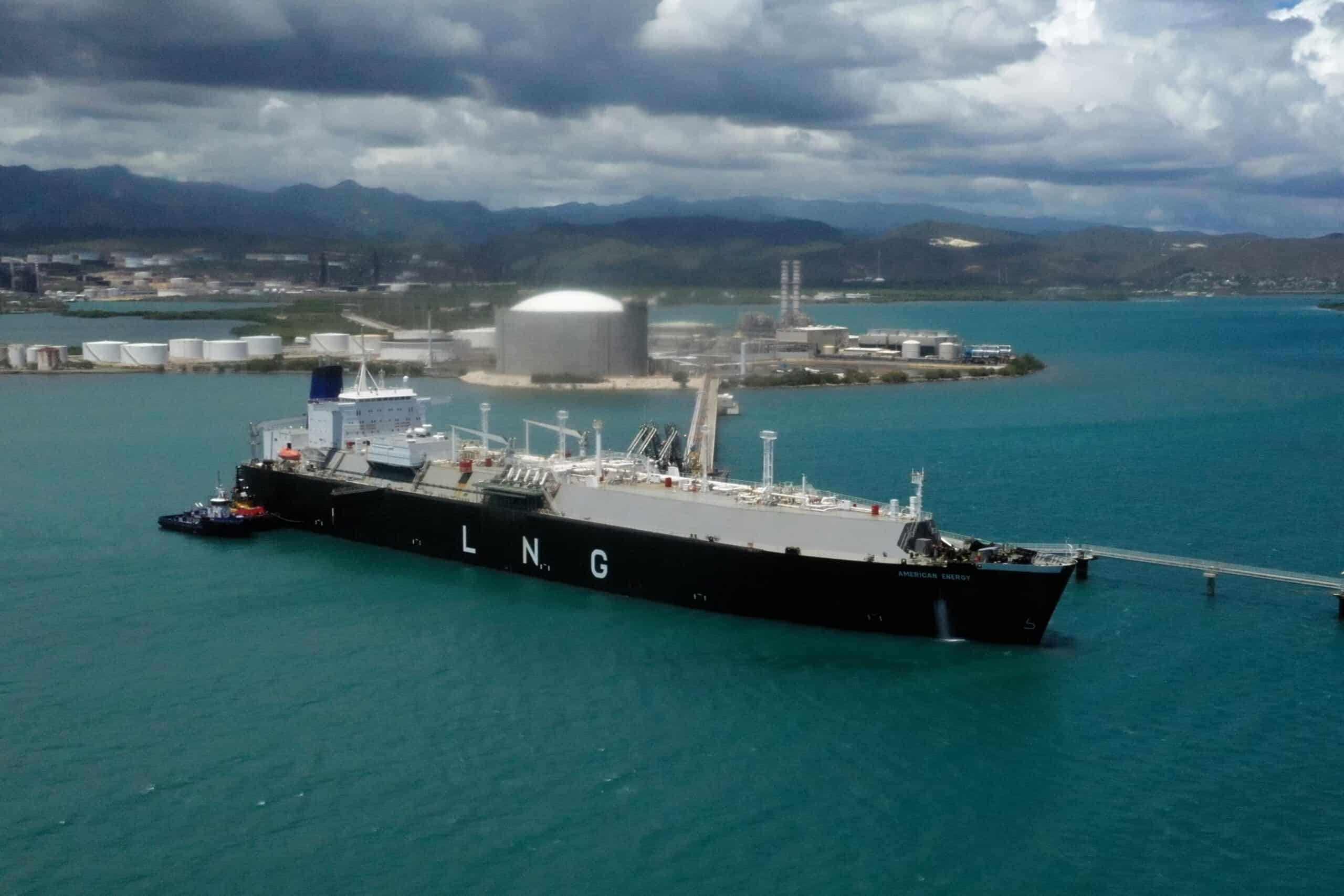
 The U.S. Energy Information Administration (EIA) forecasts U.S. natural gas net exports will keep rising through 2027, driven by expanding LNG capacity and stronger pipeline shipments to Mexico. Net exports are projected to reach 18.7 Bcf/d in 2026 and 20.5 Bcf/d in 2027. LNG exports should average 17.0 Bcf/d in 2026, then climb again in 2027 as new projects, including Corpus Christi, Golden Pass, Port Arthur, and Rio Grande, ramp up. Europe remains the leading destination, while Mexico’s power and LNG growth support pipeline demand. Imports stay minimal, and reduced Canadian imports reflect new Canadian LNG projects and rising Appalachian production serving Northeast markets.
  Wood Mackenzie reports that geopolitical tensions, particularly in the Middle East, are driving a renewed global focus on international shale exploration to enhance energy security and diversify supply. Six countries are prioritizing unconventional (shale) resource development: Algeria for European supply, and the UAE, Mexico, Australia, Turkey, and Indonesia for domestic energy independence. This “Global Shale 2.0” differs from past attempts due to improved technology, a clearer understanding of viable plays, and less competition from new Permian-scale discoveries, encouraging investment where regulatory and fiscal terms align with national interests.