Allegheny County | Ascent Resources | Belmont County | Bradford County | Columbiana County | Energy Companies | EOG Resources | EQT Corp | EXCO Resources | Expand Energy | Gulfport Energy | Harrison County | Hilcorp Energy | JKLM Energy | Ohio | Pennsylvania | Range Resources Corp | Sullivan County | Tioga County (PA) | Tuscarawas County | Washington County | Weekly Permits | West Virginia | Wetzel County
37 New Shale Well Permits Issued for PA-OH-WV Oct 13 – 19
 For the week of October 13 – 19, the number of permits issued to drill new wells in the Marcellus/Utica increased significantly from the previous week. There were 37 new permits issued across the three M-U states last week, up dramatically from the 7 issued two weeks ago. We can’t remember the last time we saw 37 (or more) permits issued. It’s been a looong time (months, at least). Pennsylvania issued 19 new permits. Ohio issued 13 permits. And West Virginia, which had been skunked with no new permits for three consecutive weeks, finally woke up last week (it’s woke!), issuing 5 new permits. Read More “37 New Shale Well Permits Issued for PA-OH-WV Oct 13 – 19”

 Something remarkable has happened in the Pennsylvania State Senate, where Republicans hold a slim majority with 27 members and Democrats have 23 members. In an unusual act of bipartisanship, six of the Democrat Senators (26% of all PA Democrat Senators, more than one-quarter) voted with all 27 Republicans to pass a bill that would erase Regional Greenhouse Gas Initiative (RGGI) regulations from Pennsylvania’s books. RGGI is a carbon tax on coal- and gas-fired power plants in the state.
  We happened across a lawsuit we didn’t know about, involving an issue we’ve seen before. A landowner in Belmont County, Ohio, filed a lawsuit in June 2024 alleging that Gulfport Energy, in a joint development agreement with EQT (the lease owner), drilled three wells under the landowner’s property that tapped into the Point Pleasant formation, which sits immediately below the Utica. The landowner said the lease only allows drilling in the Utica and Marcellus and NOT in the Point Pleasant.
  In the olden days of fracking (20 years ago), drillers would drill and frack one well at a time, called a Zipper Frac. Around five years ago, in 2020, fracking two wells at a time became vogue, a technique called SimulFrac (simultaneous fracturing). Today, SimulFracs are used by all major producers, including those operating in the Marcellus/Utica. Now coming into vogue is the next evolution: TrimulFrac, or fracturing three wells simultaneously. Fracking three wells at a time requires even more sophisticated logistics, real-time monitoring, and effective equipment management.
  For years, we’ve tracked and sometimes discussed lawsuits (a better term is lawfare) from the left against fossil fuel companies. These lawsuits seek to blame oil and gas companies for causing global warming by putting “too much” carbon dioxide into the atmosphere, even though you breathe CO2 out with every breath you take, as do all mammals. The left doesn’t even care if it loses these lawsuits (although they’d love to win some of them) because the very act of forcing companies to defend themselves, and paying big money to do so, means they must raise the price of their goods, and consumers eventually pay those higher prices. A Big Green attorney working on some of these lawsuits openly admits—we’d call it bragging—that the lawsuits are a backdoor carbon tax aimed at forcing consumers to pay more. It’s SICK.
  OTHER U.S. REGIONS: Google backs US gas power plant with carbon capture for Midwest data centers; NATIONAL: U.S. natural gas futures settles lower on storage data; NERC president warns of ‘five-alarm fire’ for grid reliability; ProEnergy repurposes jet engines to power data centers amid gas turbine shortages; Pearson and CEWD partner to power future energy workforce; Surprised by leftwing radical rhetoric? Look closer at the climate movement; Climate out, affordability in; AI’s insatiable need for power is driving an unexpected boom in oil-fracking company stocks; Why Big Oil is asking EPA not to cut its polluter reporting program; INTERNATIONAL: Oil futures take flight on Russia sanctions; Next month in Brazil expect the climate cops to party, plot; China threat calls for ideologically free energy policy; Global total of renewable rejections hits 1,104.
  EQT Corporation delivered its latest quarterly update yesterday for the third quarter of 2025. Like prior quarterly updates, it was jam-packed. The company, having already secured deals to supply natural gas to two of Pennsylvania’s biggest data and AI center projects, anticipates winning even more agreements in the coming months and years. During the earnings call, CEO Toby Rice said, “Strategically, when we look at what we’re doing, it’s really simple: getting access to the best markets and supplying the best energy.” He added, “Our execution machine is firing on all cylinders.”
  Williams engaged in some LNG jiu-jitsu yesterday, announcing several transactions related to LNG exports. It’s somewhat complicated, but we’ll break it down. First, Williams sold its interest in the Haynesville’s South Mansfield upstream (drilling) venture to JERA, Japan’s top power generator, for $398 million. Williams will continue to operate the gathering system for the South Mansfield wells. Second, Williams is buying 80% (becoming the operator) of the Driftwood Pipeline LLC, which includes the construction of Line 200, a fully permitted greenfield pipeline connecting Woodside’s Louisiana LNG facility to multiple pipelines, including Transco and Louisiana Energy Gateway (LEG). Third, Williams is buying a 10% stake in the Louisiana LNG export facility. Williams will pay $378 million for the Driftwood Pipeline and the 10% stake in Louisiana LNG. However, Williams will contribute another $1.9 billion for its share of capital expenditures for the LNG facility and pipeline. Williams’ total investment will be roughly $2.3 billion. And yes, there is a connection to the Marcellus/Utica.
 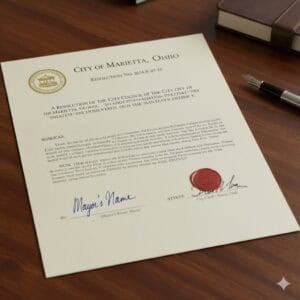 In August, Marietta, OH, officials, including the city’s Republican mayor, law director, water superintendent, and a majority of city council members, asked the Ohio Department of Natural Resources (ODNR) Oil and Gas to deny a permit application from DeepRock Disposal Solutions for the Stephan #1 injection well, which would be the company’s fifth injection well in the area (see
  In October of last year, MDN told you that both EQT Corporation and Tenaska are “dipping their toes” in the carbon capture and sequestration (CCS) space (see
  An article appearing in the Peekskill (NY) Herald has this headline: “Natural Gas Pipelines: A Path to Renewable Energy?” The subhead reads, “Several projects propose solutions that address the threat of statewide energy shortages in the near future.” The article highlights four active pipeline projects in the Empire State that we have covered multiple times. These pipelines would flow more Marcellus gas from Pennsylvania (perhaps beyond) into New York and New England. They include Enbridge’s Project Maple, Williams’ Northeast Supply Enhancement (NESE), Williams’ Constitution Pipeline, and Iroquois Gas Transmission’s Iroquois Enhancement by Compression (ExC). Where does each project stand?
 The Tennessee Valley Authority (TVA) is a federally owned electric utility corporation in the U.S. TVA’s service area covers all of Tennessee, portions of Alabama, Mississippi, and Kentucky, and small areas of Georgia, North Carolina, and Virginia. TVA is the country’s sixth-largest power supplier and the largest public utility company. In May 2023, TVA announced that it would convert the Kingston Fossil Plant (coal-fired) in East Tennessee to become a natural gas-fired plant capable of generating 1,500 megawatts of electricity (see