
New Gas-Fired Data Center Coming in Clearfield County, PA
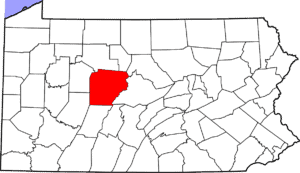
We’ve just learned about a new AI data center coming to Clearfield County, PA. Pennsylvania’s Department of Environmental Protection (DEP) has granted Iron City Wells LLC a permit allowing the construction and installation of 15 “behind-the-meter” natural gas-fired electric generators to power an AI data center in Karthaus Township. We don’t know much about this project. Here’s what we could find… Read More “New Gas-Fired Data Center Coming in Clearfield County, PA”
 Pipeline giant Williams is going on a PR offensive to pressure New York State to approve the 125-mile (99 miles in NY) Constitution Pipeline from the prolific gas fields of Susquehanna County, PA, into and through New York State, to Schoharie County, where it would connect with two other interstate pipeline systems to flow molecules to New York City and New England. On its blog site, Williams recently published a post titled “Winter storms underscore why infrastructure is needed,” with the subtitle “Severe cold underscores need for Constitution Pipeline.”
  MARCELLUS/UTICA REGION: Pa.’s energy bills out of control; Congressman highlights new era for federal energy policy & Pa. natural gas; OTHER U.S. REGIONS: New Jersey’s new governor declares state of emergency on energy; NATIONAL: These rural Americans are trying to hold back the tide of AI; NCEA sounds the alarm on oil underinvestment fueled by peak oil myths; Climate ‘overshoot’? Let’s go!; Chevron CEO outlines off-grid natgas strategy for AI data center power; Senate carbon tax crowd wants new energy taxes; INTERNATIONAL: Oil closes sharply lower as Iran risk fades; Analysts explain energy ‘bloodbath’; OPEC+ 8 reaffirm decision to pause output hikes; Greek joint venture will supply US LNG to Ukraine in March.
  The Marcellus/Utica rig count gained 1 rig eight weeks ago in the Ohio Utica, bringing the regional total to 39 rigs. The combined number of 39 remained the same last week, however, there was an important change. The Pennsylvania Marcellus picked up one rig last week, while the Ohio Utica lost a rig. PA is now operating 19 rigs, OH is operating 13 rigs, and WV maintains its 7 rigs, which it has operated since May of last year. There were 25 rigs targeting the Marcellus and 14 targeting the Utica last week. The national count gained 2 rigs last week, bringing the national total to 546 active rigs.
  Last week, CNX Resources issued its fourth quarter 2025 update. In 3Q25, the company did not drill, frack, or complete any new wells (see
 The CEO of French company DataOne recently held a town hall in Vineland, New Jersey, regarding a 2.4 million-square-foot AI data center currently under construction. Residents expressed frustration over being consulted only after the project was nearly finished, citing concerns about noise, transparency, and environmental impact. The CEO defended the facility, claiming its “breakthrough” technology ensures near-zero emissions for its gas-fired power and zero water consumption while protecting local utility rates. Despite promises of private funding and a community vertical farm, skepticism persists.
  Last September, MDN told you that two major Kinder Morgan pipeline projects that will flow Marcellus/Utica molecules in the southeastern U.S. took a big step forward at the Federal Energy Regulatory Commission (FERC) with FERC actively working on an environmental impact statement (EIS) for both projects (see
  About six years ago, Dominion Energy announced the River Neck to Kingsburg project, a short 15-mile 16-inch natural gas transmission main line that would run in an existing right-of-way alongside another pipeline along Old River Road near Pamplico in Florence County, SC. It was supposed to be built and flowing in 2022. Dominion still hasn’t built a square inch, thanks to the lawfare launched by the anti-fossil fuelers of the Blue Ridge Environmental Defense League (see
  Glenfarne’s Texas LNG facility in Brownsville, Texas, will have a capacity of 4 MTPA. EQT Corporation, the largest natural gas producer in the Marcellus/Utica, signed two agreements with Glenfarne to liquefy 2.0 million tons per annum (MTPA) of EQT-extracted shale gas at the facility when it’s built (see
  The Marcellus/Utica region received a combined 10 new drilling permits last week, Jan. 19 – 25, down significantly from the 27 issued two weeks ago. Pennsylvania issued 6 new permits, Ohio issued 4, and West Virginia issued none. The drillers receiving new permits last week included: Ascent Resources, EOG Resources, Expand Energy, and Pennsylvania General Energy.
  All the major media outlets (Reuters, Bloomberg, Financial Times) are reporting that a merger announcement between Coterra Energy and Devon Energy is very close, likely to happen next week, according to sources “familiar with the discussions.” MDN reported on the rumors of a potential merger earlier this month (see
 Yesterday, the NYMEX natural gas March futures contract became the “front month” contract after the previous February contract expired. As we reported, the February contract went into the stratosphere, closing at $7.46/MMBtu based on something called a short squeeze (see
  National Fuel Gas Company (NFG) is an integrated natural gas company with a regulated utility business, a shale drilling business (Seneca Resources), and a pipeline business (NFG Midstream, Empire Pipeline). The company issued its fiscal first quarter update yesterday, which is everyone else’s calendar fourth quarter update. The company reported that Seneca produced 109 Bcf of natural gas, an increase of 11 Bcf, or 12%, from the prior year, due to new Utica pads that came online in Tioga County.