 A shocking and at times farcical tale of how an environmental lawsuit turned into the world’s biggest fraud is revealed in a new play. The world premiere of “The $18-Billion Prize,” based on the true story of rainforest natives and their New York lawyer “fighting for justice” against one of the world’s biggest oil companies, opens May 19 at San Francisco’s Phoenix Theatre. Performances continue through June 3. Written, or perhaps a better word is assembled, by Phelim McAleer and Jonathan Leaf, the play uses exact words from transcripts of court documents. In 1993, Steven Donziger, a Harvard-educated American lawyer, represented indigenous groups from Ecuador’s rainforest in a class action lawsuit against Chevron–a shakedown. The case received an enormous amount of media attention, including major coverage by Vanity Fair, Rolling Stone and 60 Minutes to name a few, and it drew the support of international celebrities. Chevron, to their credit, fought back. An American court found evidence of fraud and ordered Donziger to hand over his files and diaries, which exposed a massive bribery and corruption scheme. The play will make you laugh, and cry, and make you angry that such a long-running fraud could be perpetrated here in the United States…
Read More “San Francisco Play Exposes $18B Environmental Fraud”

 The “best of the rest”–stories that caught MDN’s eye that you may be interested in reading: Dominion seeks OK to work on Atlantic Coast Pipe in North Carolina; Haynesville Shale making a major production comeback; these 2 oil shale plays are making a comeback too; natural gas curbs actually hurt the environment; Charif Souki says LNG plant financing needs a new model; Trump admin considering “fossil fuel alliance” to promote coal & natgas; Enbridge sells midstream biz in U.S. for $1.12B; longest lateral in Canada drilled; and more!
 The average worker who works for producers (i.e. drillers) in the Pennsylvania Marcellus makes among the highest average salaries of any industry in the state. Looking at six of the state’s top Marcellus drillers, the average worker made $113,610 last year! That’s an average taken from workers at CNX Resources, Range Resources, Chesapeake Energy, Southwestern Energy, EQT and Cabot Oil & Gas. We hasten to add not “all workers” but “average” or “median” workers–meaning there are people who make below that number and people who make well above that number. It also means the majority of Marcellus workers in those companies made at least $100,000 per year. Those working for oilfield services (OFS) companies like Halliburton, Baker Hughes and others didn’t fare quite as well, making an average of $52,000-$80,000 per year. Still, hey, it ain’t bad money! Here’s a look at the average wage for top Marcellus drillers and the OFS companies that serve them…
 Although the average employee at Range Resources made $123,500 last year (see today’s lead story, Average Worker at Top Marcellus Drillers Makes $100K+ Salary), those in upper management at Range made considerably more. We don’t have the 2017 number, but in 2016, Range CEO Jeff Ventura made $9.8 million (see
  If you’ve read MDN for any length of time, you know about a $6 billion ethane cracker plant being built by Shell in Monaca (Beaver County), PA–near Pittsburgh. The plant will chemically “crack” ethane, an abundant natural gas liquid (NGL) that comes out of the ground along with methane, creating polyethylene from the ethane. Polyethylene is, in essence, raw plastic. Manufacturers in the region and beyond will use the plastic pellets Shell will produce at the plant to create an unlimited variety products. Shell is a smart company. They’re as much a marketing company as they are an oil and gas producer and petrochemical manufacturer. They know the value of positioning and mind share. We hadn’t thought about it previously, but we always just thought of and called the project the “Shell cracker plant.” The plant now has a name: Shell Polymers. The name Shell Polymers has been around for a long time but had fallen out of use when Shell largely exited the plastics business. With the new cracker coming online in the next few years, it’s time to revive the Shell Polymers name/brand and apply it to the cracker plant, which is how the project was being pitched at the last week’s NPE2018 (formerly called the National Plastics Exposition) in Orlando, Florida…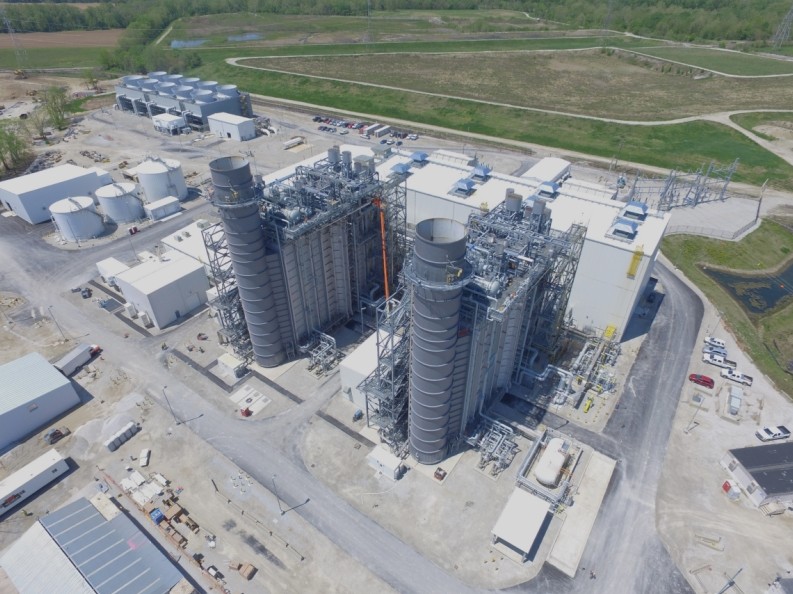
 In August 2015, MDN told you about a lawsuit brought by a group of left coast radicalized children who want to force the federal government to become communist and “force action” on mythical climate change (see
  Can you imagine an oil company being ashamed of the word “oil”? Sounds like a European thing–and indeed it is. Statoil, Norway’s largest oil company (in fact, the single largest company in Norway period) with operations in 36 countries around the world and over 20,000 employees–is ashamed of its own name. And so, as of today, Statoil is changing its name to Equinor. “Equi” stands for equal, equality, or equilibrium (take your pick), and “nor” stands for Norway. Whatever. We mention this bit of tomfoolery because Statoil (now Equinor) still has meaningful leases and assets in the Ohio Utica. According to MDN’s forthcoming
  Nearly a year ago MDN reported that Big Green group THE Delaware Riverkeeper (aka Maya van Rossum) and the odious Philadelphia-based Clean Air Council (CAC) had suffered a crushing legal defeat in their attempt to interfere with shale drilling on the opposite side of the state from where the Delaware River and Philly is located (see
  Perhaps our headline uses a poor choice of words, but that’s what immediately comes to mind in describing the enormous amount of gas (and oil) production coming from America’s shale plays–in particular the Marcellus/Utica (for gas) and the Permian (for oil). Yesterday our favorite government agency, the U.S. Energy Information Administration (EIA), issued our favorite monthly report, the Drilling Productivity Report (DPR). The DPR is the EIA’s best guess, based on expert data crunchers, as to how much each of the U.S.’s seven major shale plays will produce for both oil and natural gas in the coming month. We sound like a broken record, but the numbers continue to be mind-blowing–hitting new all-time, breath-taking highs each month. This month is no exception. Last month the EIA predicated natural gas output from the seven major shale plays would go up another 1+ billion cubic feet per day (see
  West Virginia has a long, proud history as a coal producer. And according to West Virginia Coal Association President Bill Raney, some 95% of the electricity produced and used in the Mountain State comes from coal-fired plants. However, natural gas burns cleaner than coal, and frankly, natgas is now cheaper than coal. Yet WV still has not permitted or allowed a single new gas-fired plant to be constructed. Why not? The obvious answer is because Big Coal is pushing back and pushing back hard. Last September WV’s Secretary of Commerce, Woody Thrasher, admitted publicly that his beloved state is unfriendly to new natgas-fired electric plant projects (see
  Last November we updated you on a lawsuit filed by a group of anti-fossil fuelers in Penn Township (Westmoreland County), PA (see
 MDN has previously written about the Appalachian NGL (natural gas liquids) Storage Hub, a $10+ billion infrastructure project with no specific location identified as yet, but West Virginia often named (see