
PA Town Supervisors Still Not Happy with Proposed Legislation
The Pennsylvania State Association of Township Supervisors (PSATS) originally opposed PA House Bill 1950 and Senate Bill 1100, the two primary bills before the General Assembly that deal with the issue of natural gas development that are now very close to reconciliation and a signature from Gov. Tom Corbett. PSATS’ primary objection is that the bills would strip away most, if not all, municipal authority to regulate gas drilling in their own communities. Recent amendments to the bills have made them “more reasonable” and more palatable to PSATS, but they are still not good enough to garner an endorsement.
Read More “PA Town Supervisors Still Not Happy with Proposed Legislation”
 On Thursday, the federal Environmental Protection Agency (EPA) released draft findings of its investigation into groundwater contamination in the small town of Pavillion, Wyoming (a copy of the EPA draft report is embedded below). The EPA says that water in the town contains chemicals consistent with chemicals used in hydraulic fracturing. Fracking has been used in a number of nearby gas wells. Needless to say, major media outlets like the AP, and anti-drilling environmentalists, are breathlessly calling this the “smoking gun” and declaring that fracking really does cause groundwater contamination after all (ban it now!). Not so fast…
 In the ongoing press event that is Dimock, PA, yesterday Gasland creator Josh Fox and actor Mark Rufalo, among others, gathered in Dimock to keep up the pressure and to continue to demagogue what has really happened in Dimock. See MDN’s
  It is no surprise that those who rabidly oppose shale gas drilling in general, and hydraulic fracturing in particular, do so for one primary reason: it threatens renewable energy. In fact, MDN would go so far as to say hydraulic fracturing has single-handedly destroyed the renewable energy movement, and the greenies have brought out the long knives in response.
 A new email from the federal Environmental Protection Agency says the water wells for 19 affected families in Dimock, PA have tested fine and do not pose a threat to those families. Yet, some of those families are still grabbing headlines by playing the victim, claiming their water is undrinkable. Who to believe?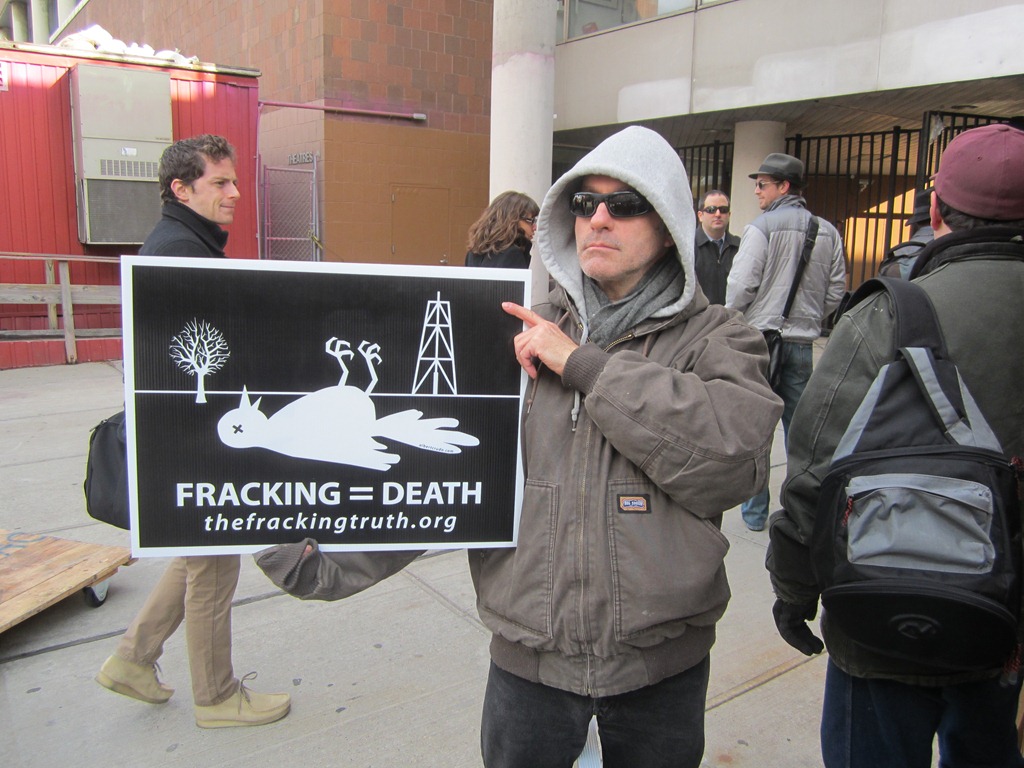
 Yesterday was an interesting experience for MDN editor Jim Willis, sitting in the NY Department of Environmental Conservation (DEC) hearing in New York City. The hearing was the last to be convened by the DEC to accept public comments on new draft drilling regulations proposed by the DEC that will allow high volume hydraulic fracturing to commence in New York State (ie allow shale gas drilling).