
Green Energy Device Generates Electric from Compressor Station Fans
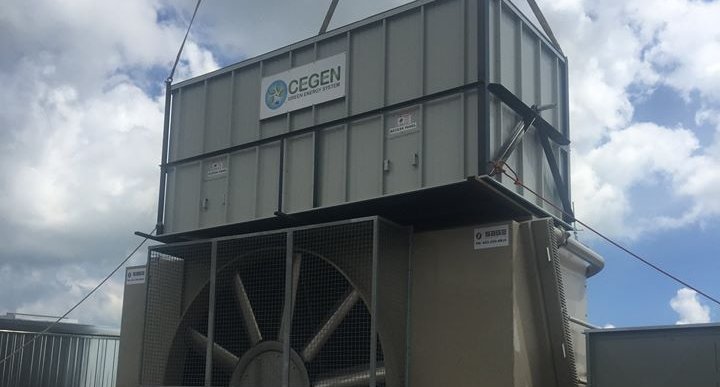
Green electric generation has just come to pipeline compressor stations across the fruited plain–potentially in the Marcellus/Utica. If you’ve ever visited a pipeline compressor station–used to pressurize pipelines to keep the gas flowing along–one thing you will immediately notice is a ginormous fan (or more than one fan if there are multiple compressors at the site). Those fans are there to help cool the machinery working to compress and flow the gas. Here’s a genius observation: fans move air. Now let us tell you about some real genius. What if you attached something to that moving air, say a small turbine, and that turbine powered an electric-generating motor–so you could produce electricity. Maybe even enough electricity to power the entire compressor station. Now that IS genius! CEGEN (Clean Energy Generation) conceptualized, built, tested and is now selling such a device. Their “generator in a box” device has a constant, 24/7/365 source of “wind” to power it. It is green energy meets fossil energy–and it’s a match made in heaven…
Read More “Green Energy Device Generates Electric from Compressor Station Fans”

 MDN has extensively covered the story of a family in Huntingdon County, PA radicalized by the Big Green movement into opposing the Mariner East 2 pipeline across their property. The Gerhart family, with the assistance of what Sunoco Logistics Partners calls “eco-terrorists,” have pledged to illegally block construction of the pipeline. So a few weeks ago Sunoco asked a Huntingdon County judge to grant an injunction against the Gerharts AND the interloping eco-terrorists–to have them forcibly removed if they attempt to stop construction which is about to begin (see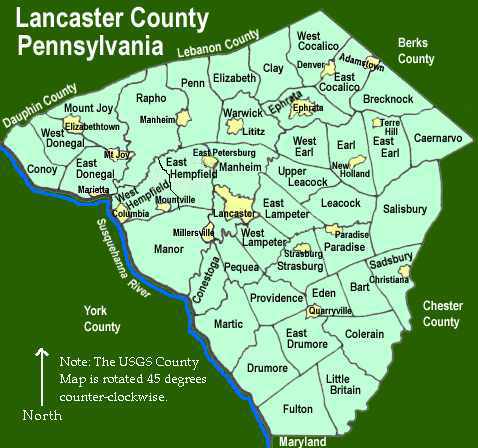
 A liberal Democrat County from the Washtenaw County, Mich. Board of Commissioners, someone who obviously ignores the rule of law, has pledged to break the law in her misguided attempt to stop Energy Transfer’s Rover Pipeline project from coming through her county. Lib Dems often like to pick and choose which laws they will obey and which they’ll ignore, so we’re not surprised by the mouthy reaction from Commissioner Michelle Deatrick, D-Superior Township. She’s like many other radical anti-fossil fuelers. Michelle is an Al Gore fan and has apparently overdosed on trailers for Gore’s forthcoming Inconvenient Truth Part Deux fictional flick, called “Truth to Power,” because that’s the exact phase she used at a recent board meeting. Here’s what mouthy Michelle had to say…
 Last December Spectra Energy pushed the pause button on their Access Northeast Pipeline project, a roughly $3 billion project in New England to connect four existing pipeline systems (with enhancements): Texas Eastern, Algonquin Gas Transmission, Iroquois and Maritimes & Northeast (see
  The New Jersey Dept. of Environmental Protection (NJDEP) sent PennEast Pipeline a letter yesterday saying they have closed the application for water-crossing permits for the project–without granting those permits. In April the NJDEP temporarily rejected the permits, giving PennEast another 60 days to respond to requests for more detailed information about the project (see
  Yesterday Energy Transfer Partners, the builder of the Rover Pipeline, once again asked the Federal Energy Regulatory Commission (FERC) if they could pretty-please-with-a-cherry-on-top resume horizontal directional drilling (HDD) in a couple of key locations in Ohio, so they can finish phase one of the pipeline somewhere close to on-time. Rover is a $3.7 billion, 711-mile Marcellus/Utica natural gas pipeline that will run from PA, WV and eastern OH through OH into Michigan and eventually into Canada. It is a critical piece of sorely needed infrastructure for the Marcellus/Utica industry. As soon as ET received approval for the project in February, they began building it. But they hit a few snags along the way, including an “inadvertent return” (i.e. leak) of 2 million gallons of drilling mud in a swamp next to the Tuscarawas River (Stark County, OH). Following that leak and other leaks, FERC told Rover to stop any new underground drilling not already under way (see
  In October 2016, Dominion announced a new pipeline project called Eastern Market Access Project (see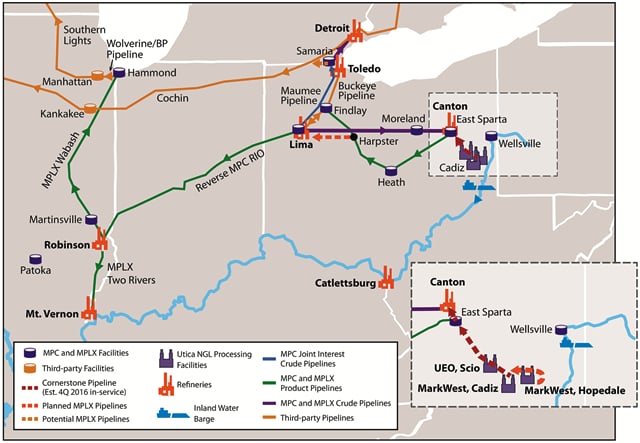
 NG Advantage is making a concerted effort to dispel false rumors and misunderstanding on the part of neighbors who live near a proposed “virtual pipeline” site that is a series of compressor stations grabbing gas from the Millennium Pipeline in a Binghamton suburb, compressing it and loading onto tanker trucks. As MDN reported yesterday, two different groups have now filed lawsuits to stop work at the site, one by a local elementary school (more than a half mile away) and one by residents living nearby, including a local Catholic church parish (see
  It’s clear that radical environmentalists who (irrationally) oppose the use of fossil fuels believe the recent decision by Pennsylvania Supreme Court is a gift from Gaia (Mother Earth goddess). As MDN previously reported, last week the Pennsylvania Supreme Court of Appeals, in a sharply divided 3-2 decision, sided with a virulent anti-drilling group, the Pennsylvania Environmental Defense Foundation, against the state in saying that any revenue generated from leasing and drilling on state-owned land MUST be used solely for conservation and the environment (see
  Is Kinder Morgan’s NED pipeline project getting reincarnated?! You may recall that over a year ago, in April 2016, anti-fossil fuel nuts in Massachusetts and other northeastern states were orgasmic that Kinder Morgan announced the company had suspended (not necessarily canceled) any further spending/time/effort on the Tennessee Gas Pipeline expansion from NY through MA, otherwise known as the Northeast Energy Direct (NED) project (see
  Just when you thought you’ve seen how low some anti-pipeline fanatics will go, they surprise you and go even lower. Antis set up a fake graveyard with a half dozen authentic, 19th century tombstones, right next to a pipeline right of way for the Williams Atlantic Sunrise Pipeline in Lancaster County, PA. Williams is hypersensitive to ensure they don’t violate any “Native American” or other kinds of historic sites. So when they came across the fake graveyard, they thought it was real and proceeded as such, spending time and money to plan a route for construction that would protect the fake site. And antis, with full knowledge, lied to Williams’ people (not telling them is the same as lying in our book). And laughed their considerable derrieres off the entire time, wondering when those poor dunderheads at Williams would figure it out. Now Williams may have the last laugh, because what the antis did is fraud and prosecutable. So-called local Native Americans (i.e. Indians) were in on the “joke.” And now those Indian activists have the gall to say if Williams didn’t recognize something as fake, how will they recognize real Indian artifacts that need protecting? We ask a different question: Who will ever believe these so-called Native American activists again–when they are self-professed liars?…
 In March 2016, the Federal Energy Regulatory Commission (FERC) approved Tennessee Gas Pipeline’s (TGP) Connecticut Expansion project (see