
FERC Lifts Rover Horizontal Drilling Ban, Pipeline Work Resumes
 Rover Pipeline–$3.7 billion, 711-mile natural gas pipeline that (will eventually) run from PA, WV and eastern OH through OH into Michigan and on to Canada–began flowing natural gas through a large portion of the pipeline on Sept. 1st (see Big Portion of Rover Pipeline Now Up & Running – Thru Most of Ohio). In the past three weeks, Phase 1A of the pipeline has steadily increased its throughput and now flows over 700 million cubic feet per day (MMcf/d) of yummy Utica/Marcellus Shale gas to Defiance, OH. However, it could flow more, if the Federal Energy Regulatory Commission (FERC) would lift its considerable boot off Rover’s neck and let them finish Phase 1B pipeline work in eastern Ohio to feed more gas to the main part of the pipeline. The problem is that Rover had early missteps, the most serious of which spilled 2 million gallons of non-toxic drilling mud in a swamp near the Tuscarawas River back in April (see Rover Pipeline Accident Spills ~2M Gal. Drilling Mud in OH Swamp). An investigation by the Ohio Environmental Protection Agency (OEPA) found the presence of diesel fuel in the drilling mud, which means the mud wasn’t so non-toxic after all (see OH EPA Says Diesel Fuel Found in Rover 2M Gal Drilling Mud Spill). Rover believes sabotage may have been the cause. Since April, FERC has blocked all new underground HDD work for the Rover project. Rover has asked (begged, pleaded) FERC, several times, for permission to restart the HDD work–at least in a few select locations. In August, FERC issued eight conditions before they would agree to lifting the HDD ban (see FERC Issues Rover 8 Commandments to Restart Horizontal Drilling). Rover says they have met all of those conditions. However, the OEPA says they have not. Last week OEPA asked FERC to continue blocking HDD activity until they (OEPA) are satisfied (see Rover Pipeline Still Battling Ohio EPA, Asks FERC to Lift HDD Ban). Rover fired off a letter to FERC that says OEPA’s public statements are opposite of their private statements with Rover. In other words, OEPA is lying. Who will FERC listen to? Now we know. They’re listening to Rover. Yesterday FERC lifted the ban on HDD for nine key locations–NOT including the Tuscarawas River site. FERC says they are still investigating that spill. FERC said, in lifting the HDD ban, that “Rover has demonstrated sufficient progress on the required rehabilitation and restoration of the areas affected by the inadvertent release and drilling mud contamination” and that the company is following FERC’s 8 Commandments. We’re pretty sure yesterday’s FERC decision won’t make the OEPA happy…
Read More “FERC Lifts Rover Horizontal Drilling Ban, Pipeline Work Resumes”

 In August, the D.C. Court of Appeals ruled in a case that may have long-term, very negative consequences for the oil and gas industry related to pipeline development (see
  Bad news for the Sisters of the Corn and the radicals at Lancaster Against Pipelines. On Friday the Federal Energy Regulatory Commission (FERC) granted Williams permission to begin construction on Atlantic Sunrise, a $3 billion, 198-mile pipeline project running through 10 Pennsylvania counties to connect Marcellus Shale natural gas from northeastern PA with the Williams’ Transco pipeline in southern Lancaster County. Last week the Sierra Club and a mish mash of other nutball groups begged FERC to delay issuing an order that Williams can commence with construction, claiming FERC’s delay in considering a rehearing delayed a lawsuit and the lawsuit hasn’t had enough time to work it’s way through the court system (see
  TransCanada, one of Canada’s leading midstream/pipeline companies, cooked up a deal last year to pipe natural gas from Canada’s West Coast to the East Coast in order to fend off cheap supplies of Marcellus/Utica gas that will flow into Canada when/if the NEXUS and Rover pipelines get built (see
  In July when the Pennsylvania Senate passed their awful budget bill that includes a variety of new taxes, including a new severance tax on the Marcellus industry, they also slipped in Section 1610 which changes established lease law with respect to oil and gas wells that no longer produce anything (see
  Last week the Pennsylvania Dept. of Environmental Protection (DEP) issued the final permit needed by Williams to begin construction on Atlantic Sunrise, a $3 billion, 198-mile pipeline project running through 10 Pennsylvania counties to connect Marcellus Shale natural gas from northeastern PA with the Williams’ Transco pipeline in southern Lancaster County (see
 West Virginia Dept. of Environmental Protection’s (WVDEP) capricious decision to yank a permit it previously granted for the Mountain Valley Pipeline is “the last straw” according to the legal beagles at the Blank Rome law firm. Last week WVDEP, under pressure in a lawsuit brought by the radical Sierra Club, decided to revoke a previously granted water crossing permit (see
  Well they did it. Yesterday at a regularly scheduled meeting of the Delaware River Basin Commission (DRBC), representatives for the five voting members voted to begin the process of formalizing a permanent ban on fracking in the Delaware River Basin. It wasn’t unexpected, but it was hotly contested–by both sides in the debate. As we’ve previously chronicled, the DRBC is composed of five voting members: the governors of Pennsylvania, New York, Delaware, New Jersey, along with the U.S. Army Corps of Engineers. The governors all sent people to represent them at the meeting, with clear instructions. The three Democrat governors–Tom Wolf (PA), Andrew Cuomo (NY), and John Carney (DE) all voted in favor of a resolution to take the next step in the process of a permanent ban, voting to adopt a draft resolution MDN previously shared (see
  Following yesterday’s vote by the Delaware River Basin Commission (DRBC) to take the first step in a permanent ban on fracking in the Delaware River Basin (DRB), reaction from those who support drilling was swift. The American Petroleum Institute issued a statement saying, among other things, that the DRBC’s intention to permanently ban fracking in the DRB is “bad public policy.” More than a few Pennsylvania legislators took issue with PA Gov. Wolf’s vote to endorse a permanent frack ban. Three ranking State Senators–Senate President Pro Tempore Joe Scarnati, Senate Majority Leader Jake Corman, and Senate Environmental Resources and Energy Chair Gene Yaw, ripped into Wolf with a joint press release yesterday, saying they “strongly objected” to Wolf’s vote. The three said a permanent ban on natural gas drilling in the Delaware River Basin is “arbitrary, short-sighted and a blow to economic development, job-creation and landowner’s rights.” We appreciate their support. However, those same three Senators recently sold out the gas industry when they voted for a severance tax. They were part of the high-tax cabal that made the job of the House that much harder (thank God the House passed a no-severance-tax budget yesterday, see today’s companion story). While we appreciate the Senators’ support on the DRB frack ban issue, their bloviating against Wolf on the frack ban vote doesn’t remove the stain of their betrayal of the gas industry in voting for the severance tax. All three Senators need to go at the next primary…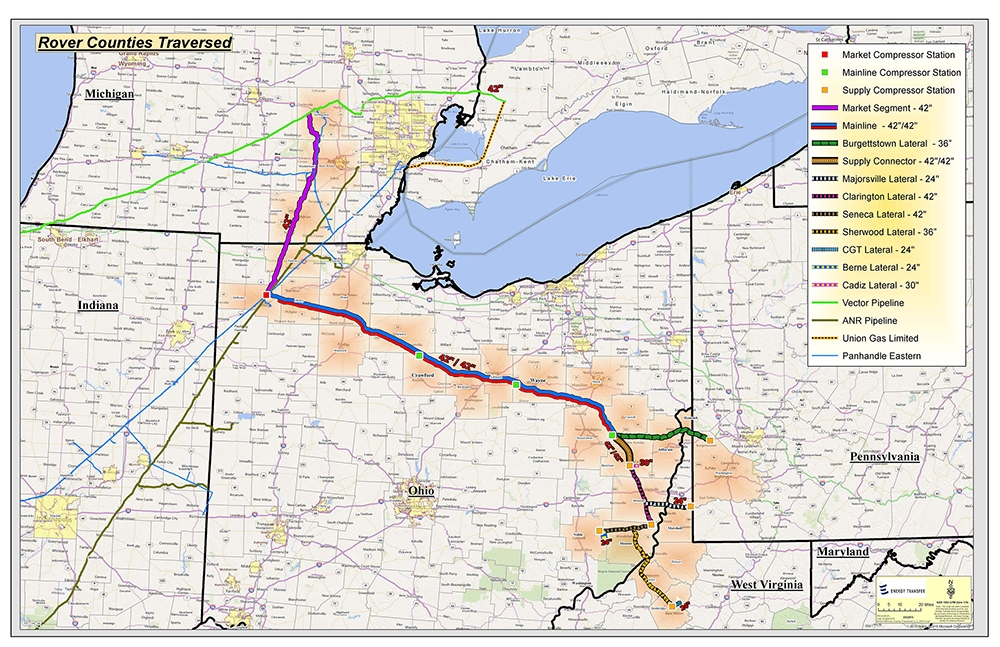
 Monroeville, PA (Allegheny County, suburb of Pittsburgh) voted last night to restrict seismic testing within municipal boundaries–a move meant to restrict future shale well drilling in the area by Huntley & Huntley. In a July story, MDN brought you the news that Cougar Land Services, a subcontractor working with Huntley & Huntley, is planning to conduct seismic testing in two rural areas of the municipality, including “small portions” of Monroeville’s northernmost and southernmost tips (see
  Mountaineer NGL Storage wants to build a new underground NGL storage facility in Monroe County, Ohio, near Clarington, along the Ohio River (see
  Here’s a surprise: Big Green mouthpiece PBS StateImpact Pennsylvania is dishing some dirt on one of their own–PA Gov. Tom Wolf. We’ve been closely following the developing situation with the Delaware River Basin Commission (DRBC) finally coming out of the closet as an extended arm of radical Big Green group Delaware Riverkeeper. The DRBC will vote (today) on beginning the process to permanently ban fracking in the Delaware River Basin (DRB), which will prevent landowners in Wayne and Pike counties (PA) from accessing the bountiful shale gas under their land (see our article yesterday,
  MDN editor Jim Willis had the pleasure of visiting France in 2006. It is a breathtakingly beautiful country. Jim found the French people to be personable and easy to deal with, contrary to the popular myth they are arrogant and hate Americans. But hey, that was just one guy’s experience. Maybe you have had a different experience? We’ve written about France’s on again, off again frack ban over the years (