
Alternative Energy | Anti-Drilling/Fossil Fuel | Electrical Generation | Industrywide Issues | Pennsylvania | Philadephia
Big Green Tries to Bully PJM Into Using More Unreliable Solar/Wind
 Big Green, particularly the New Jersey chapter of the odious Sierra Club, persists in trying to convince the general public that unreliable renewables (solar and wind) are less expensive than alternatives like natural gas. That’s simply a lie (see Study Proves Solar is 10X More Expensive than NatGas for Electric). Solar and wind are 10X and 7X more expensive, respectively, than using natural gas to produce electricity, when all costs are factored. Yet the Clubbers and their sycophants showed up at PJM headquarters yesterday to bully and pressure PJM into approving more solar and wind ahead of gas for new power additions. Read More “Big Green Tries to Bully PJM Into Using More Unreliable Solar/Wind”
 The Baker Hughes U.S. rig count dropped like a rock last week, down 10 rigs to its lowest level since November 2021. It is the first time the count has slumped for four consecutive weeks since 2024. On a happier note, the combined Marcellus/Utica count rose by two rigs to 37 active rigs. However, there was a change between the plays (and states) in the M-U. The Pennsylvania Marcellus lost one rig, now at 17 rigs, while the Ohio Utica picked up two rigs, now at 12 rigs. West Virginia remained the same with eight active rigs.
  The editors of the Pottsville, PA, Republican Herald newspaper in northeastern Pennsylvania raise an important issue that should be considered in light of the flurry of announced (and rumored) data centers planned for northeastern PA. The editors look forward to the massive economic boom such centers would create. However, as with any industry, there are drawbacks, negatives to be aware of and plan for. In the case of data centers, the lack of zoning ordinances may bite municipalities on the backside. It’s time to address these issues now, before these massive facilities are built.
  For the week of May 12 – 18, the number of permits issued to drill new wells in the Marcellus/Utica was up five from the previous week. Last week, 31 new permits were issued in the M-U. In the Keystone State (PA), seven new permits were issued. The top permittee was Range Resources, which was issued four permits in Washington County. Seneca Resources scored two permits in two different counties: Elk and Tioga. PennEnergy Resources received a single permit in Butler County.
 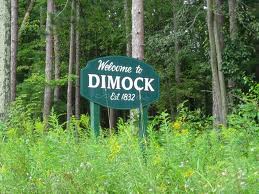 In December 2022, MDN brought you the great news that Coterra Energy (formerly Cabot Oil & Gas) would be allowed to restart drilling in a nine-square-mile area in Dimock, PA (Susquehanna County) following a “no contest” plea deal with PA’s then-Attorney General, Josh Shapiro, on a misdemeanor charge (see
  According to opinion researchers at Pennsylvania’s Franklin & Marshall College, the issue of fracking has deepened the schism between Democrats and Republicans in the Keystone State. Pennsylvania’s voter registration statistics have shifted rightward (from Democrat to Republican), which has been traced to shifts in the affiliation of working-class communities, particularly those located in the northeastern and southwestern parts of the state. New research offers a more direct cause for the shift: the decline of coal mining and the rise of shale gas development.
  In January, MDN brought you the news that TECfusions, based in Tampa, Florida, had purchased 1,395 acres in Upper Burrell (Westmoreland County), PA, for a groundbreaking data center project called TECfusions Keystone Connect (see
  Yesterday, the first of what will no doubt be many such events, the Appalachian AI Energy Conference (sponsored by Shale Directories) was held at the Hilton Garden Inn in Pittsburgh/Southpointe. Event speakers explored why Appalachia is uniquely suited to meet AI’s massive energy needs. CNX’s VP of sustainable development, Brent Bobsein, spoke about the region’s “massive opportunity.”
  The Marcellus/Utica region is the United States’ top natural gas production area, accounting for about one-third of the country’s daily output. Natural gas production in the M-U has soared from 2 Bcf/d (billion cubic feet per day) to over 33 Bcf/d today in the past 15 years. Growth has slowed in recent years due to pipeline constraints, but new pipeline projects, rising Gulf Coast LNG demand, and in-basin data center development could drive a resurgence. Despite past challenges like canceled pipelines and a focus on the Permian, our region’s vast potential and improving infrastructure suggest a breakout, according to RBN Energy. However, low gas prices and regulatory hurdles remain big concerns, though data centers and LNG exports could boost demand significantly.
  Gas-fired power plants in the Marcellus/Utica region (and beyond) continue to change hands at a dizzying pace. Last week, MDN brought you the news that NRG Energy agreed to acquire LS Power’s portfolio of natural-gas power plants in a deal valued at roughly $12 billion, including debt, that will expand NRG’s footprint in Texas and along the East Coast (see
  In March 2024, we reported that two Democrats and one anti-drilling RINO who run Bucks County, PA government (a Philadelphia suburb) fell for the bait by Big Green and filed a lawsuit against Big Oil companies for supposedly, knowingly, causing the Earth to toast to a cinder (see
  In January, MDN brought you the news that TECfusions, based in Tampa, Florida, had purchased 1,395 acres in Upper Burrell (Westmoreland County), PA, for a groundbreaking data center project called TECfusions Keystone Connect (see
  The U.S. national rig count lost two more rigs last week, going from 578 to 576, tying January 24th of this year as the lowest national rig count in the past 12 months. Rigs targeting the Marcellus layer remained the same with 25 rigs last week, while the Utica (in Ohio) picked up one rig and now operates 11 rigs for a combined total of 36. Pennsylvania was static with 18 rigs, Ohio moved up from nine to ten rigs, and West Virginia remained the same with eight rigs.
  Last November, MDN brought you the great news that MPLX (aka MarkWest Energy) would file to build an expansion at its existing Harmon Creek facility in Smith Township, Washington County, PA (see
  In January 2024, MDN told you about a long-closed landfill that seeks to reopen in Liberty and Pine Townships in Mercer County, PA (see