Please see comments from Ascent Resources below in the 2/7/18 update…
We have to confess, we did not see this one coming. Ascent Resources Marcellus, a company founded by Aubrey McClendon after he left Chesapeake Energy, has filed for Chapter 11 bankruptcy. Note that Ascent, which was spun off from the McClendon company American Energy Partners, has a split corporate structure. On paper there are a number of “Ascent Resources” companies: Ascent Resources, LLC; Ascent Resources Utica Holdings, LLC; Ascent Resources – Utica, LLC; Ascent Resources Management Services, LLC; and, Ascent Resources Marcellus Holdings, LLC. Same management team for all and frankly, as a practical matter, they are all one company. But it is the last one in the list, Ascent Marcellus, that is seeking bankruptcy protection. According to the company website, Ascent Marcellus focuses its drilling activity on 43,000 leased acres in West Virginia. Ascent Marcellus has a couple of loans it can’t repay, so it’s taking the bankruptcy route which will transfer ownership of that portion of the company from existing shareholder to debtholders. We’ve seen this movie before. Nobody gets screwed except existing shareholders–at least, that’s the theory. According to an announcement by Ascent, the “restructuring” as it’s called, will not affect landowners or vendors. This is “an operational restructuring and is not intended to restructure or compromise any vendor, service provider, contractor, lessor, working interest owner or royalty owner obligations.” Of course “intent” and reality are sometimes two different things. We’ll keep a close eye out as this develops…
2/7/18 Update: Ascent Resources sent clarifications to our statements and assumptions above. Below are Ascent’s comments as provided, verbatim. We thank Ascent for taking the time to comment.
Regarding the comment that they are basically the same company:
It isn’t all the same company. This is a very important distinction. There are several different companies with similar names that are managed by another separate company that also has a similar name. The Marcellus company always had separate assets in West Virginia, a separate capital structure and separate debt that was collateralized solely by the West Virginia assets. It’s not all the same company.
Regarding the comment that “Nobody gets screwed except existing shareholders–at least, that’s the theory.”
You should know that Marcellus private equity owners hold more than 75% of the stock and control the board, so they were integrally involved in determining the most appropriate outcome for shareholders as part of the Chapter 11 discussions. So “in theory” does not apply to the detailed plan of reorganization that has been worked out between the company’s owners and the creditors. Read More “Ascent Resources’ Marcellus Unit Files for Chapter 11 Bankruptcy”

 In 2017 Mountaineer Gas launched the Eastern Panhandle Expansion pipeline project–a project to deliver natural gas via local distribution channels to a new industrial facility in Berkeley County, WV, and to provide gas to other local businesses and residents in the Tri-State area. There are three phases to the Eastern Panhandle Expansion project: Phase One runs a 22.5-mile, 10-inch-diameter steel pipeline from Morgan County to Martinsburg; Phase Two includes a loop to Charles Town; and Phase Three will build a four mile segment of pipeline into Martinsburg. The West Virginia Dept. of Environmental Protection held a hearing on Phase One in January, at the Berkeley Springs High School (see Old Hippies Turn Out at WV DEP Hearing to Oppose Mountaineer Pipe). All of the people who spoke at the hearing, some 33 of the 80 people present, spoke against the project. Even though local residents object, on Wednesday the WV DEP issued a permit for the project…
 Ever hear of “title washing?” MDN alerted readers about this funny sounding practice that has to do with mineral rights in Pennsylvania, with possible implications for landowners and drillers, back in 2016 (see
  There’s a real eyesore in downtown Washington, PA–a building that brings down the neighborhood. Even though the building is a blight for the entire area, it remains standing due to prejudice on the part of local residents, including a local Catholic church. There was a plan to renovate a former, run-down convent and turn it into a boarding house for Marcellus Shale workers in Washington, PA. We previously chronicled City Council’s opposition to the project (see
  This is one of those zany Friday kind of stories. Yet another so-called study on the Marcellus Shale industry recently caught our attention. We’ve often pointed out the “bought and paid for” research that abounds on shale drilling. This one goes to a whole new metaphysical plane. Instead of researching and drawing conclusions from research data, the recently published study “Engaging over data on fracking and water quality” (University of Pittsburgh and Penn State University) talks about talking about the issue of Marcellus Shale drilling. Yeah. How do you *feel* about drilling? Here, lie down on this sofa while we ask you some questions about your childhood and fracking practices. OK, so maybe a study about how people talk about the issues involved with Marcellus Shale drilling isn’t so far-fetched–if such a “study” were to appear in the Journal of Idiosyncratic Sociology. This “study” however, was published in the journal Science. As in hard science–not social science. So now it no longer matters what real science finds–whether or not fracking actually pollutes water and air. Whether or not living near a fracking site will stunt your growth. Whether or not fracking carves up forests or increases automobile accidents or any of a plethora of other issues. What REALLY matters is what you *think* about all that. That’s what now passes for science in Science…
 The “best of the rest”–stories that caught MDN’s eye that you may be interested in reading. In today’s lineup: Pipelines have econ benefits for WV; Atlanta energy law firm opens office in Pittsburgh; natgas bills for Massachusetts homeowners on the rise; some locals oppose proposed natgas-fired electric plant in Michigan; Exxon’s reserves jump 19%; analysis of pipeline assets & outlooks; Carl Icahn claims another CEO scalp at SandRidge Energy; and more!
 Pin Oak Energy Partners has just more than doubled the leased acreage it owns in the Marcellus/Utica, adding 70,000 Utica acres in both Ohio and Pennsylvania to its portfolio. MDN previously ran several stories about this relatively new entrant to our region (
 MDN reported on a heated meeting several weeks ago near our home base. The Town of Fenton Zoning Board of Appeals (ZBA) met to hear arguments against a zoning decision that would allow a proposed virtual pipeline/compressor station from NG Advantage to be zoned as a trucking/freight facility (see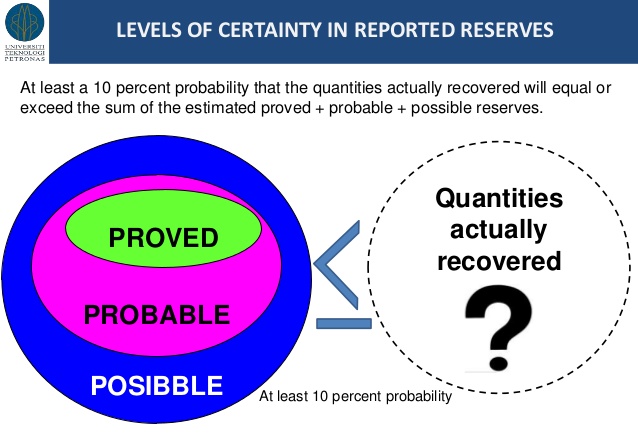
 CNX Resources, in addition to issuing an announcement about proved reserves yesterday (see today’s companion story), also issued an announcement about CNX the drilling company selling its Shirley-Pennsboro gathering system in West Virginia to CNX the pipeline company (CNX Midstream) for $265 million. Yes, in a sense it is moving assets around on paper. However, this seemingly innocuous announcement is interesting to MDN for a couple of reasons. First, there is a trend of splitting companies apart–to spin out the pipeline/midstream stuff into its own standalone company, separate from the drilling part of the company. EQT, a major CNX competitor, is going through the process of evaluating whether or not to spin off their pipeline subsidiary into its own company (see
  In November 2015 MDN reported on a seemingly obscure zoning court case in Westmoreland County, PA (see
  In 2011, then-Gov. Tom Corbett’s Marcellus Shale Advisory Commission filed a final report with 96 recommendations (see
  As we told you last week, Monday (Feb. 5) was the final day for landowners who live along the path of the PennEast Pipeline to accept an offer from PennEast to lease their land for the pipeline (see
  A construction company based in North Dakota, Bilfinger Westcon, has filed several lawsuits against MarkWest Energy (now owned by Marathon Petroleum) claiming MarkWest has failed to pay more than $40 million for work done on a number of projects. Bilfinger Westcon says MarkWest used a “time & materials cap” scheme to cap the amount of money they paid for various projects, but then slipped in last-minute change orders. Essentially, it was a way of getting more work for free–that’s the charge being made. Bilfinger says MarkWest was getting ready to sell itself to Marathon and wanted to rush to complete several projects and using time & materials cap was how they did it without breaking the bank. We have to say this is the first time we’ve heard or read anything negative about MarkWest’s business practices. We suspect there’s another side to this story, but MarkWest says they won’t comment on pending litigation. Here’s the Bilfinger Westcon side of the story…
 One of the primary ingredients in fracking is sand–a special kind of very fine sand called silica. When silica gets airborne and into a person’s lungs, it’s not good news. Silica behaves like asbestos, with the potential to cause lung cancer. The shale industry is keenly aware of it and takes steps to ensure workers are not exposed. The federal Occupational Safety and Health Administration (OSHA) developed a new rule for respirable silica (tiny tiny sand) that will go into effect for the shale industry in June of this year. We have the details below…