
“Boring” Pipelines Great Again Thx to Data Ctrs; NESE Breaks Ground
 Williams Companies is breaking ground tomorrow on the Northeast Supply Enhancement (NESE) pipeline in Brooklyn — the first new pipeline in New York in over a decade — signaling a broader national natural gas infrastructure boom. Driven by AI data center power demand, LNG export growth, and population expansion, the U.S. is tracking over 150 pipeline projects representing roughly 150 Bcf (billion cubic feet) of daily capacity. Read More ““Boring” Pipelines Great Again Thx to Data Ctrs; NESE Breaks Ground”
 In March, South Carolina regulators approved Duke Energy’s proposal to build a 1.4-gigawatt (GW) natural gas-fired power plant in Anderson County, marking the utility’s first new generation project in the state in a decade (see
  Despite being the nation’s leading electricity exporter and a top producer of natural gas, nuclear power, and coal, Pennsylvania residents pay significantly more for electricity — 45% more per kilowatt-hour than in 2018. Why? Sleazy politicians blame “greedy” utility companies and AI data centers, even though the rise in electric prices predates the current data center boom. If you dig just a little, you will find the real answer: it’s due to the policies put in place by the same sleazy (Democrat) politicians who blame others.
  PJM Interconnection, the nation’s largest electric grid system serving 65 million people across 13 states and Washington, D.C., is pursuing an emergency plan to secure 15 gigawatts (GW) of new power supply to avert electricity shortages driven by surging data center demand tied to artificial intelligence (AI). The grid operator looks to pair proposed data centers with new generation through bilateral negotiations running from September to March 2027. Let’s make a deal!
  MARCELLUS/UTICA REGION: Core Natural Resources expands Triadelphia facility to make finished aircraft parts; Shale Crescent USA sells region to the world; OTHER U.S. REGIONS: EPA approves carbon-capture project in Indiana; NATIONAL: U.S. natural gas futures end week lower; The carbon bureaucracy nobody voted for; U.S. E&Ps stay cautious on 2026 capex amidst market volatility; INTERNATIONAL: Oil settles lower ahead of Iran talks; Trump vows Hormuz blockade after failed talks; European gas prices jump as U.S. set to blockade Iran ports; How the Iran war reshapes global gas and LNG this year and beyond.
  The Marcellus/Utica region received 22 new drilling permits last week, Mar. 30 – Apr. 5, up 3 from the 19 issued two weeks ago. Pennsylvania issued 6 of the permits. Ohio issued 8 new permits. West Virginia also issued 8 new permits last week. The drillers who received new permits last week included Ascent Resources, EOG Resources, EQT, Expand Energy, Jay-Bee Oil & Gas, and Laurel Mountain Energy.
  We believe this is the end of the legal road for the Briggs family’s lawsuit against Southwestern Energy (now part of Expand Energy) in a case that centers on whether hydraulic fracturing constitutes a trespass if it forces gas from a neighbor’s property, even if no fluid enters that neighbor’s specific property layer. In January 2020, the Pennsylvania Supreme Court ruled in favor of Southwestern, retaining the “rule of capture” in the Keystone State (see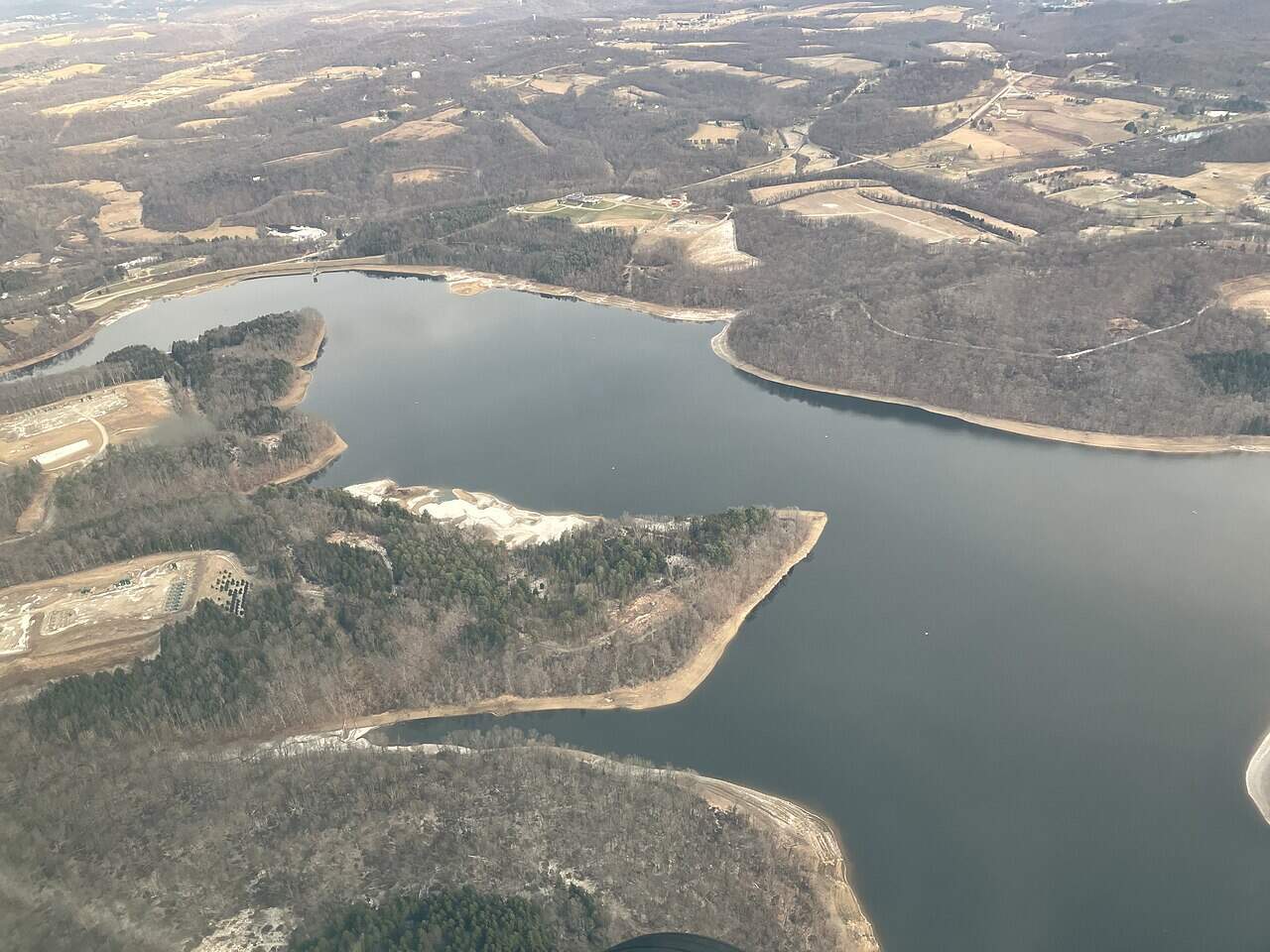
 On February 2, 2026, Devon Energy and Coterra Energy announced a landmark $58 billion all-stock merger, creating a “Super-Independent” energy producer targeting the AI-driven surge in power demand (see
  Here’s something you don’t hear about often: A Democrat who supports fossil energy and pipelines. It’s especially noteworthy when the Democrat is the former head of the Democratic Party in Pennsylvania. In an eloquent guest editorial published in the Harrisburg Patriot-News, T.J. Rooney, former Chairman of the PA Democratic Party and a former member of the PA House, discusses (bemoans the fact) that it’s next to impossible to build a new natural gas pipeline in the Keystone State. He makes a full-throated plea for permitting reform to change that.
  Fervo Energy and Youngstown, OH-based Vallourec announced a five-year supply agreement, potentially worth up to $800 million, to scale domestic geothermal infrastructure in the United States. Vallourec will exclusively supply Fervo with U.S.-manufactured tubular solutions (pipelines) and pipeline connectors, creating a fully domestic supply chain for critical geothermal well infrastructure. This collaboration aims to reduce supply chain risks, improve project timelines, and ensure cost certainty for Fervo’s deployment of standardized 50 MW geothermal units, leveraging Vallourec’s expertise in tubular solutions. Here’s the cool part: the pipelines and connectors Vallourec will manufacture for Fervo’s geothermal work were originally developed for shale energy applications.
  The number crunchers in the bowels of the U.S. Energy Information Administration (EIA) issued their latest Annual Energy Outlook (AEO) for 2026 yesterday. And, wow! We didn’t expect this! The agency predicts that natural gas production will grow significantly, from 107 billion cubic feet per day (Bcf/d) in 2025 to between 133 Bcf/d and 151 Bcf/d by 2050. The growth is being driven by both domestic and international demand. But here’s the interesting part: The EIA sees the coming growth in production as strongest “in the East region, which includes the low-cost Appalachian Basin.” The EIA says that to grow production in the M-U, new pipeline infrastructure will be needed to transport it to the U.S. Gulf Coast.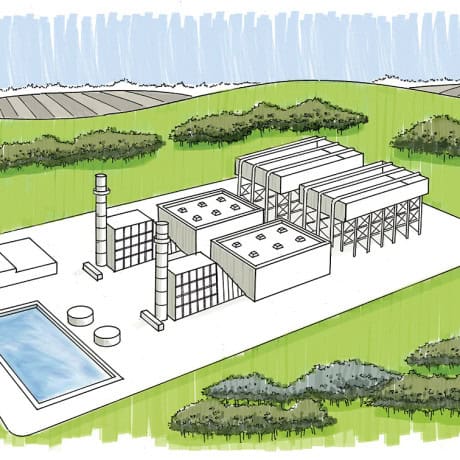
 Much as the Marcellus Shale boom revolutionized Pennsylvania’s economy, a wave of data center development is poised to drive Pennsylvania’s digital future. At a Williamsport-Lycoming Chamber of Commerce panel, experts from PPL Electric Utilities, Amazon Web Services, and the government discussed the immense power demands of this transition. With AWS investing $20 billion in two Pennsylvania-based data centers, the state is racing to catch up to neighboring states in the lucrative data center market. Unfortunately, it has already fallen behind.