
Report: Middle East Disruption Elevates North American LNG
 Morningstar DBRS has published an interesting commentary that will be of interest to MDN readers and those with an interest in LNG: “From Risk to Relevance: Middle East Disruption Elevates North American LNG.” The escalating conflict in the Middle East has disrupted global LNG supply, damaged infrastructure in Qatar, and constrained shipping. These developments have heightened buyer concerns around supply security and transit risk, prompting a reassessment of LNG sourcing strategies. As a result, North American LNG has gained strategic relevance (preference), supported by jurisdictional stability and expanding export capacity. Read More “Report: Middle East Disruption Elevates North American LNG”
 In December, representatives from Chesapeake Utilities and BHE GT&S, a subsidiary of Berkshire Hathaway Energy, presented a proposal to the Port Canaveral Authority to construct a new LNG liquefaction facility in Brevard County, FL (see
  OTHER U.S. REGIONS: Chevron warns California risks energy crisis due to Iran war; New York approaches the green energy cliff with morons in charge; NATIONAL: U.S. natural gas futures edge up ahead of storage data; Brother Love the Earth’s Traveling Salvation Show; Technology to be integral part of shale development in US; US shale oil production seen to plateau, Chevron CEO says; Propane sees record production and elevated inventories as export constraints emerge; INTERNATIONAL: Crude falls as Iran talks confuse market; Iran is drafting law to introduce tolls for Hormuz transit; ADNOC CEO says weaponizing Hormuz is economic terrorism; The truth about the energy transition and the need for affordable secure energy; U.S. natural gas exporters answer Asia’s calls for ‘help,’ but aid can’t come overnight.
  Last week, MDN told you about one landowner in Luzerne County, PA, who became an overnight millionaire after selling his small farm to a company planning to build a data center on the land (see
  Some more high finance stuff to share—but hang tight, there is a point. EQT Corporation announced the pricing and accepted amounts for the buyback of up to $1.4 billion in eight series of outstanding senior notes (IOUs) maturing between 2027 and 2031. The primary motivation for this action is debt reduction and balance sheet management. EQT is getting financially healthier and stronger by getting rid of debt. That’s the point.
  Yesterday, the Pennsylvania House passed House Bill (HB) 1834 to regulate AI data centers, supposedly aiming to protect the electric grid and shield consumers from rising utility costs. Authored by Representative Robert Matzie (Democrat), the legislation requires data centers to use increasing amounts of clean, in-state energy and contribute to affordability programs like LIHEAP. While Democrats emphasize the need for safeguards against industry expansion, Republicans argue that the bill’s mandates could discourage investment and drive developers to neighboring states. The measure now heads to the state Senate, where it’s dead on arrival (DOA).
  We just happened across another XTO Energy lawsuit in which leased landowners sued over post-production deductions being taken from their royalty checks. Salvatora v. XTO Energy Inc. is a pivotal Pennsylvania case tackling the messy business of natural gas royalties. Western Pennsylvania landowners from Mercer and Butler counties sued XTO, arguing the company unfairly deducted “post-production costs”—like compression and transport—from their checks. The core debate hinged on “at the wellhead” lease language.
  Expand Energy and EQT Corporation are bypassing traditional gas-trading middlemen to capture higher profits by selling natural gas directly to end users. Expand has increased its marketing team and relocated to Houston to secure regional supply deals with utilities and manufacturers, using its production data for a competitive edge. Simultaneously, EQT is pursuing long-term contracts with power plants and LNG exporters to reclaim margins once held by intermediaries.
  This one makes us white-hot with anger. Our “cousins” to the north, who have bashed fossil energy repeatedly and have disrespected the Trump administration on numerous occasions, now want to export more of their natural gas to the U.S. so we can use it in our LNG exports to other countries. NO THANKS. You can keep your gas and stick it where the sun doesn’t shine. We have PLENTY of our own gas, and we could extract even more (from the Marcellus/Utica, other plays, too) if we had available pipelines to flow it. We don’t need or want Canadian gas that would displace existing molecules in our limited pipelines.
  Norway’s Equinor (formerly Statoil) is expanding its U.S. shale gas footprint, specifically targeting the Marcellus Shale to increase “portfolio longevity.” This strategic move is part of a broader global reshuffling in which Equinor is divesting from mature assets in regions such as Azerbaijan and Nigeria to reinvest in high-growth areas. The U.S. remains Equinor’s largest international development hub, and the company aims to boost non-Norwegian production to 900,000 barrels per day by 2030. By focusing on non-operated positions in Appalachia and the Gulf of Mexico, Equinor is “high-grading” its portfolio to relocate capital toward more sustainable, long-term production assets.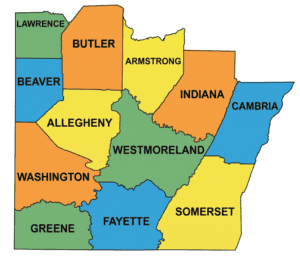
 In July 2022, MDN brought you news of a possible frac-out, or “inadvertent return” that happens when drilling mud pops out of places where it’s not supposed to — places outside the borehole being drilled (see
  Hull Street Energy (HSE) has entered an agreement to acquire two peaking power plants from Rockland Capital, LP, significantly expanding its Milepost Power portfolio. The acquisition includes the 677-megawatt (MW) Lee County Generating Station in Illinois and the 586-MW Tait Electric Generating Station in Ohio. Both facilities operate within the PJM electricity market, providing essential fast-start resources and grid stability amidst tightening supply-demand dynamics. Upon closing later this year, HSE’s total generation capacity will reach nearly 5,000 MW, establishing it as one of the largest private power producers in the United States.
 Dr. Kelvin Kemm is a South African nuclear physicist and past Chairman of the South African Nuclear Energy Corporation (Necsa). In an article on the Committee For A Constructive Tomorrow (CFACT) website, Kemm highlights a political exchange in which Senator John Kennedy exposed a climate advocate’s lack of knowledge about atmospheric CO2 concentrations. Kemm clarifies that CO2 levels are merely 0.04% of the Earth’s atmosphere, illustrating this with a 10,000-golf-ball analogy in which only one “yellow-dotted” ball represents human-added emissions since the 1860s.