
MDN’s Energy Stories of Interest: Mon, Jan 26, 2026 [FREE ACCESS]
 MARCELLUS/UTICA REGION: US DOE issues order allowing PJM power plants to run without regard to air quality; OTHER U.S. REGIONS: Will Governor Spanberger return to common sense and moderation?; NATIONAL: U.S. natural gas adds to gains in choppy trade; Winter weather to disrupt U.S. gas production, increase prices; INTERNATIONAL: Crude closes higher on Iran, cold weather; SLB predicts worst is behind global oil market. Read More “MDN’s Energy Stories of Interest: Mon, Jan 26, 2026 [FREE ACCESS]”
 A nice bump up in permit numbers last week, mainly due to Pennsylvania. The Marcellus/Utica region received a combined 27 permits last week, Jan. 12 – 18. Pennsylvania issued 21 new permits, Ohio issued 5, and West Virginia issued just 1. Among the drillers receiving new permits last week: Antero Resources, Coterra Energy, EQT, Expand Energy, Gulfport Energy, and Seneca Resources.
  Last Friday, MDN reported that the rumor mill was in overdrive with chatter that Devon Energy and Coterra Energy are exploring a potential merger “that would be among the biggest oil and gas deals in years” (see
  As we point out in a companion post today, potential merger talks between Devon Energy and Coterra Energy are in an “advanced” stage (see Devon Energy/Coterra Energy Said to be in “Advanced Merger Talks”). One of the reasons (perhaps THE reason) why Coterra is considering a merger is ongoing pressure from “activist” investor Kimmeridge, which launched a public campaign last November to force Coterra to split the company, to sell off its Marcellus (and Anadarko) assets, and focus 100% on oil drilling in the Permian (see
  As we predicted may happen in a post yesterday, the NYMEX “front month” natural gas futures price closed above $5 yesterday (see
 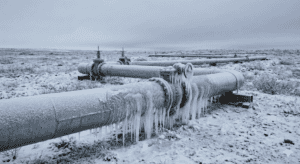 On January 22, Mount Pleasant Township Police (in Washington County, PA) reported that extreme winter temperatures caused an aboveground water pipeline serving Range Resources’ shale gas operations to freeze and rupture near the Yonker Tank Pad. In response to the infrastructure failure, the Township Zoning Officer granted a temporary permit modification, allowing the company to bypass the damaged pipeline by hauling water via dozens of trucks over the next two weeks.
  There’s just no other way to say this: Pennsylvania is on the cusp of flushing $92 billion down the toilet because resistance is preventing new data centers from being built. We’ve been warning about this danger for months (see
  Venture Global’s Calcasieu Pass (CP) LNG export facility in Louisiana began operations in March 2022 (see
  For the second day in a row, the “front month” NYMEX natural gas futures contract was firmly attached to a rocketship. Yesterday, the NYMEX contract for February delivery gained 96.80 cents per million British thermal units (MMBtus), or 24.78%, to close at $4.8750. That’s up $1.772 (or 57%) over the last two trading sessions. It is the largest two-day dollar gain since Thursday, Jan. 27, 2022 (four years!). Early trading this morning was hovering between $5.35 and $5.50. It’s all to do with the current Arctic freeze in the eastern half of the country and a massive snowstorm due this weekend. But, bear this in mind: What goes up must come down.
  Based on the fourth quarter 2025 earnings call transcript and the accompanying press release, Kinder Morgan (KMI) reported record financial results driven largely by its natural gas business. While much of the growth came from the Gulf Coast and Southeast, several updates were specifically relevant to the Marcellus and Utica shale regions and the pipeline projects that transport Marcellus/Utica molecules. We’ve sifted through the release and earnings call to bring you the latest updates that impact the M-U region.
  Gulf South Pipeline Company, a subsidiary of Boardwalk Pipelines, announced the launch of an open season for new natural gas storage capacity at its flagship Petal Gas Storage complex in Mississippi. In addition to the Petal open season, Boardwalk also highlighted significant expansion potential across two cornerstone assets: Choctaw Storage in Louisiana and the Midland Storage Complex in Kentucky. All three storage facilities are used to store Marcellus/Utica molecules.
  Last Friday, the Trump administration officials joined several governors from the 13 states that are part of the PJM Interconnect grid to outline a broad plan they say will ensure customers of the grid will not face skyrocketing electric prices due to new AI data centers getting built in the region (see
  There are two universal, unavoidable truths of life: (1) death, and (2) Democrats love to tax anything and everything. Pennsylvania Democrats are urging state lawmakers to tax data centers to shield residents from rising energy bills. During a hearing held by PA House Democrats on January 20, so-called experts argued that data centers must “pay their own way” for grid upgrades necessitated by their high demand, rather than passing those costs to households. With grid operator PJM Interconnection warning that surging demand could cause blackouts, Democrats proposed legislation to protect ratepayers from price spikes. Although some officials value the industry’s job creation, tax proponents insist that ordinary consumers should not subsidize the infrastructure needed to support the state’s expanding and energy-intensive digital industry.
 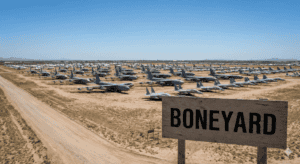 As data center operators have sought rapidly deployable power sources for their facilities, some have turned to companies that modify jet engines for commercial power generation. Data center facilities in Texas have recently deployed modified jet engines as generators, each with 48 megawatts (MW) of generating capacity. There’s a whole “graveyard” of retired military aircraft at the U.S. Air Force’s facility on Davis-Monthan Air Force Base in Arizona, called the Boneyard. Could the old/retired jets at the Boneyard be repurposed to power data centers? Quite possibly!