
Energy Stories of Interest: Fri, Feb 1, 2019
 MARCELLUS/UTICA REGION: Bitter cold tests electricity, natural gas systems; Dominion Energy donates $1.6 million to charities meeting critical community needs; Con Ed riles Westchester with moratorium on natural-gas hookups; OTHER U.S. REGIONS: Epic fail of renewables causes Texas town to have $1200 per year higher power bills; NATIONAL: Natural gas prices slump despite US winter weather blast; Natural gas is doing far more than renewables to clean our air; Sen. Whitehouse, #ExxonKnew activists try to revive failing climate litigation campaign; The New York Times got it wrong in “Drilling Down” and shale wins again; The Energy 202: 2020 hopefuls love talking about a ‘Green New Deal.’ But they’re short on specifics.; Commissioner, former chair Cheryl LaFleur to leave FERC this year.
Read More “Energy Stories of Interest: Fri, Feb 1, 2019”
 Here’s an interesting twist on the theme of drillers shorting leaseholders out of royalty money. Usually such cases involve drillers claiming post-production deductions from landowner royalty checks. This time the landowner/rightsholder is Columbia Gas Transmission (pipeline company owned by midstream giant TransCanada), and the claim is that Southwestern Energy (driller) is not paying royalties for gas produced but not actually sold.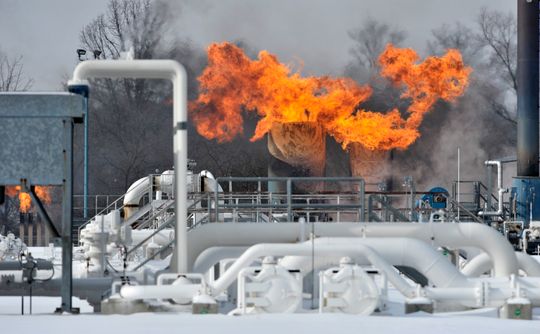
 The folks who keep track of these things expect today’s record-cold polar vortex in the Midwest and northeast (coldest temps in more than a generation, hey, what was that about global warming?) will create the highest demand/usage of natural gas for a single day–ever. Prognosticators also predict a “freeze-off” in the Marcellus/Utica, causing a temporary 1 Bcf/d decrease in production.
 Canadian pipeline giant TransCanada, which owns the Columbia Pipeline system here in the U.S., blames the Marcellus/Utica for a huge drop in volumes flowing through its Canadian Mainline from Western Canada to Ontario and Quebec.
 The Environmental Protection Agency’s (EPA) office of enforcement is close to launching a new audit policy “that will offer significant new penalty reductions for the oil and gas industry.” That’s how the news is being spun–that oil and gas are about to get a big, fat, wet, sloppy kiss from the EPA. The truth is far different from the media spin.
 As we have noted recently in a number of posts, it appears we’re heading into a dip of drilling activity–not only in the oil plays but also here at home in the Marcellus/Utica (see

 Equitrans’ (EQT Midstream) 300-mile Mountain Valley Pipeline (MVP) is now 70% built (see
 MDN previously reported on efforts in both Ohio and Pennsylvania to plug orphaned and abandoned oil and gas wells (all of them conventional/vertical wells), which present a health and safety issue. It’s all too easy to hit one of these old wells when drilling a new horizontal shale well. In WV, a new effort to plug old wells is causing concern for some–that the effort to plug old wells may inflict economic damage on WV counties. Huh?!
 It seems the rather thick-headed governors from New England have finally woken up and understand their resistance to new natural gas pipelines has placed them in a pickle. The region, when it gets really cold (like over the next few days), gets really short on natural gas. Prices soar, supplies diminish, and people not only pay high natgas prices, but high prices for electricity, which gets generated by natgas. The govs have a plan to slap a Band Aid on the problem.
 Baker Hughes, a GE Company (a company GE is trying to dump) is holding its annual meeting in Florence, Italy. Must be nice to work for BH! At the meeting BH made a big production of announcing they intend to reduce their carbon dioxide (CO2) emissions by 50% by 2030, and 100% by 2050. Fat chance.