
NatGas Groups Urge Trump to Act Against States Blocking Pipelines
 Five natural gas trade associations representing pretty much the entire natgas industry (producers, suppliers, pipelines and local gas utilities) sent a joint letter to President Trump on Tuesday asking the President to clarify the role of states in administering Clean Water Act Section 401. Specifically, the groups want the president to slap around individual states that are abusing Section 401 to block critical pipeline projects–like how the corrupt Andrew Cuomo in New York is blocking the Constitution Pipeline by withholding Section 401 approval for the project. The five groups which collectively call themselves the Natural Gas Council, say in the letter that some states abuse Section 401 “to hijack the permitting process for pipelines that transport natural gas in interstate commerce.” In other words, New York’s action not only hurts the residents of New York, it hurts the residents and producers in Pennsylvania that produce the gas, and potential customers in New England and beyond who would use the gas (i.e. interstate commerce). While Section 401 gives states a say in how federally-approved pipeline projects are managed, it does NOT give states the right to outright reject those projects. The Natural Gas Council is calling attention to this ongoing violation and wants Trump to do something about it…
Read More “NatGas Groups Urge Trump to Act Against States Blocking Pipelines”
 The hits keep comin’ from Williams. Yesterday Williams announced it has filed a request with the Federal Energy Regulatory Commission (FERC) to expand capacity along the mighty Transco Pipeline to increase the amount of gas the pipeline can flow to the Mid-Atlantic and Southeastern U.S by 296,375 dekatherms (296 million cubic feet) per day. The Southeastern Trail expansion project (SET), as it is called, includes building 7.7 miles of 42-inch pipeline looping (pipeline laid next to existing pipeline) in Virginia, adding extra horsepower at existing compressor stations in Virginia, and making some pipe and valve modifications on other existing facilities in South Carolina, Georgia, and Louisiana to allow for bi-directional flow. The project aims to bring more gas to utilities, including PSNC Energy, South Carolina Electric & Gas, Virginia Natural Gas, the City of Buford, Ga., and the City of LaGrange, Ga. Note that Mountain Valley Pipeline recently announced they want to expand the MVP project an extra 70 miles to serve PSNC Energy (in North Carolina) too. Williams is currently working to finish up the Atlantic Sunrise project, which includes new pipeline to feed Marcellus gas from northeastern PA into the Transco mainline. Bottom line: This new Southeastern Trail expansion project will bring Marcellus gas to more customers in the Mid-Atlantic and Southeastern U.S. And that’s a good thing!…
 We’ve been monitoring the developing situation in Virginia where anti-fossil fuelers continue to protest against Mountain Valley Pipeline in the Jefferson National Forest. Some of the protesters are fueled by an irrational hatred of fossil fuels (movement people), while others are locals who believe digging a trench for a pipeline will destroy their scenic vistas. The movement people arrived from out of town and whipped up the locals. A mix of both have taken to sitting in treetops (see
 Big Green groups are objecting to a plan to exempt Pennsylvania’s mom and pop conventional oil and gas drillers from regulations meant to apply to unconventional (shale) oil and gas drillers. The anti-drilling Environmental Defense Fund (EDF) along with the anti-drilling Pennsylvania Environmental Council (PEC) co-authored a letter to PA Senators encouraging them to vote against a bill now working its way through the Senate (and House). In March, two identical bills were introduced, one in the Senate, the other in the House, that would “roll back” (more like “lock in”) regulations that govern conventional PA drilling to the Oil and Gas Act of 1984 (see
  In March the Pennsylvania House State Government Committee debated and voted to approve a slate of five bills aimed at fixing not only the slowmo way the state Dept. of Environmental Protection (DEP) approves shale permits, but also roll back some of the egregious regulatory overreach that exists in PA (see
 The “best of the rest”–stories that caught MDN’s eye that you may be interested in reading: PUC awaiting report on Mariner East 1 pipeline; Range Resources’ Ray Walker retires, Dennis Degner moves up; so-called church pushing Range for more disclosure on methane emissions; Atlantic Sunrise restarts work in Luzerne County in May; abundant Marcellus gas leads to rate cut for Peoples Gas; CNG fueling station opens in Allentown; WV board denies request to move Mountaineer Gas pipeline hearing; NJ votes to spend $300M to “save” nuke plants; Texas LNG signs contracts with Chinese, Southeast Asian buyers; Cali’s pathetically weak case against fossil fuel companies; building bigger pipelines over old ones a smart idea; and more!
 As Mountain Valley Pipeline (MVP) begins construction and launches a plan to expand their pipeline another 70 miles (see today’s lead story), the Virginia Dept. of Environmental Quality (DEQ) says it is eager to work with radical antis to monitor work that will be done by MVP in the Old Dominion. MVP is a $3.5 billion, 301-mile pipeline that will run from Wetzel County, WV to the Transco Pipeline in Pittsylvania County, VA–and perhaps beyond into North Carolina (see Mountain Valley Pipeline Launches Plan to Expand 70 Miles into NC). MVP is being built by EQT Midstream, NextEra Energy and several other partners. It has been hassled by protesters and sued by a cadre of Big Green groups–all with no result. The pipeline is currently under construction. Since there’s no stopping it, antis intend to launch a host of volunteer “monitors” to rat out pipeline workers that do anything from drop a candy wrapper on the ground to drive 2 miles an hour over a locally posted speed limit. In other words, a busybody brigade. To which we say: Go ahead–knock yourselves out. MVP has nothing to hide. If you want to waste your time, it’s yours to waste. The DEQ, under Democrat Gov. Ralph Northam, is only too happy to work with the busybody brigade to further hassle MVP…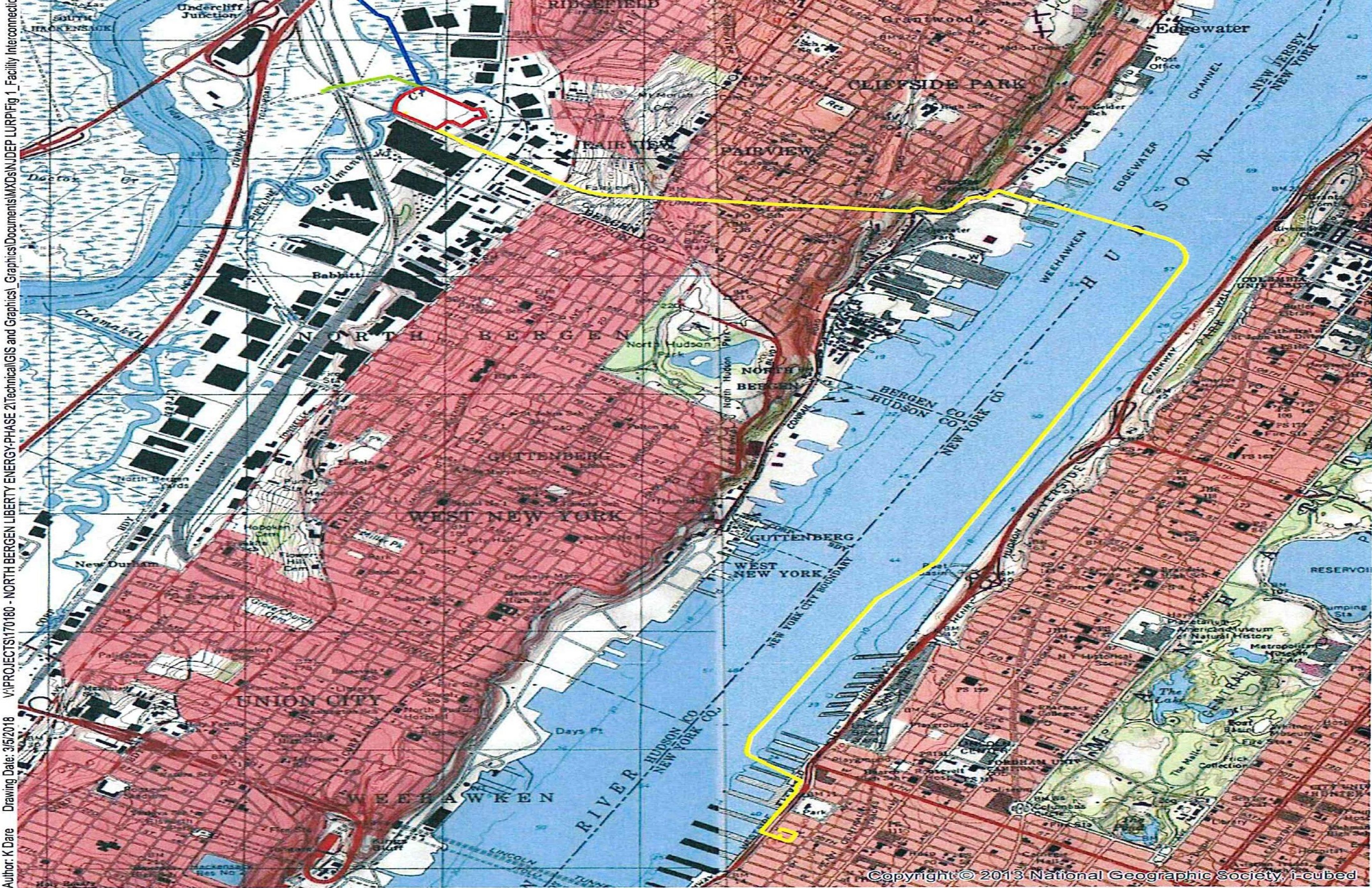
 As the Competitive Power Ventures (CPV) $900 million Valley Energy Center natural gas-fired electric generating plant in Orange County, NY gets ready to begin service THIS MONTH, antis, including Big Green group Riverkeeper, are desperate to stop it from entering service. Since they couldn’t win any lawsuits to stop it, and since they couldn’t convince the federal government (FERC) to stop it, Riverkeeper and some politicians in Riverkeeper’s back pocket (via campaign contributions) have turned their attention to the Andrew Cuomo-corrupted Dept. of Environmental Conservation (DEC), hoping they can convince the corrupt DEC to revoke the permits issued for the plant. On what basis does Riverkeeper and their colluding politicians claim the permits should be revoked? On the basis that a CPV lobbyist paid money to Cuomo’s closest confidante and aide as a bribe to get the project approved. There’s no evidence that the project got approved because of the bribe, but the stench is certainly there, and hey, if corrupt bribes got it approved, maybe corrupt politicians colluding with Big Green can get it unapproved, right?…
 If the American Petroleum Institute (API) were to launch a satellite into space to monitor so-called fugitive methane emissions from oil and gas sites on the ground, would you believe the data they report coming from the satellite? We would, because the API is professional and doesn’t lie. But let’s face it, most people would see a clear conflict of interest. It would be better if a government agency, or perhaps a consortium of universities, were to launch such a research project. On the other hand, the Environmental Defense Fund, a far-left, profoundly biased and anti-fossil fuel organization is proposing to do just that–launch a $40 million satellite that supposedly will monitor methane emissions from oil and gas sites–specifically sites in Pennsylvania. Does anyone really believe that if this happens, the data the EDF will report will be objective? No, NOBODY believes such a thing. But it will give colluding/lying mainstream media an opportunity to continue their false narrative that methane is leaking everywhere causing Mom Earth to catastrophically heat up…