
Antero Midstream Bets Big on WV Power Demand with East Side Express
 Antero Midstream Corporation (AM) posted second quarter 2026 results on Tuesday and held its analyst call yesterday morning. A quick word on the corporate plumbing for newer readers: Antero Midstream and Antero Resources (AR) are two separate publicly traded companies that share a management team. AR drills the wells; AM gathers, compresses and moves the gas and handles the water. Different shareholders, same brain trust. The headline number is a good one. AM gathered 4.1 Bcf/d (billion cubic feet per day) during the quarter, a 19% jump year over year and a company record. Compression volumes rose 17%. Most of that growth came from the HG Midstream assets AM bought earlier this year and has now fully digested. Processing and fractionation capacity at AM’s joint venture ran at 100% utilization — you can’t do better than full. Read More “Antero Midstream Bets Big on WV Power Demand with East Side Express”
 National Fuel Gas Company (NFG) — the Williamsville, NY company that drills (Seneca Resources), pipes (NFG Supply Corporation, Empire), and sells gas at the meter (NFG Distribution Corp) — issued its fiscal third quarter update Wednesday evening and talked it over with analysts Thursday morning. NFG’s fiscal year ends September 30, so their “third quarter” is everyone else’s second quarter (April–June). There’s a lot in here for Marcellus/Utica watchers, but two items stand out: Supply Corporation more than tripled the size of its Line N System Upgrade Project, and Seneca is about to start writing big checks to landowners in Tioga County.
  Detroit-based DT Midstream (DTM) reported second quarter 2026 results this week, and while the headline numbers were fine but unremarkable, the Appalachian news buried in the deck is worth your attention. DTM booked net income of $112 million ($1.09 per diluted share) and adjusted EBITDA of $305 million, declared a $0.88 per share dividend, and reaffirmed full-year 2026 adjusted EBITDA guidance of $1.155–$1.225 billion. Fine. Now here’s the part that matters if you own minerals in Belmont County or run a rig crew in Susquehanna County: DTM just signed up a new 380 MMcf/d interconnect on the NEXUS Gas Transmission pipeline that will feed a gas-fired power plant serving a new data center in Ohio — and it’s expanding its Appalachia Gathering System by 100 MMcf/d to shove more supply into NEXUS and Texas Eastern.
  I&S Inc. of New York, an Allegany-based well servicing company owned by Dan Sessler, is planning a $9 million expansion that will create at least 80 new jobs. The company, which has serviced oil, gas, and solution mining wells since 1988, is purchasing the old Allegany Drive-In property along Route 417 — just up the road from its current headquarters. Plans call for a new 5,000-square-foot office, a 14,400-square-foot commercial shop, and a 9,600-square-foot cold storage warehouse to store pipe for its oil, gas, and solution mining operations. The company secured a 10-year PILOT agreement from the Cattaraugus County IDA. Construction costs are estimated at $7.3 million.
  For the past two years we’ve heard the same complaint on repeat: those greedy data centers are jacking up your electric bill. State legislators have introduced data center construction bans. Towns have passed moratoriums. A Gallup poll found roughly 70% of Americans don’t want a data center anywhere near them. The White House even got seven big tech companies to sign a “Ratepayer Protection Pledge” this past March. Turns out the whole premise may be backward. A new working paper from researchers at the Electric Power Research Institute (EPRI) — Asa Watten, John Bistline, and Geoffrey Blanford — looked at the actual data from 2015 through 2024 and found data centers caused average residential electricity rates to fall. Not rise. Fall.
  Yesterday we told you about Project Oak Leaf, Eastern Gas Transmission and Storage’s (EGTS) 52.5-mile expansion that will carry Leidy gas down to Maryland and Virginia (see
  We periodically go pipeline-notice hunting to see what’s throttling Marcellus/Utica molecules on any given day (see
  Back in May, we told you about a new 28-mile intrastate natural gas pipeline Enbridge Gas North Carolina (EGNC) wants to build in Chatham and Lee counties, running from Siler City southeast to Moncure (see
  Two days ago, we brought you word of a big new gas-fired power plant headed for Dominion Energy’s Mt. Storm complex in Grant County, WV (see
  There’s a brand-new pipeline project on the board for our region, and it’s a good one. Eastern Gas Transmission and Storage (EGTS) — a BHE GT&S company, which means it ultimately belongs to Warren Buffett’s Berkshire Hathaway Energy — is proposing Project Oak Leaf, a 52.5-mile expansion of its PL-1 system that will move an extra 250,000 dekatherms per day (Dth/d) of natural gas from Clinton County, Pennsylvania down to customers in Maryland and Virginia. (A dekatherm is a heat measurement roughly equal to one thousand cubic feet of gas, so call it about 250 MMcf/d — 250 million cubic feet per day.) EGTS plans to file its application with the Federal Energy Regulatory Commission (FERC) in the fourth quarter of this year, with construction starting in early 2028 and gas flowing by the end of 2029. The Frederick (MD) News-Post picked up the story yesterday. Four public open houses are already on the calendar, the first one next week.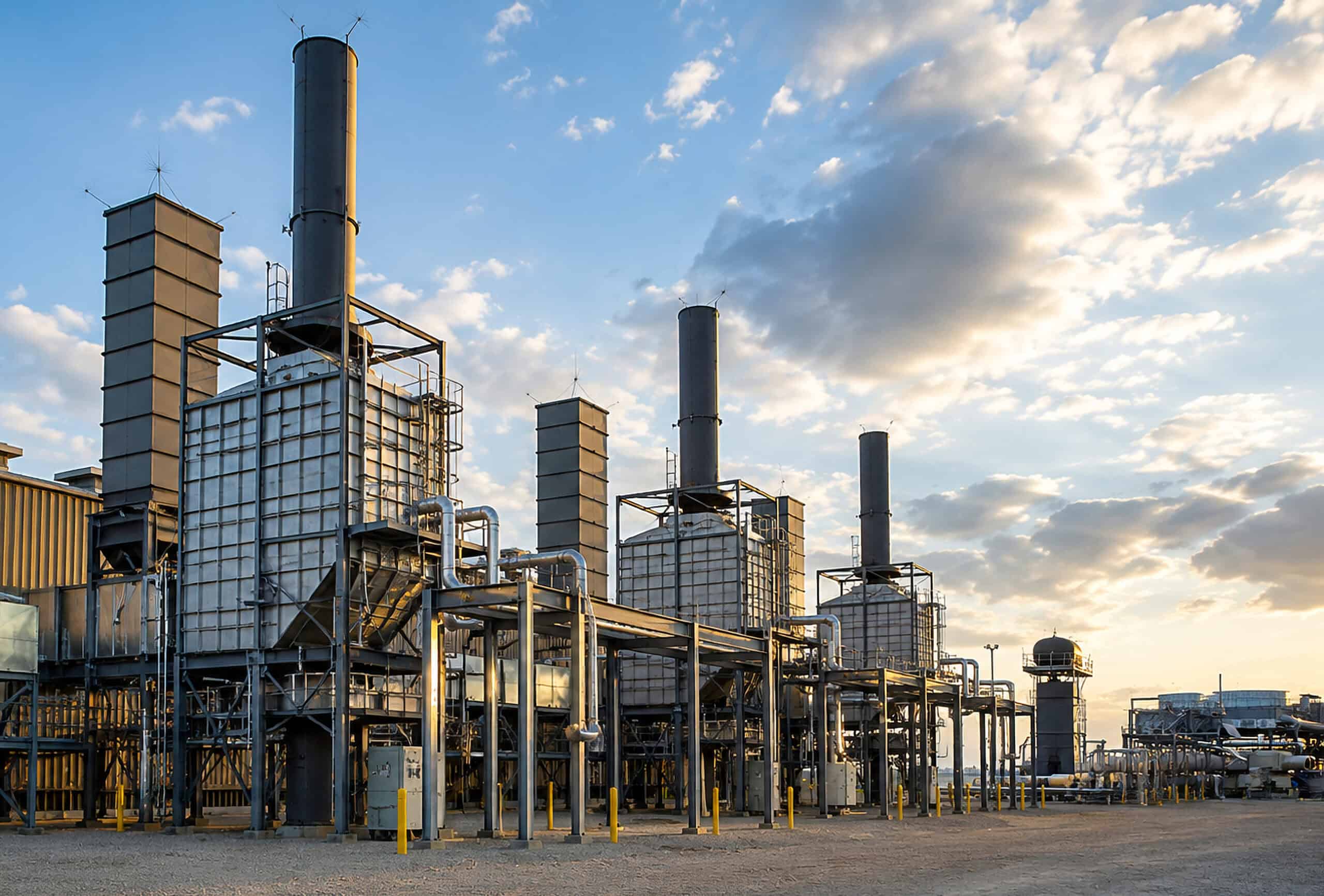
 DTE Energy reported second quarter 2026 results yesterday, and before we dig in, one piece of housekeeping. DTE used to be an M-U player in a big way — it owned gathering systems in the Marcellus and Utica plus half of the NEXUS pipeline. That business walked out the door on July 1, 2021, when DTE spun it off as DT Midstream (see
  Back in May we brought you the news that NextEra Energy is buying and merging with Dominion Energy in a deal valued around $66.8 billion (see
  Back in March, we told you about two radical green groups — the Southern Environmental Law Center and the Sierra Club — running to court to block new gas-fired turbines at Georgia Power’s Plant Bowen in Bartow County, Georgia (see
  Back in May we told you about FERC’s proposal to modernize its natural gas “blanket certificate” program (see