
Amazon in Talks to Land Data Centers at Homer City Gas Plant
 Amazon Web Services (AWS) is now in talks to build a data center campus next to the Homer City Energy Campus in Indiana County, PA — meaning the company that already pledged $20 billion for data centers in eastern PA (see our prior coverage here) may now be circling the massive Marcellus-fed gas plant project we’ve covered extensively in western PA. The news broke via TribLive, which obtained emails through a Right-to-Know (freedom of information) request showing Amazon has been talking with Homer City Redevelopment (HCR), the company converting the old Homer City coal plant site into a 3,200-acre, 4.5-gigawatt (GW) natural gas-fired power plant and data center campus (see our story, Largest Gas-Fired Power Plant in the U.S. Coming in Western Pa.). Amazon confirmed the talks in a statement but stressed no deal is signed. No word yet on how big a footprint Amazon might want, or how much gas-fired power it would draw. We’ll keep digging. Read More “Amazon in Talks to Land Data Centers at Homer City Gas Plant”
 Quinnipiac University released a new poll of Pennsylvania registered voters on July 15, and one question in it should worry everyone who makes a living from Marcellus gas. Asked whether they would support or oppose building an AI data center in their community, 74% of Pennsylvania voters said “oppose,” 16% said “support,” and 10% offered no opinion. That’s a jump from Quinnipiac’s February 25 poll, when the split was 68% opposed and 20% in favor. The opposition is bipartisan — 64% of Republicans, 82% of Democrats, and 77% of independents all said no thanks. Three-quarters of voters (76%) say they’re following data center news either very closely (26%) or somewhat closely (50%). And Gov. Josh Shapiro isn’t getting credit either: just 24% approve of how he’s handling data centers in Pennsylvania, while 34% disapprove and a whopping 42% have no opinion. The survey polled 895 registered voters July 9-13, with a margin of error of +/- 4.3 percentage points.
  Williams dropped its second quarter 2026 results after the close on Monday, August 3, and held the analyst call Tuesday morning. The headline numbers are good: adjusted EBITDA of $1.921 billion (up 6%), GAAP net income of $827 million (up 51%), and a raised full-year guidance midpoint of $8.4 billion. Wall Street liked it. But the story for MDN readers isn’t in the headline. It’s buried in the volume tables on page 8 of the release, in a capital spending line nobody read out loud, and in two new Transco projects in Pennsylvania and New Jersey that got about eleven seconds of airtime on the call.
  The long, sad saga of Eureka Resources has a new chapter — and for once, it’s not another fine or another leak. Eureka has sold the business operations at all three of its shuttered Pennsylvania frack wastewater treatment plants. Two of the three went to Select Water Solutions, one of the biggest water-management companies in the oilfield. The third went to a Washington County trucking outfit. We didn’t hear this from Eureka. We heard it from the Middle Susquehanna Riverkeeper Association, which pried the details out of the PA Department of Environmental Protection (DEP) in advance of the one-year anniversary of the Aug. 17, 2025 spill that dumped 16,000 gallons of untreated wastewater into the West Branch of the Susquehanna River (see
  Back in January 2022, we brought you what looked like a milestone: the WV Dept. of Environmental Protection had issued a construction permit for a big Marcellus gas-fired power plant next door to the Longview coal plant in Maidsville, Monongalia County (see
  The Tennessee Valley Authority (TVA) posted its third-quarter fiscal 2026 results yesterday (Aug. 4) — a press release, an investor presentation, and a 10-Q filed with the Securities and Exchange Commission. The headline numbers are fine but boring: $10 billion in revenue over nine months, net income of $965 million, up $220 million from last year. Yawn. However, if you dig into the 10-Q, there’s real news for Marcellus/Utica producers. TVA’s giant new Cumberland gas plant has fired up for the first time. TVA borrowed $2 billion to pay for it — the largest such financing in the agency’s history. And TVA has quietly expanded its natural gas hedge book to nearly 1 trillion cubic feet. Let’s dig in.
  On July 30, French environmental services giant Veolia announced it had been picked by “a major project developer” to operate and maintain a 350-megawatt (MW) microgrid that will power an artificial intelligence data center campus in Ohio. The press release carried a New Albany, Ohio dateline. It’s a genuinely big deal — a behind-the-meter power plant that will supply 100% of a data center campus without leaning on the grid at all. Here’s the dots nobody else has connected. This is the same Veolia that Antero Resources and Antero Midstream spent six years suing over a botched frack wastewater plant in West Virginia. And Veolia announced this shiny new Ohio contract exactly six days after wiring Antero a check for $371 million. You can’t make this stuff up.
 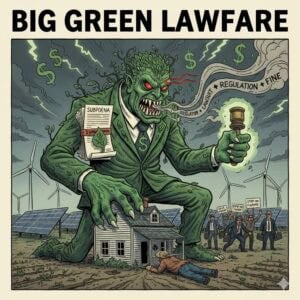 Two federal lawsuits landed in the same Washington, D.C. courthouse six days apart last month, and while both are nominally about pipelines in Mississippi and Alabama, Marcellus and Utica readers should pay close attention. Not because of where the pipe goes — but because of which pipelines the greens dragged into their complaints as Exhibit A.
  Want to know what the smartest money in the natural gas business expects to happen in the Northeast this winter? Don’t ask a politician. Look at the forward curve. As of the first of August, traders were pricing December-through-February gas at Algonquin Citygate (the Boston benchmark), Iroquois Zone 2 in New York, and three Tennessee Gas Zone 6 points in New England above $18 per MMBtu. At the other 77 pricing hubs Natural Gas Intelligence tracks across the U.S. and Canada, that same three-month strip averages under $5. Read that again. Same country. Same historically abundant supply. Roughly four times the price.
  The Intercontinental Exchange (ICE) — the outfit that owns the New York Stock Exchange and runs the world’s largest energy derivatives markets — put out a press release in mid-July containing a number that ought to catch the eye of every Marcellus/Utica producer and royalty owner. On July 1, open interest in ICE’s North American financial natural gas futures and options markets hit an all-time record of 13.4 million contracts, up 9% from a year ago. “Open interest” is just a fancy way of counting the bets still sitting on the table — contracts that have been opened and not yet closed out or settled. A record means more people than ever are using these markets to lock in a price ahead of time. Which raises the obvious question: lock in a price against what?
  Enbridge reported second quarter results on Friday, July 31, and buried in a Canadian midstream giant’s quarterly slide deck — a document that is 90% oil sands, Permian, and balance sheet talk — is the best piece of news Appalachian producers have gotten out of New England in fifteen years. Project Beacon, Enbridge’s proposed expansion of the Algonquin Gas Transmission (AGT) system into New England, ran a binding open season from May 18 to July 1. An open season is simply a pipeline asking shippers to raise their hands and commit, in writing, to buy capacity. CEO Greg Ebel told analysts the response “significantly exceeded our initial expectations.” Matthew Akman, who runs Enbridge’s gas transmission business, said Beacon would be “multiple times” the size of the AGT Enhancement project already underway, and that a big enough Beacon could save New England utility customers more than $1 billion a year.
  TC Energy issued its second quarter 2026 update on July 30, and the headline numbers were strong: comparable EBITDA of C$2.9 billion, up 12% over 2Q25, and full-year guidance now tracking the upper end of the C$11.6–$11.8 billion range. Nice, but that’s investor stuff. The news that matters for Marcellus/Utica landowners, drillers, and midstreamers is sitting in the project tables — and in a demand forecast TC has now raised two years running.
  Dominion Energy reported second-quarter 2026 results on July 31, and while Wall Street focused on the penny-counting, there were three items in the release and on the analyst call that matter to Marcellus/Utica producers, midstreamers, and landowners: two new gas-fired power plants moving into permitting, a merger timeline that’s now locked in at the state level, and a nine-figure write-off on renewable assets that tells you which way the wind is actually blowing.
 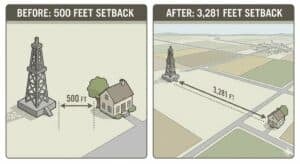 Every so often the antis tell you exactly what they’re up to, and you just have to sit back and enjoy it. On Saturday, Inside Climate News ran a story on the ongoing campaign by the Environmental Integrity Project (EIP), Clean Air Council, and their friends to jack up setbacks — the required distance between a well pad and the nearest building — from the current 500 feet to distances that would end new shale drilling in Pennsylvania. The new twist? They’ve hitched the campaign to the data center boom. More data centers means more gas, and more gas means (in their telling) more danger, so hurry up and pass the rules. It’s the same petition MDN has been tracking since 2024, dressed in a 2026 outfit.